

For an outdoor energy storage system purchase, get the AC power and usable energy in writing before comparing cabinet prices. A 100kWh or 215kWh capacity label leaves both the operating duty and commercial scope partly open. SOROTEC offers C&I storage equipment for your shortlist, including a cabinet family in that capacity range. Your enquiry should state whether the business needs tariff shifting, demand control, backup, or a combination. Ask for one identified configuration against that duty. You can then compare what each supplier is offering rather than judging differently equipped cabinets by the price of their batteries.
Key Takeaways
Gather the electricity bills and available interval load records before approaching suppliers. The bill shows the charging rules; the load records help reveal when power is needed. Where backup shares the cabinet with daily dispatch, state which duty gets priority.
- Specify required AC power as well as battery energy.
- Keep backup reserve separate from energy available for daily dispatch.
- Request operating limits for the actual cabinet configuration.
- Include EMS access, service, warranty, and delivery in the price comparison.
Capacity Is Only Half of the Buying Specification
Even when two suppliers quote the same nominal kWh, their proposals for systems with different discharge power/usable energy can be compared by reversing the load calculation to the battery size required to meet it. You will also easily see if more capacity is being bought to solve a problem than is actually required.
The Power and Duration Relationship
Energy required at the load is simply power multiplied by time: 50 kW x 2 hours = 100 kWh of energy required at the load. Note that this is a very simple calculation and does not include any losses as well as reserve energy. Also this is NOT a rating of your SES cabinet – just a definition of the required duty and the supplier must then calculate the required energy on the battery side.
For battery calculations first define the discharge window permitted and reserve setting. Conversion losses and auxiliary consumption also need to be reduced from the total available energy to be distributed to the load. Assumptions made when calculating over a service life also change, so keep these visible so that quoted run time can be rechecked if operating policy changes.
Power can be the tighter constraint. Short durations of low demand at a site do not benefit from additional stored energy unless the PCS and battery can deliver the required kW. Ask the supplier to define the limiting component and the operating conditions rather than just stating total battery capacity.
The Duty Your Tariff Actually Rewards
For energy shifting we need tariff periods and the charging window. In addition the supplier needs to know whether we charge from grid, PV or a mix of both. For the assessment of savings also the purchase price of the charged energy and the cabinet’s own consumption have to be taken into account.
To determine demand charges, first establish the measurement interval for the utility. Then using the load data that matches that interval, go to the peaks to find the highest instantaneous reading and the billed demand value for that interval. The highest reading and the billed demand can be for different times in the interval. A monthly average demand is not the same as a monthly total demand.
Stored energy held in reserve will not be used for daily energy tariff charging. Define your critical loads and their required duration and obtain evidence that a proposed backup system can deliver it. A grid connected storage cabinet is not a backup supply on its own.
Match the SES Cabinet to Your Electrical Requirement
Your RFQ can name a product family while allowing the supplier to select the suitable configuration. The returned quotation should do the opposite: identify one configuration precisely. A range of capacities and a family brochure leave too much open for a purchase agreement.
Published Product Boundaries
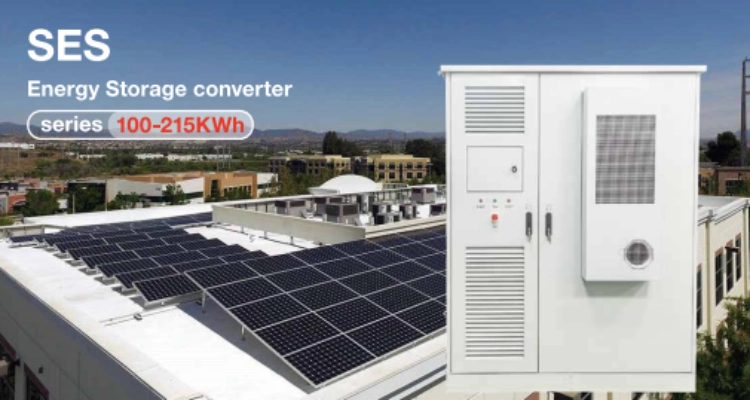
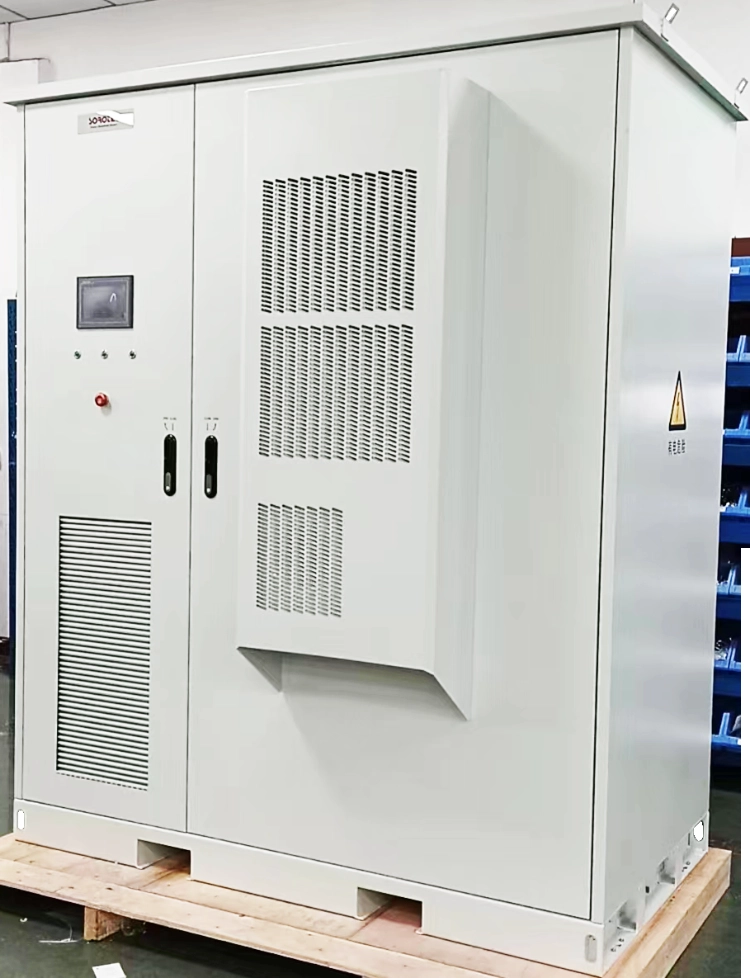
The SES integrated outdoor energy storage system lists 100–215kWh capacity, IP55 enclosure protection, and an operating temperature range of −40°C to +55°C. It combines batteries, PCS, thermal management, and fire suppression in an outdoor cabinet. C&I buyers can consider it where the electrical duty matches the supplied configuration; request its exact AC power, usable energy, and operating limits alongside the selected battery capacity.
| Published Parameter | Detail Needed for Your Order |
| 100–215kWh capacity range | Selected capacity and usable energy |
| IP55 cabinet | Environmental restrictions and maintenance requirements |
| −40°C to +55°C operating range | Charge/discharge conditions and derating curves |
| 380/400VAC grid specification | Compatibility with the site’s electrical supply |
| 670–1000VDC battery range | Battery and PCS configuration being supplied |
The official product description supplies those family-level values. The broad temperature range is worth investigating, but it does not state that full rated charge and discharge power is available at both ends. Get the relevant curves and any heating or cooling conditions before accepting that interpretation.
Voltage Fit and Later Expansion
Verify the site voltage and frequency with the proposed PCS model. A published model such as 380/400VAC must not be specified for a different industrial power supply and if a supplier is to offer a different model, it must be clearly identified within the supplier’s quotation and associated technical documentation.
The document lists parallel expansion for this family of products. You should outline the number of units, the controls to be used and the restrictions on mixing and majors versions for any future expansion plans. The agreement must outline how later additions will be assessed and that there is no commitment that all cabinets will interconnect with all other cabinets. The availability of batteries and firmware can change over time.
Controls Decide How Much of the Cabinet You Can Use
An integrated package reduces the separate equipment you must source. It also makes the system supplier responsible for the relationships between battery, PCS, thermal equipment, and controls. Your acceptance criteria should cover those relationships, not just whether each component switches on.
EMS Commands and Operating Priorities
The SES description for time-of-use scheduling contains a local HMI as well as remote EMS access. In addition, communication via Modbus, IEC104 as well as IEC61850 is supported. The control team now has a starting point. However, the relevant versions, data points, read and write permissions as well as the interface test responsibility for the offered system still have to be specified.
Check EMS rules against your operating policy for scheduled discharge against reserve operations. The control sequence should specify which rule takes precedence for any given situation. Identify who can change these settings. This is the principal means by which your financial calculation becomes detached from system behavior on a day to day basis even though the cabinet appears to function correctly.
This is also true for Network failure. Establish what will continue to work locally, what will be logged and what will not be available when remote access fails. A dashboard screenshot does not provide enough information on this behavior. Your team will also need the control sequence and an acceptance check for this.
Thermal Loads and Safety Evidence
Cooling and heating consume energy. Request auxiliary-power assumptions for standby and active operation, with the temperature conditions attached. If those loads are left out, your savings calculation may credit energy the site never receives.
Fire suppression also needs more detail than a feature name. Obtain the detection method, protected area, alarm sequence, maintenance needs, and applicable test evidence. Then compare them with the requirements from your insurer and local authority. Presence of a suppression component is not proof of every approval the project requires.
The supplier’s case-study collection can provide application context. Request documentation for the proposed battery configuration and operating mode separately. Similar cabinet appearance is not a reliable basis for transferring safety claims from one project to another.
A Cabinet Price Needs a Defined Boundary
Once the technical duty fits, price the same scope across suppliers. Your comparison should show what reaches the named destination, which control functions you can use, and who supports the package. Leaving these details until contract negotiation can make the apparent price advantage disappear.
Items to Put beside the Unit Price
A price per nominal kWh is a convenient first filter, but it ignores usable energy, power, and service differences. Keep it as one column, not the final purchasing rule. The following items give you a more useful basis for comparing outdoor energy storage system suppliers.
| Commercial Item | Required Quotation Detail |
| Configuration | Battery capacity, PCS power, EMS, and included protection equipment |
| Performance basis | Usable energy, losses, auxiliaries, and operating limits |
| Delivery | Incoterm, named place, packing, and battery transport documents |
| Warranty | Retained-capacity terms, throughput limits, exclusions, and remedy |
| Ongoing costs | Software fees, service scope, and spare-parts arrangements |
Ask for priced alternatives where they affect the duty. More energy, higher AC power, and a different support arrangement are distinct choices. Combining them into a single upgrade price makes the extra spending harder to judge.
Warranty Measurement and Service Responsibility
Read the terms relating to retained capacity and the agreed measurement methodology. This should include details of test conditions, historic usage and who bears the costs of testing. Also verify the calendar limits against the throughput limits – a quoted term of years may include an energy-throughput ‘limit’. Excluded temperature limits should also be noted. All of the above terms and conditions provide more detail than the warranty period.
The company profile helps you begin supplier qualification. For the order itself, name the party responsible for the complete cabinet. You also need a practical diagnostic route when a fault crosses battery, PCS, and EMS boundaries. Separate component warranties can leave that question unanswered.
Request a Proposal You Can Accept or Reject
Provide interval load data, tariff periods, grid details, climate conditions, backup priorities, and expected expansion through the technical sales contact. Request an identified configuration with its assumptions and exceptions. A qualified objection is useful at this stage: it tells you what the quoted cabinet cannot do before you commit money.
Your Purchase Decision
Use the technical reply to close the outdoor energy storage system supplier comparison. Attach the accepted configuration, operating assumptions, and relevant documentation to the order. Agree on the acceptance measurements and remedy for a shortfall before signing. If two proposals still meet the same duty, the price negotiation now has a defined scope behind it.
FAQ
Q:Is the Largest Cabinet the Best Value
A: Extra capacity has value only if your operating schedule can use it. Compare its incremental usable energy and cost against the load data, not an assumed daily cycle.
Q:Can Tariff Shifting and Backup Share One Cabinet
A: Potentially, provided the system supports the required backup operation. The proposal must account for reserve energy and show the control priorities when duties conflict.
Q:What Should You Check in a Savings Forecast
A: Read the load-data period, tariff basis, usable energy, losses, auxiliaries, ageing assumptions, and recurring costs. Request another calculation if working hours or tariffs change.