

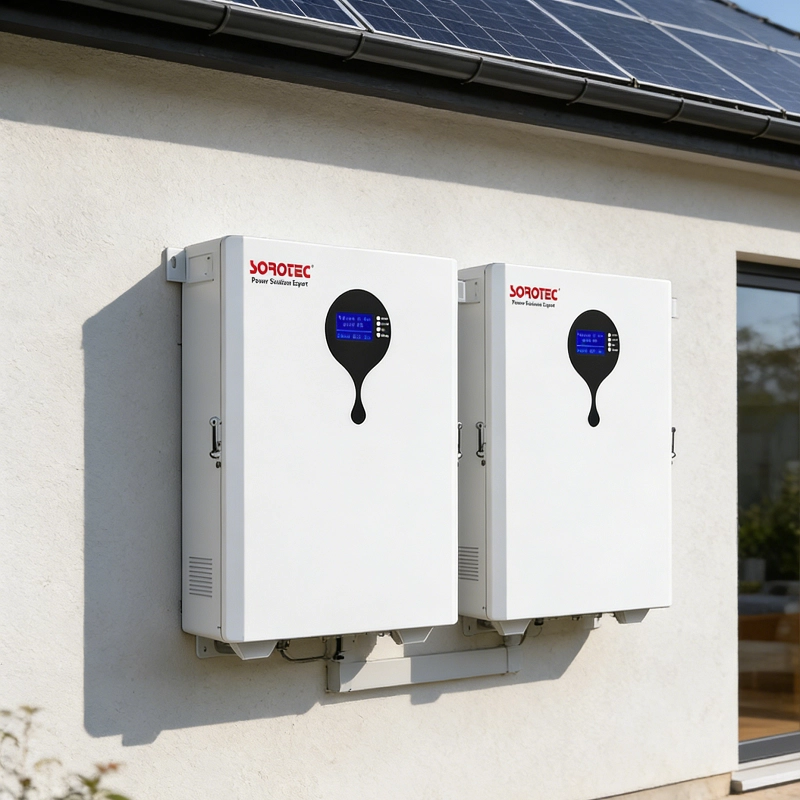
Choosing between one 300Ah LiFePO4 Battery and several 100Ah modules looks like a basic capacity decision. Three 100Ah batteries appear to equal one 300Ah unit, so the result should be the same. In practice, it rarely is. Wiring, current limits, inverter settings, wall space, service access, and later expansion can all change how the system behaves.
SOROTEC works across solar power, energy storage, telecom power, and backup equipment. Its company profile shows the testing and manufacturing work behind the range. For home storage, the SL-W/SL-R Series offers 100Ah, 200Ah, and 300Ah choices within one family, giving buyers a fair basis for comparison.
What Does 100Ah vs. 300Ah Really Mean?
Amp hours measure electric charge, but they do not show stored energy on their own. Voltage matters just as much. A 100Ah battery at 25.6V stores only half the energy of a 100Ah battery at 51.2V, although both quotations may place “100Ah” in large type.
Nominal energy in watt hours = voltage × amp hours
LiFePO4 Battery Capacity in Real Kilowatt Hours
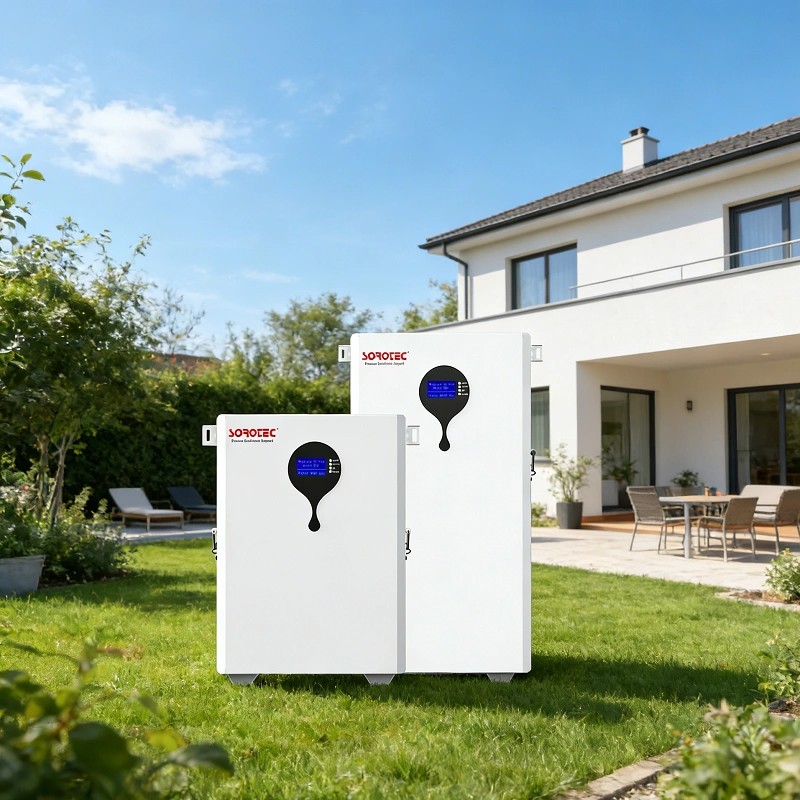
The SL-W/SL-R Series LiFePO₄ Battery covers several voltage and capacity combinations, from 2.56kWh to 15.36kWh.
| Nominal Voltage | Capacity | Calculation | Nominal Energy |
|---|---|---|---|
| 25.6V | 100Ah | 25.6 × 100 | 2.56kWh |
| 48V | 100Ah | 48 × 100 | 4.80kWh |
| 51.2V | 100Ah | 51.2 × 100 | 5.12kWh |
| 51.2V | 300Ah | 51.2 × 300 | 15.36kWh |
Three 51.2V 100Ah modules can match the nominal 15.36kWh of one 51.2V 300Ah unit. Even so, the electrical layout, number of control boards, and service method remain different.
Usable Energy and Daily Loads
Nominal energy is not the same as usable energy. Inverter loss, reserve settings, temperature, cable resistance, and discharge current all reduce runtime. A 15.36kWh bank will not feed a steady 1kW load for the full 15.36 hours.
A daily load record tells you more than an appliance list. Refrigerators cycle, pumps have starting surges, and air conditioners change their draw as the room warms or cools.
Is One 300Ah Battery the Cleaner Installation?
For many homes, one large unit gives a neater result, with fewer cabinets, cable runs, and service points. In a small utility room, spare wall space disappears quickly once breakers and pipework are fitted.
Fewer Connections and Protection Parts
A single 300Ah LiFePO4 Battery usually needs one main positive cable, one main negative cable, one communication link, and one main protection path. A three module bank often needs individual cables, matched protection, a shared busbar, and closer attention to current balance.
| 51.2V System Design | One 300Ah Unit | Three 100Ah Modules |
|---|---|---|
| Nominal energy | 15.36kWh | 15.36kWh total |
| Battery cabinets | 1 | 3 |
| Battery-level BMS units | 1 | 3 |
| Typical DC cable pairs | 1 | 3 |
| Expansion step | Large | Smaller |
| Battery fault impact | Whole bank may stop | Partial operation may remain* |
That final row depends on approved parallel use, correct isolation, suitable inverter settings, and the type of fault. Several cabinets do not create automatic redundancy.
One Display and One Battery Management System
The larger unit gives you one battery management system to watch. Protection covers overcharge, over discharge, overcurrent, short circuit, and unusual temperature. The LCD shows state of charge, voltage, current, and temperature, while CAN, RS485, and RS232 ports support compatible equipment.
Communication still needs checking before purchase. Two products may use the same socket but different software instructions, which is a small detail until commissioning stops for half a day.
When Do Several 100Ah Modules Make More Sense?
Smaller modules suit uncertain future demand, staged budgets, awkward access, and easier replacement.
Gradual Capacity Growth
A modular bank lets you begin with 5.12kWh and add capacity later when approved parallel operation is available. This suits homes that may add air conditioning or more solar panels.
Batteries should match in model, voltage, firmware, cable length, and state of charge. Age matters too, since a new module beside a heavily used one may not share current evenly.
Partial Redundancy and Easier Service
If one 100Ah module enters protection mode, the other modules may continue feeding essential loads. A single 300Ah battery has no battery level fallback if its own management system shuts down.
Smaller units move more easily through narrow stairs and doors. The 300Ah version gives you a cleaner wall, but it needs stronger support and enough service space.
Which Layout Gives Better Power and Efficiency?
Capacity tells you how long a battery may run. Current tells you what it can run at one moment. The SL-W/SL-R range lists model dependent continuous discharge ratings of 100A or 200A, so battery capacity alone should never decide inverter size.
Current Limits and Inverter Demand
At 51.2V, 100A represents about 5.12kW of DC power, while 200A represents about 10.24kW. These are DC calculations, not final AC output figures. Inverter efficiency, cable size, temperature, and protection settings still matter.
A large LiFePO4 Battery performs well when its internal current limit suits the inverter and the heaviest loads. Several smaller modules may divide current across more than one battery management system, but only when parallel use is permitted and the wiring is balanced.
Cable Balance and Communication
Parallel batteries should use equal length conductors of the same size and a suitable common busbar. Poor balance can make one module carry more current and age faster.
The inverter also needs the correct voltage range, charge setting, discharge limit, and communication method. A sound LiFePO4 Battery can still behave badly when the inverter profile is wrong.
Which Choice Offers Better Lifetime Value?
The battery price is only one part of the bill. Add breakers, fuses, cables, busbars, brackets, labor, testing, and service. One 300Ah unit may use fewer parts, while three 100Ah modules allow smaller capacity steps and individual replacement.
The listed specification gives more than 6000 cycles at 100 percent depth of discharge under test conditions of 0.2C and 25°C, with a design life above ten years. Those figures are useful, though heat, wrong voltage settings, loose terminals, and frequent high current use can shorten working life.
Several real battery and inverter project examples can help you notice practical questions that a product sheet may miss, especially around cable routing, communication, and load behavior.
Why Consider This Series for Your Solar Project?
The SL-W/SL-R Series suits indoor, wall mounted storage where buyers need several voltage and capacity choices within one product family. Its IP20 rating points to a clean garage, utility room, or protected electrical area, not an exposed outdoor wall. The front display also makes routine checks easier.
For a stable load profile, one 300Ah unit is often the tidier choice. For gradual expansion, easier handling, or partial redundancy, several 100Ah modules may suit you better. The answer comes from usable kilowatt hours, inverter current, solar recharge capacity, cable layout, and service plans.
Before ordering, ask for a battery bank diagram, inverter compatibility check, cable size guidance, parallel connection rules, and after sales procedure. The technical support team can then confirm whether one large LiFePO4 Battery or several smaller modules make more sense for your project.
FAQ
Q: Is one 300Ah battery exactly equal to three 100Ah batteries?
A: They can provide the same nominal energy when voltage is equal, but the systems differ in wiring, protection, current sharing, service access, redundancy, and future expansion.
Q: Can three 100Ah batteries be connected in parallel?
A: Yes, but only when the exact model allows parallel operation. Use matched batteries, equal length cables, suitable busbars, individual protection, compatible firmware, and approved inverter settings.
Q: Which LiFePO4 Battery size is better for home solar?
A: Choose 100Ah modules when you value gradual expansion, easier handling, or partial redundancy. Choose 300Ah when your load is known and you prefer fewer cables, one battery management system, and a cleaner installation.