

Finding out the real burden a 5kVA UPS can manage often puzzles site overseers and home owners in equal measure, since the “5kVA” mark shows the seeming power, yet it fails to reveal the full picture on how many servers, cooling devices, or factory machines can operate together amid a power outage. To ensure your key setups keep going, one must examine the link between various power measures and the real bounds of the battery hold.
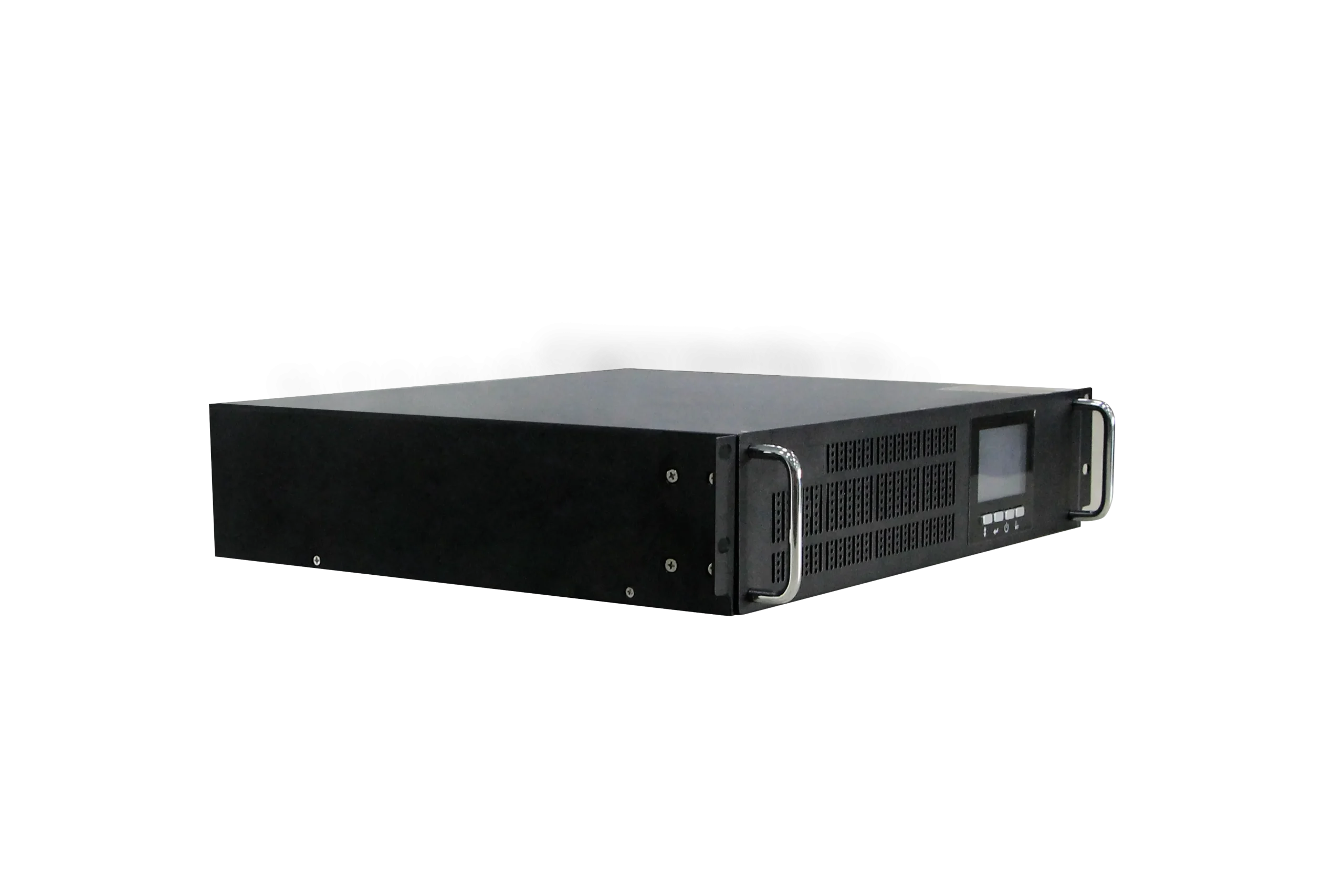
What Factors Determine the Load Capacity of a 5kVA UPS?
Prior to linking every item of equipment in the workplace, it proves essential to grasp that power exists in two forms, namely real and seeming, for a 5kVA mark sets an upper limit for the overall electric flow the setup backs, although the true task performed gets gauged in Watts. Working out this matter precisely avoids the unwelcome unit cutoff precisely when the grid drops out.
Total Wattage and Apparent Power Correlation
The divide between kVA and Watts arises from the Power Factor (PF), which typically spans from 0.7 to 1.0 in current devices, so if a 5kVA UPS holds a power factor of 0.9, it practically backs 4,500 Watts of true power. It amounts to an error to suppose that a 5kVA unit manages a 5,000-Watt burden, because such an assumption will probably set off an overload warning the moment the inverter steps in.
Impact of Appliance Surge Power
Figuring constant power proves straightforward, but surge power stands as the true setup breaker, as inductive burdens like water pumps, air handlers, or sizable motors draw far more current when they initially start up than in their steady run, and thus if one’s 5kVA unit backs a 0.5kW pump, that pump could well require 2.5kW for a brief instant at launch, which might readily activate a modest UPS.
Necessary Safety Margin for Expansion
Operating a UPS at its utmost edge forms a path to device wear and excess warmth, yet most field experts advise retaining a “reserve” or safety allowance of about 10% to 20% of the full size, which this added room covers upcoming device inclusions and stops the setup from getting overly warm amid extended warm-season cutoffs.
How Do SOROTEC Products Support Industrial Load Requirements?
As the extent of power demand shifts past a handful of computers and enters the domain of plants or distant locations, basic home devices simply fall short, whereas SOROTEC has crafted ample-size answers that view energy hold as a sturdy framework instead of merely a standby battery. These setups stand constructed to manage the demanding rounds needed by today’s industry.
High-Performance SES Outdoor Cabinet Systems
The SES Integrated Energy Storage System counts as a sturdy unit made for outdoor conditions, featuring an IP55 grade that shields dust and moisture from the delicate circuits, with a size reaching from 100kWh to 215kWh, so these enclosures can sustain large burdens for hours without stop, well past what a compact rack-mount UPS could possibly achieve. They suit spots where heat varies from -40°C to 55°C especially well.
Versatile On & Off Grid MPGS Series
For setups blending solar power and grid supply, the MPGS Series (50-600kW) functions as the main center for power shift, and one of its prime features lies in the very quick switch period under 10ms, which proves fast enough that even delicate medical devices or data hub servers avoid restarting when the grid fails. It basically converts an unsteady power origin into a firm energy provision.
Intelligent Integrated Battery Management
Handling such vast burdens calls for more than simple power; it demands smarts, since every SOROTEC setup includes inbuilt Battery Management Systems (BMS) and Energy Management Systems (EMS) that oversee each cell. These aids follow voltage and temperature live, ensuring no lone battery group faces overuse or serious imbalance.
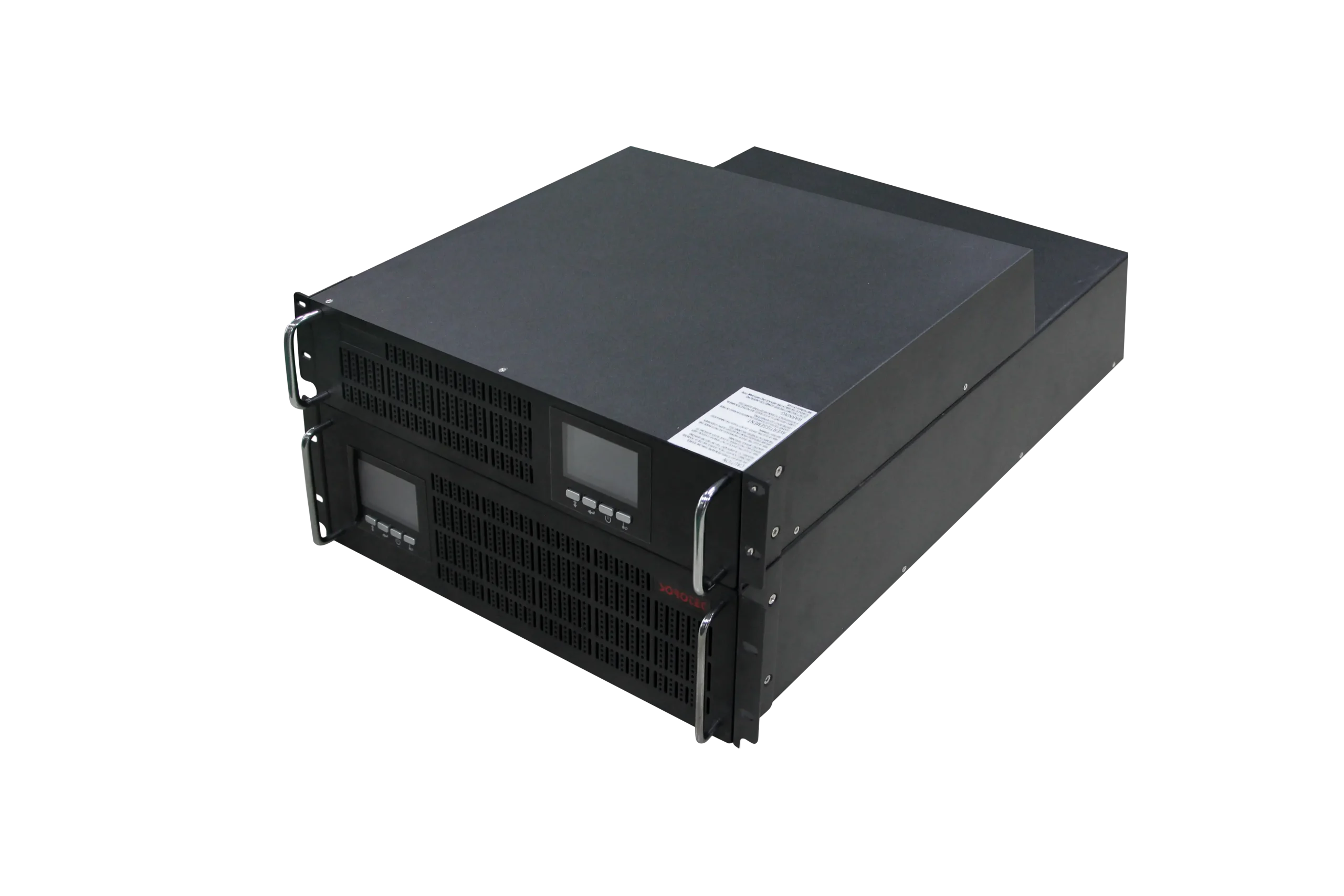
Why Is Battery Selection Critical for UPS Load Capacity?
Although the inverter sets how much power one can draw at a given time, the battery sets how long that flow endures, and picking the incorrect battery kind can result in a setup that ends prematurely or lacks the peak flow required for weighty machines. The move to Lithium tech has altered the figures for most site overseers.
Energy Density and Cycle Life
Lithium-ion batteries, especially the Lithium Iron Phosphate (LiFePO4) units in the SES series, offer a clear edge in energy density, as they store considerably more power in a smaller, lighter case than traditional lead-acid batteries. Moreover, they endure over 3,000 to 6,000 charge rounds, so they will probably survive longer than the UPS circuits proper.
Discharge Depth and Efficiency Limits
A major untruth in the battery field concerns the “marked size” of lead-acid batteries, for draining a lead-acid battery beyond 50% essentially ruins it, but Lithium batteries can release to almost 100% without issue. Thus a 100Ah Lithium battery truly delivers more workable energy than a 150Ah lead-acid counterpart.
Voltage Matching with the Inverter
Effectiveness depends or fails on voltage alignment, since if one’s inverter requires 48V and the battery array sits wrongly set, one loses a large share of energy to warmth in the shift process. Setups like SOROTEC’s get built so the battery array and inverter use the same electric terms, which maintains smooth energy passage with little loss.
Table 1: Real-World Battery Type Comparison
| Feature | Flat Plate Lead-Acid | Tubular Lead-Acid | Lithium-Ion (LiFePO4) |
| Usable Capacity | 50% | 50-60% | 90-100% |
| Cycle Life | 300 – 500 | 500 – 1,200 | 3,000 – 6,000+ |
| Lifespan | 2 – 5 Years | 5 – 8 Years | 10 – 15+ Years |
| Maintenance | Distilled Water Refills | Frequent Topping | Zero Maintenance |
What Are the Application Scenarios for SOROTEC ESS Solutions?
The manner in which one employs a 5kVA UPS or bigger hold setup hinges fully on the nearby energy trade and framework, as some individuals merely aim to maintain lighting, while others seek to trim their power bill by thousands monthly. SOROTEC devices offer enough flexibility to fill both parts.
Peak Shaving and Valley Filling
In numerous urban areas, power costs little at 2 AM and much at 2 PM, so business users employ SOROTEC setups to absorb low-cost power overnight and then drive their weighty machines from the batteries amid costly daytime peaks. This “peak shaving” can lower a plant’s demand fees by 30% to 50% without altering any output timetable.
Emergency Backup for Critical Infrastructure
When power cuts in a medical center or data hub, “adequate” falls short, yet SOROTEC complete setups serve as a full-day guard net, assuming the burden so rapidly that computers show no blink. Since these units combine the inverter, battery, and cooling in one case, fewer wires exist that could break in a crisis.
Remote and Off-Grid Power Support
For isles, extract camps, or hilltop signal towers, the grid lacks entirely, and these places depend on SOROTEC’s outdoor enclosures to oversee solar setups and standby generators. The setups can even carry out a “black start,” which means they can restart a wholly inactive power network solely from the stored energy in the battery arrays.
Table 2: UPS and Inverter Performance Benchmarks
| System Type | Typical Switching Time | Best Use Case | Maintenance Level |
| Standard Inverter | 20ms – 50ms | Home Lighting / Fans | High (Water Top-up) |
| Online UPS | 0ms (Instant) | Servers / Medical Gear | Low |
| SOROTEC MPGS | < 10ms | Industrial / Microgrids | Automated |
| Hybrid ESS | < 10ms | Solar + Grid Arbitrage | Minimal |
How Can Users Maintain Optimal System Load Performance?
Even the finest designed power setup will sooner or later slow if left unchecked for years, although upkeep need not form a constant task, but some care extends far in assuring one’s 5kVA burden remains steady. It centers mainly on tracking data and keeping the tangible parts clear.
Regular Inspection of Electrical Connections
With time, the ongoing warming and cooling of cables can make ends come loose, and a loose link builds resistance, which builds warmth, which can ultimately cause a blaze or setup breakdown. A simple review to secure fasteners and seek worn covering yearly can avert 90% of usual setup issues.
Monitoring Through the EMS Platform
One requires no engineering skill to oversee power any longer, for via the Smart-EMS cloud base, one can view setup condition from a mobile device amid relaxation. If a given battery part heats excessively or if solar panels gather dirt, the setup sends notice prior to it turning a true issue.
Temperature and Liquid Cooling Management
Warmth ranks as the chief foe of battery span, since SOROTEC’s bigger units frequently use fluid cooling or progressed air flow to hold cells at their ideal range near 15-20°C. Clearing the space around outdoor enclosures of plants and waste aids fans to operate and guarantees burden size does not fall in a warmth spell.
FAQ
Q1: Can I run my 2-ton air conditioner on a 5kVA UPS?
A: In principle, a 2-ton AC could operate, but its launch surge often reaches 3 to 5 times its steady wattage, so one must verify if the UPS manages that first “pull” or consider a SOROTEC unit with a strong peak-burden mark.
Q2: How long will a 5kVA UPS run my office?
A: This hinges completely on the battery array, not the UPS size, and if one draws a 2,000W burden with a 10kWh battery array, one gains roughly 4 to 5 hours of run, presuming batteries stay sound.
Q3: Is it better to use two small UPS units or one big SOROTEC ESS?
A: For factory or key burdens, a lone combined setup like the SES series generally proves superior because the BMS and EMS can direct all as a unified “mind”. It cuts failure spots and simplifies tracking via a single program.