

You check your phone app, and the Solar Battery is sitting at just 34 percent. It has been perfectly sunny all morning, so why is it taking so long? It gets incredibly frustrating when your off-grid setup takes forever to fill up. Before you start climbing onto the roof to tear out the wiring, you need to look at the hardware processing the power.
If you are tired of dealing with equipment that drops the ball during peak production, you need hardware built for real industrial abuse. That is where SOROTEC steps in. Since 2006, they have quietly become a heavyweight in power electronics and smart new energy. They do not just assemble boxes. They engineer complete smart city power systems and robust off-grid and on-grid inverters that handle the messy reality of unstable grids without the usual setup nightmares. They focus on giving you reliable, heavy-duty tech that gets the job done right.
Common Causes of Slow Solar Battery Charging
A solar system that takes forever to charge usually suffers from physical bottlenecks. Power needs a clear path from the roof to the storage bank.
Poor Solar Panel Placement and Shading
Even minor shading from nearby trees or thick dust accumulation slashes the DC voltage reaching your inverter. A weak input naturally results in a painfully slow fill. If the panels cannot generate high voltage, the charging current drops significantly.
Degraded or Incompatible Chemistry
Old lead acid setups develop high internal resistance over time. The system is forced to feed them at a trickle to prevent boiling the acid. Also, mixing different battery ages forces the entire bank to charge at the speed of the weakest cell.
Low-Capacity Inverter Bottlenecks
The inverter acts as the main gatekeeper. You sometimes see a massive storage bank connected to an older unit with a strict 30A limit. It is literally like trying to fill a swimming pool with a garden hose. A small controller will bottleneck the whole operation, regardless of how many panels are on your roof.
| Battery Chemistry | Average Charge Efficiency | Depth of Discharge Limit | Typical Lifespan |
|---|---|---|---|
| Lithium Iron Phosphate | 95% to 98% | Up to 100% | 6000 cycles |
| Traditional Lead Acid | 70% to 80% | Roughly 50% | 500 to 800 cycles |
Fix 1: Upgrading to High-Current Inverter Technology
Pushing past a charging bottleneck requires hardware built to handle massive amounts of current simultaneously.
Importance of Maximum Charging Current
You need to look at the maximum charging amps. Upgrading to a system that handles up to 100A or 120A drastically cuts down the hours required to fill a home energy storage bank. Higher amps mean you capture more power during the short peak sunlight hours.
AC and Solar Charge Integration
A great fix is using hybrid charging. Modern hardware pulls from the solar array and the main grid at the exact same time. This combined approach saves the day during short winter afternoons when the sun drops early and you need a full charge before nightfall.
Batteryless Operation for Immediate Power
A truly advanced unit does not even make you wait. Some modern systems bypass the storage entirely. You run heavy loads straight from the sun, while slowly pushing current into your Solar Battery in the background. This keeps your appliances running immediately without waiting for a full charge.
| Inverter Type | Max Solar Charge Current | Typical Charging Speed | Communication Ports |
|---|---|---|---|
| Older PWM Models | 30A to 50A | Slow | None |
| Modern MPPT Hardware | Up to 120A | Fast | RS485 and CAN |
Fix 2: Establishing Proper BMS Communication
Fast charging requires constant, clear communication between the main controller and the storage pack.
Lithium Protection Mechanisms
Lithium cells throttle their intake if they feel unsafe. Without a clear data signal, the pack limits the incoming amps to protect itself from thermal runaway or overcharging. It acts out of self preservation, which looks like a slow charge to you.
RS485 and CAN Port Requirements
You need the right data cables. RS485 and CAN ports let the inverter talk directly to the pack. They agree on the absolute fastest safe speed. Without this physical connection, the hardware relies on blind voltage readings, which are notoriously inaccurate.
Prevention of Charge Throttling
Once the Battery Management System accurately reports its internal temperature and cell balance, the inverter unleashes maximum amps. There are no sudden drops or unexplained throttling because both devices are operating in total sync.
Fix 3: Implementing Smart Monitoring and Updates
Hardware is only as good as the software running it. Tracking data and updating firmware resolves hidden charging bugs you cannot see with the naked eye.
Real-Time Wi-Fi System Tracking
Connecting your setup to Wi-Fi lets you see the exact charging curve. You can pinpoint the exact minute your Solar Battery stops taking a charge. This data helps you figure out if a passing cloud or a system error caused the slowdown.
Over-The-Air Software Upgrades
Manufacturers release firmware patches to fix bad charging algorithms. Having an over the air software upgrade feature keeps the charging logic sharp. You get the latest fixes pushed directly to your machine without paying a technician to visit your house.
Identification of Performance Bottlenecks
Smart monitoring gives you the diagnostic power you need. It tells you clearly if the slow charge comes from a bad panel string, a sudden grid voltage drop, or a faulty cell block. You stop guessing and fix the actual broken component.
The REVO VM II PRO for Optimal Speed
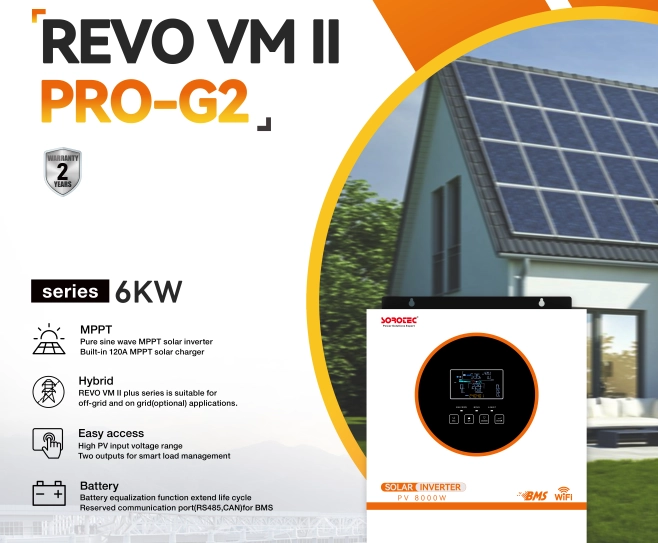
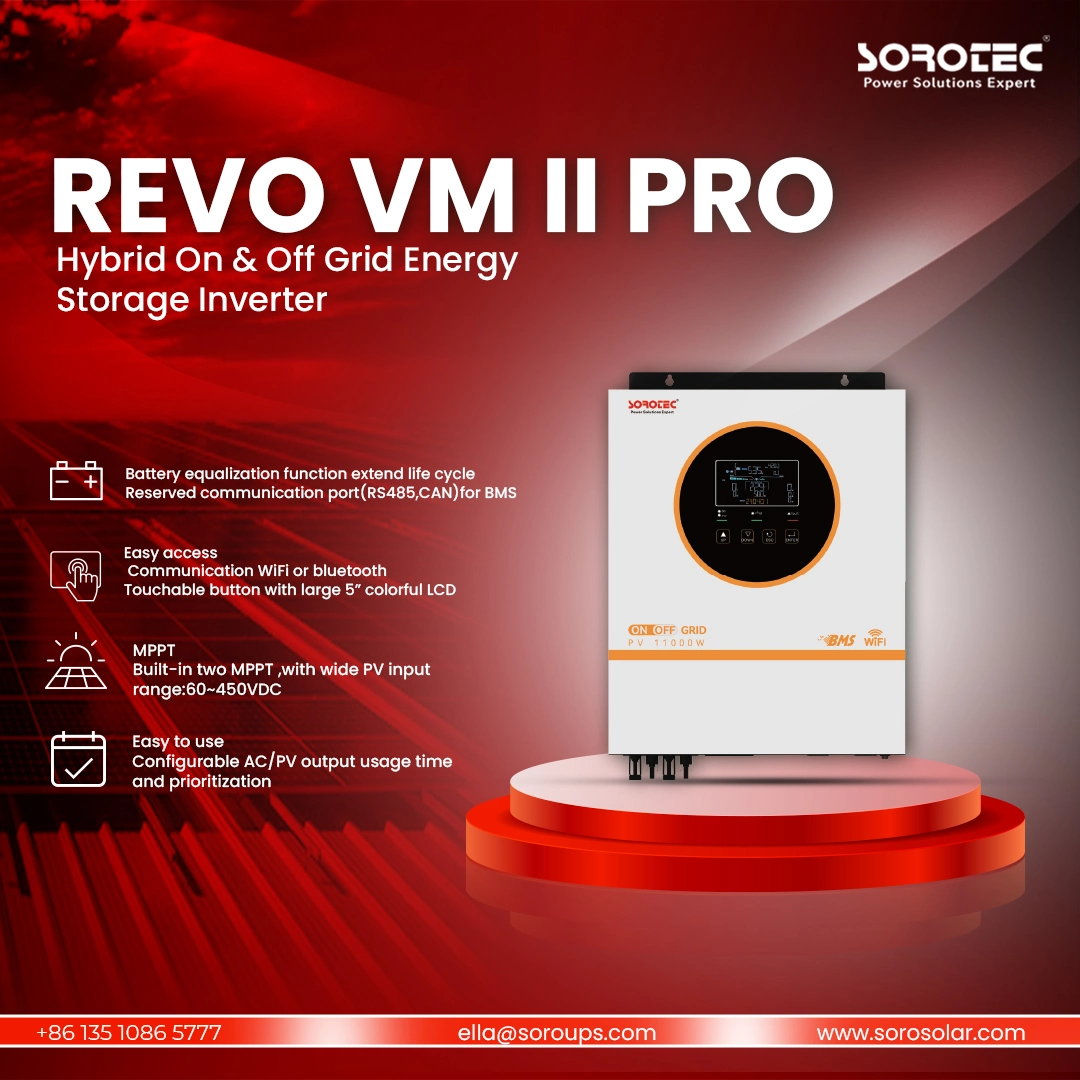
If you want to solve slow charging permanently, you need an all in one answer. The REVO VM II PRO incorporates all the fixes discussed above into a single, highly efficient unit.
Touch-Button Interface for Easy Management
It features a sleek touch button design and a massive RGB display. The intuitive screen makes setting up the maximum charging parameters incredibly straightforward. You do not need an engineering degree to navigate the menus and crank up the charging amps.
High-Current Specifications
This machine delivers hard numbers. The 4 kW and 6 kW models handle a massive 120A maximum solar charge and a 100A maximum AC charge. It completely eliminates the slow charge bottleneck. It also includes built in RS485 and CAN ports for flawless lithium communication.
Flexible Off-Grid and On-Grid Capability
You get total operational flexibility. It runs perfectly without storage attached, supports optional grid connected functions, and features built in Wi-Fi for remote monitoring and simple software upgrades. It adapts to exactly how you want to manage your power.
Partner for Reliable Solar Solutions
Stop dealing with systems that take all day to fill up. Check out the Case Study section on the website. You will see that their inverters and energy setups are successfully running in tough environments worldwide, providing stable, fast charging power day after day.
Getting your Solar Battery to charge fast takes the right hardware. Do not settle for weak controllers and blind battery connections. Read more about their decades of manufacturing experience. Since 2006, they have proven they build equipment that actually lasts through harsh conditions.
Take action today. Just get in touch with the technical service team. They will help you with personalized system sizing, custom project quotes, and expert advice on fixing your current setup.
FAQ
Q: What physical issues prevent my Solar Battery from charging quickly?
A: Dust accumulation and minor tree shading slash the DC voltage reaching your inverter. If the input voltage drops too low, the system simply cannot push enough amps into the storage cells.
Q: Can I fix a slow Solar Battery without replacing my entire system?
A: Yes, you often just need to upgrade the inverter. Connecting an older 30A controller to a massive storage bank takes forever. Upgrading to a 120A MPPT unit drastically cuts your charge time.
Q: Why does my lithium pack suddenly stop charging at 80 percent?
A: This is usually a data communication failure. If the inverter and the battery management system cannot talk via RS485 or CAN ports, the pack limits the incoming current to protect itself from overheating.