

The lights suddenly flicker, and then the whole house goes completely dark. A blackout in 2026 is no longer just a minor annoyance; it quickly turns into a real problem when your groceries start thawing and your phone battery drops to zero.
When facing an unexpected grid failure, a properly sized LiFePO4 Battery setup acts as your strongest defense. A lot of folks tend to panic right after a long blackout. They rush online and buy the most massive backup power box they can find, thinking bigger is automatically better. That approach simply wastes a ton of money. You really only need enough stored electricity to comfortably pass through a standard eight-hour outage without sweating in the dark. Let us look at the actual math involved in picking a residential battery, skipping the heavy sales talk and focusing on the hardware details that actually matter.
Assessing Your Essential Energy Requirements During an Outage
That gives you an idea of where to start without breaking out the calculator or pulling out your pen. First take a look around your home to see what’s needed to get through the night. Of course, those big items like a heavy clothes dryer or central air conditioning will not function in a power outage unless you have a huge solar array in your yard to supply the electricity. Therefore your concern should be to ensure you have appliances to maintain the perishable food in your fridge and freezer to prevent spoilage, and provide adequate light in the rooms as well as a means of communication such as a telephone.
Refrigerator and Kitchen Appliance Consumption
The kitchen fridge is obviously your biggest priority. A standard modern refrigerator hums along using about 150 watts of continuous power. But there is a catch. When the internal compressor kicks on to cool things down, it demands a sharp, sudden spike of energy for a few seconds. If you try to run a microwave to heat up some dinner, be prepared for a massive power drain, even if the appliance only runs for three minutes. You have to account for these heavy kitchen loads right from the start.
Lighting and Communication Device Loads
Keeping the house well-lit is fairly easy these days thanks to modern technology. LED bulbs draw remarkably little electricity. Having five standard LED bulbs turned on at the same time will barely pull 50 watts in total. Keeping your internet router and phone chargers active is just as important. Cellular towers often get congested or lose power themselves during regional blackouts. Running a home Wi-Fi router uses maybe 15 watts, which is a tiny price to pay to keep checking the local news updates.
HVAC and Medical Equipment Considerations
Medical equipment bypasses every other priority on your list. If a family member sleeps with a CPAP machine, that specific device needs guaranteed power. Most medical breathers consume between 40 and 60 watts. As for staying cool, forget the central AC. A simple floor fan running on 40 watts will keep the air moving without completely draining your energy reserve in two hours.
| Emergency Appliance | Average Running Wattage | 8-Hour Total Consumption (Wh) |
|---|---|---|
| Emergency LED Lights (x5) | 50 W | 400 |
| Home Wi-Fi Router | 15 W | 120 |
| Standard Refrigerator | 150 W | 1,200 |
| Smart Phone Charger | 10 W | 80 |
| CPAP Medical Machine | 40 W | 320 |
| Total Real-World Load | 265 W | 2,120 (2.12 kWh) |
Calculating the Exact kWh Required for an 8-Hour Outage
Looking at a basic emergency load, you might calculate a total need of roughly 2.12 kWh for an eight-hour stretch. But battery chemistry and electrical physics are rarely that straightforward. Buying a battery that exactly matches your raw calculation is a fast way to end up sitting in the dark again by hour six. You need specific safety buffers to keep the system healthy.
Peak Wattage vs. Continuous Wattage
Continuous wattage is the steady stream of electricity your appliances need to keep running normally. Peak wattage is the sudden, heavy burst required to turn them on. Think of it like pushing a heavy car; getting it rolling takes way more physical effort than keeping it moving. Your LiFePO4 Battery must be capable of handling these brief, high-current surges without tripping its own internal safety breakers.
Depth of Discharge Margin
Treating a battery exactly like a gas tank and running it to absolute zero is a terrible idea. Older batteries would literally destroy themselves if you drained them completely dry. While modern lithium technology can safely handle deep discharges, constantly pushing the cells to the absolute limit causes unnecessary wear. Leaving a reserve buffer of ten to twenty percent dramatically extends the working lifespan of the unit.
Solar Inverter Efficiency Loss
Batteries store DC power, but your household appliances plug into AC power. The device that changes DC to AC is called an inverter. This conversion process is never perfectly clean, and some electricity naturally bleeds off as heat. If you touch an inverter that has been running for a few hours, it will feel pretty warm. Most inverters operate at around ninety percent efficiency. To make up for this ten percent loss, you take your 2.12 kWh need, factor in the inverter tax, add a small safety cushion, and aim for a capacity closer to 2.7 kWh.
Why LiFePO4 Battery Technology Beats Traditional Options
The materials packed inside the battery casing make a huge difference. Heavy lead-acid batteries are essentially an outdated nightmare for home storage. They are incredibly heavy, contain hazardous liquids, and suffer from terrible voltage drop under heavy loads. Lithium iron phosphate has essentially taken over the residential backup market for a few very practical reasons.
Superior Thermal Stability and Safety
Safety is always the biggest concern when installing heavy electrical equipment inside a residential property. Nobody wants a potential fire hazard sitting in their basement or utility closet. These specific lithium cells handle extreme temperature shifts very well. They do not release dangerous gasses, and they physically will not catch fire even if the outer casing gets severely damaged.
6000-Cycle Lifespan and Low Degradation
Standard lead-acid blocks tend to die completely after three to five hundred discharge cycles. A premium LiFePO4 Battery is rated for thousands of heavy cycles. Even if your local grid is terrible and you rely on the battery every single day, the internal cells will retain the vast majority of their original holding capacity after a decade of hard use.
Maximum Usable Capacity Advantage
Older technology suffered from a frustrating problem where you could only safely use half of the power you actually paid for. If you bought a 5 kWh lead battery, you could only use 2.5 kWh before causing damage. The flat discharge curve of lithium iron phosphate means you get stable, reliable voltage right up until the unit is nearly empty.
| Key Battery Metric | High-Grade LiFePO4 | Standard Lead-Acid |
|---|---|---|
| Usable Depth of Discharge | 90% – 100% | 50% |
| Expected Lifespan (Cycles) | 6,000+ | 300 – 500 |
| Round-Trip Efficiency | 95% | 75% – 80% |
Evaluating the SL-W/SL-R Series for Home Solar Storage
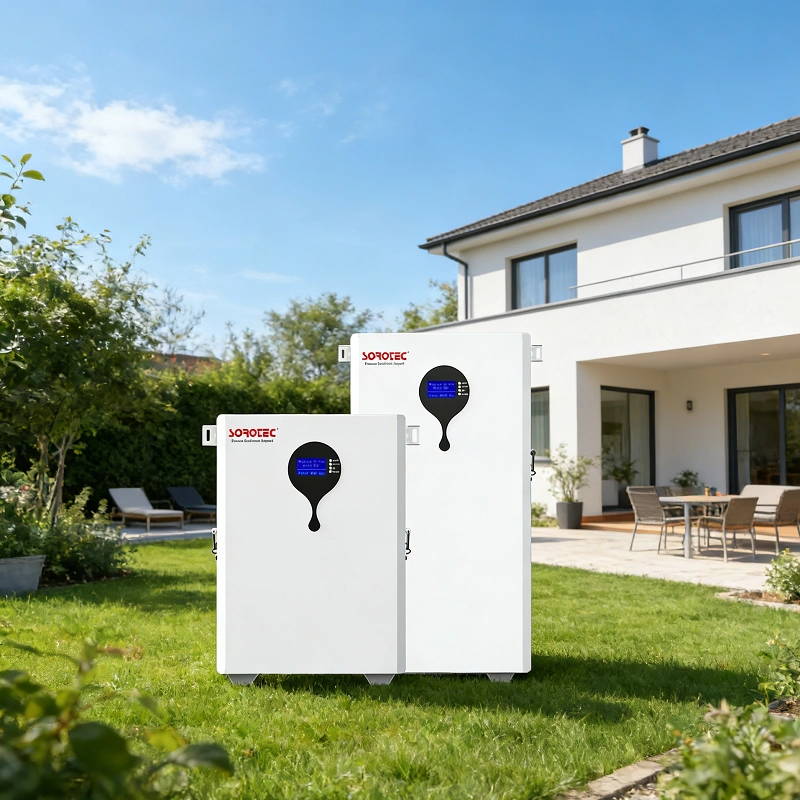
Finding hardware that actually meets these strict technical requirements takes some digging. The SL-W/SL-R Series LiFePO₄ Battery is a solid example of a unit built exactly for these demanding residential setups. It handles the complicated math we just discussed without any major performance bottlenecks.
Modular Scalability from 100Ah to 300Ah
Every single house consumes electricity differently. This hardware lineup lets you select a capacity that actually matches your 2.7 kWh calculations. The design allows you to start with one basic module today. If you buy an electric vehicle later or add more heavy appliances to your kitchen, you can just wire additional units into the exact same network.
Advanced BMS and Hardware Protection
The physical lithium cells are managed by an onboard computer called a Battery Management System. Think of the BMS as an aggressive traffic cop. It constantly monitors the temperature and voltage of every single cell. It prevents the unit from charging too fast and automatically stops power flow if it detects a short circuit, completely removing the need for manual maintenance.
Rack-Mounted and Wall-Mounted Flexibility
Finding space for electrical gear in a normal house is always frustrating because garages get cluttered fast. The wall-mounted option keeps the hardware up off the floor and away from potential flood water. If a property requires a massive amount of backup power, the rack design stacks multiple heavy modules into a single vertical tower to save valuable floor space.
Real-World Outage Resilience and Long-Term ROI
Spending money on emergency power feels painful right up until the exact moment the grid actually fails. Then, it feels like the smartest purchase you ever made. A loud, dirty gas generator requires storing highly flammable fuel and dealing with terrible exhaust fumes that annoy the whole neighborhood. Checking out various global case studies shows how modern silent batteries handle long blackouts much better in real-world conditions.
10-Year Guaranteed Operational Lifespan
A lengthy warranty is the best indicator of hardware quality. Manufacturers do not offer ten years of guaranteed performance unless they are highly confident the components will survive. Spreading the initial purchase price over a decade of reliable operation pushes the actual cost per outage down to a very reasonable number.
Seamless Integration with Existing Solar Systems
Lots of homes already have solar panels sitting on the roof. Hooking a dedicated storage unit into that existing array allows you to capture surplus midday sunlight for free. When the neighborhood goes dark at night, the battery takes over the household electrical load so quickly that your kitchen lights do not even flicker.
Proven Global Field Performance
These units are not just gently tested in comfortable laboratories. They are deployed in areas dealing with freezing winter storms and places suffering from aggressive summer heatwaves. Field data consistently shows that the internal components survive nasty environmental conditions without failing early.
Secure Your Power Independence with SOROTEC Solutions
Dealing with home electricity means you really have to trust the manufacturer behind the equipment. SOROTEC has a long history of building heavy-duty power gear for markets all over the world. They operate dedicated factory lines that focus entirely on getting residential and commercial energy storage right.
You can read up on their specific manufacturing background on their about page. Their engineering teams manage the entire process, from putting the cells together to providing actual technical help after the sale. Installing a proper LiFePO4 Battery today means you will not have to panic the next time the power lines come down in your city.
Comprehensive Solar Storage Consultation
Sizing a power system by yourself can be intimidating. If your house has strange wiring or unusual heavy loads, getting a custom calculation from a specialist stops you from buying the wrong gear and wasting money.
Professional OEM and Technical Services
The factory does a lot more than just sell single boxes to homeowners. They handle deep technical customization for larger building projects, tweaking the internal engineering so the final hardware fits specific commercial or heavy residential requirements.
Direct Contact and Technical Support
Getting ready to upgrade your home grid before the next storm season hits? Reaching out directly to their technical support gives you access to exact pricing details, hardware manuals, and specific installation advice for your property layout.
FAQs
Q: Can a single LiFePO4 Battery run a home air conditioner during an 8-hour outage?
A: A small window AC unit pulling around 500 watts can run for several hours on a 5 kWh pack. However, massive central AC systems draw way too much power and will empty a standard home battery very quickly. You should stick to fans during an emergency.
Q: How long does it take to recharge a home backup battery once the power comes back?
A: It really depends on your charger or your solar setup. Most modern systems can fully recharge a standard 100Ah or 200Ah module within two to four hours using regular grid power when it turns back on.
Q: Do these residential storage batteries require annual maintenance or fluid refills?
A: No, these units are completely sealed and maintenance-free. The internal computer handles all the cell balancing automatically, so you never need to open the case or service the hardware yourself.