

Selecting a reliable grid-tied solar inverter manufacturer requires model-specific evidence of electrical fit, grid compliance, production control, delivery, and support. EPCs and commercial buyers need this evidence to manage commissioning and procurement risk.
With more than 20 years of solar-equipment experience, Sorotec is one due-diligence reference, but buyers should judge proposals by documents, not general marketing claims.
What Does Your Commercial Grid-Tied Solar Project Require From A Manufacturer?
Before contacting suppliers, define electrical, environmental, and commercial requirements so a broadly similar but unsuitable product is easier to reject.
Define The Full Electrical, Operational, And Commercial Project Application
Document the required output, phase configuration, grid characteristics, installation location, and operating profile. Commercial rooftops, industrial facilities, utility-connected plants, and storage-supported systems may require different inverter architectures.
Common project sizes should not be treated as fixed selection rules. Build the request for proposal around the approved electrical design and site documentation.
| Project factor | Information to define | Evidence to request |
| Electrical design | Output, phase, voltage, frequency | Datasheet and system diagram |
| Installation | Indoor or outdoor conditions, space | Manual and enclosure rating |
| Operation | Grid export, storage, backup loads | Operating-mode documentation |
| Expansion | Future capacity and communications | Approved architecture and compatibility data |
Clearly Separate Grid-Tied Operation From Hybrid Storage And Backup Functions
A grid-tied inverter operates according to the applicable grid connection requirements. A hybrid solar inverter may also manage batteries, backup loads, or multiple energy sources.
Require the supplier to document every proposed operating mode. A website category or product label is not enough. Review the current datasheet, manual, system diagram, and relevant grid-compliance documents before approving a model.
Identify Site Conditions, Installation Constraints, And Future Expansion Requirements
Check ambient conditions, enclosure protection, installation clearances, monitoring interfaces, and communication protocols. If the system may be expanded later, request a manufacturer-approved architecture showing compatible equipment.
Parallel operation must be verified for the exact model, firmware, accessories, and configuration. It is an optional, model-specific capability rather than a standard feature of every inverter.
Which Technical Evidence Should A Reliable Solar Inverter Manufacturer Provide?
Technical claims need current, model-specific documents; materials for a related family may not cover the purchase-order unit.
Verify Grid Compatibility, Protection Functions, And Applicable Compliance Evidence
Request documented voltage and frequency ranges, anti-islanding behavior, protection functions, and reconnection settings for the destination market. Confirm that declarations, certificates, and laboratory reports identify the exact model.
Where local approvals apply, verify their scope and validity with the relevant authority or a qualified project engineer.
Review the DC Design, MPPT Range, and Startup Conditions
Compare PV string voltages, temperature-adjusted limits, MPPT range, maximum input values, and startup voltage. Clipping is determined by the DC/AC relationship, not merely by high input voltage. A high-voltage inverter does not inherently prevent clipping.
Startup thresholds also require careful review. A higher threshold can delay startup during weak dawn irradiance or cause earlier shutdown near dusk compared with a lower-threshold system. Ask for engineering calculations and model-specific power curves.
Check Efficiency, Thermal Management, Environmental Ratings, And Monitoring Capabilities
Review efficiency data alongside thermal derating, cooling design, operating temperature, enclosure rating, and monitoring functions. The supplier should explain the conditions and methods used to obtain published performance figures.
| Technical claim | Supporting material | Key check |
| Efficiency | Datasheet and efficiency curve | Test conditions are stated |
| Temperature range | Manual and test documents | Derating behavior is disclosed |
| Monitoring | Protocol information | Interfaces suit the project |
| Protection | Model-specific documentation | Functions match grid requirements |
How Can Buyers Assess a Solar Inverter Manufacturer’s Factory Reliability?
A suitable model still creates risk when production, inspection, or service is poorly controlled. Factory assessment should connect claims with repeatable processes.
Examine Manufacturing Quality Control Processes And Product Traceability Records
Ask how the manufacturer manages incoming components, assembly stages, firmware versions, final inspections, and serial numbers. Each shipped unit should be traceable to the relevant production and testing records.
Useful supporting evidence includes factory audit reports, quality procedures, calibration records, inspection forms, and sample traceability documents.
Evaluate Documented Production Capacity, Delivery Capability, And Change Controls
Compare the forecast order volume with the supplier’s documented production plan. Review customization controls, packaging requirements, spare-parts arrangements, and proposed lead times.
Establish how component substitutions, engineering changes, and schedule delays will be communicated. Capacity and delivery claims should be supported by records rather than accepted at face value.
Confirm Warranty Coverage, Claim Procedures, And Technical Support Processes
Review the full written warranty, including coverage, exclusions, claim procedures, repair options, replacement policies, and spare-parts availability. Do not rely only on a summary in the commercial proposal.
Buyers should also confirm how installers and EPC teams receive commissioning support, troubleshooting guidance, training materials, and access to technical escalation.
How Should Commercial Buyers Compare Solar Inverter Supplier Proposals Fairly?
Apply one method to every proposal so missing documents, technical differences, and unsupported claims stay visible.
Build A Consistent Model-Specific Technical And Commercial Evidence Matrix
Record electrical fit, compliance, environmental protection, monitoring, documentation, warranty, lead time, and service. Classify each claim as verified, pending, or unsupported.
Keep the assessment model-specific. Products from the same solar inverter manufacturer may have different functions, environmental ratings, warranties, and approved applications.
Review Relevant Product Models As Documented, Model-Specific Proof Points
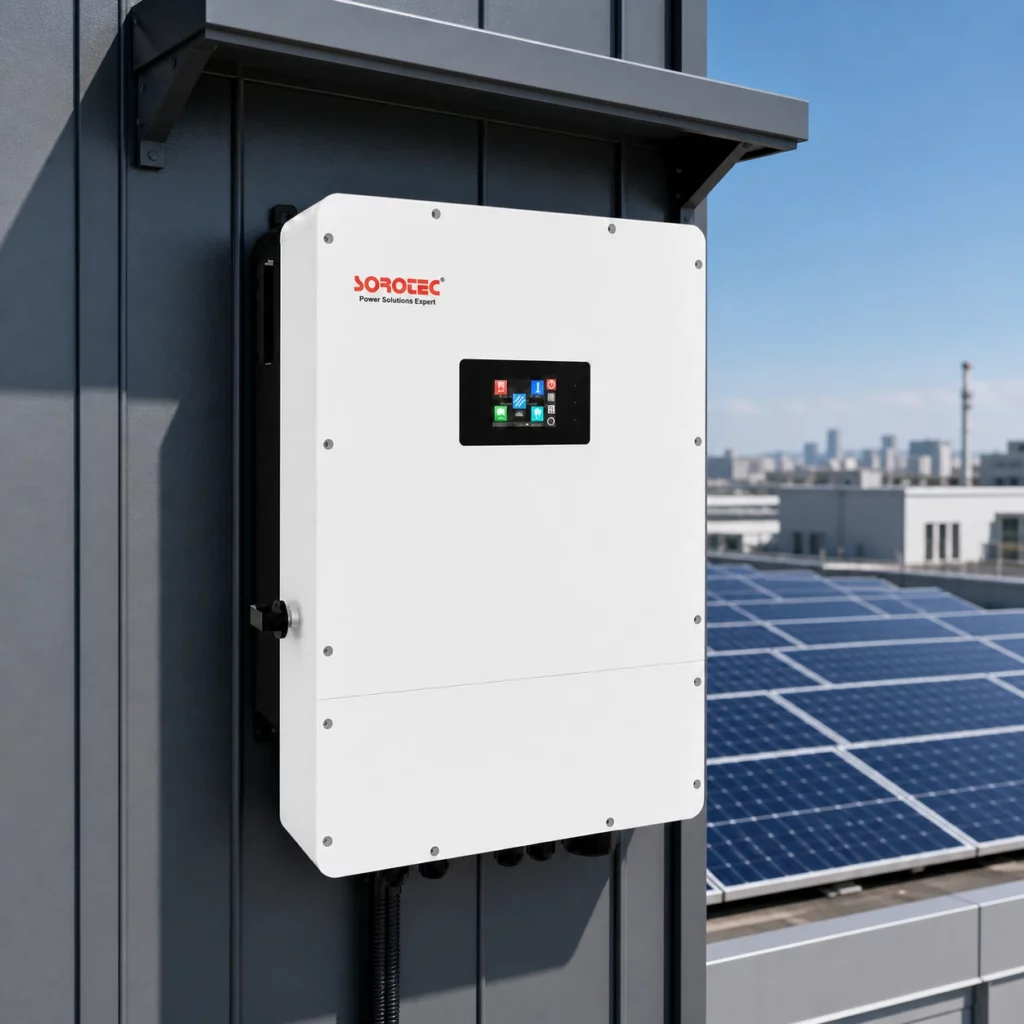
For commercial-scale assessment, the On & Grid MPGS Series 50-600KW describes MPPT functionality, UPS applications, built-in BMS and EMS, an LCD touch screen, peak-and-valley charging, and on-grid and off-grid solar use.
The Single-Phase IP66 REVO HES Hybrid Energy Storage Inverter 6/8/10kW is a separate hybrid example. Supported details include 6kW, 8kW, and 10kW options, single-phase operation, IP66 outdoor positioning, and a five-year manufacturer warranty. That warranty should not be generalized across other product lines.
Compare Total Lifecycle Value Instead Of Purchase Price Alone
Compare engineering, installation, commissioning, monitoring, maintenance, downtime, warranty handling, and spares. A lower price can raise lifecycle cost when documentation or service is weak.
Use qualitative comparisons unless financial and reliability data are verified.
What Should Commercial Buyers Confirm Before Placing A Solar Inverter Order?
Before volume procurement, convert promises into written, model-specific obligations and keep unresolved points visible.
Complete Model-Specific Technical, Compliance, And Documentation Due Diligence
Confirm the model, configuration, firmware, accessories, communication interfaces, manuals, certificates, and approved system design. Documents must correspond to the products and revisions stated in the purchase order.
Align Commercial Terms, Documentation, And Payments With Project Milestones
Define payment stages, production schedules, inspection rights, acceptance criteria, packaging, shipping documents, and delay procedures. Where practical, link payments and delivery milestones to verifiable documentation, inspections, or completed production stages.
Validate The Solar Inverter Supplier Before Full Commercial Deployment
Depending on the project’s scale and risk, consider a factory audit, sample evaluation, third-party inspection, or pilot installation. Record outstanding questions in writing before approving volume orders.
The final choice of solar inverter manufacturer should be based on documented product fit and repeatable factory processes, not brand claims alone.
For help reviewing commercial inverter requirements, buyers can discuss your project and request model-specific documentation covering compliance, configuration, warranty, and technical service.
FAQ
What Documents Should a Grid-Tied Solar Inverter Manufacturer Provide?
Request a current datasheet, installation and operating manuals, system diagrams, warranty terms, grid-compliance documents, applicable test reports, communication information, and model-specific certificates. Document revisions and model numbers should match the purchase order.
How Can Buyers Verify That an Inverter Meets Local Grid Requirements?
Compare the exact model’s certificates and protection settings with local connection rules. Check document scope, validity, issuing organization, and model reference. When requirements are unclear, seek confirmation from a qualified engineer or the relevant authority.
Should Commercial Buyers Test a Sample Before Placing a Volume Order?
A sample or pilot can identify documentation gaps, installation issues, monitoring compatibility, and support responsiveness before a larger commitment. The appropriate test scope depends on order value, project risk, customization, and whether independent inspection is required.