

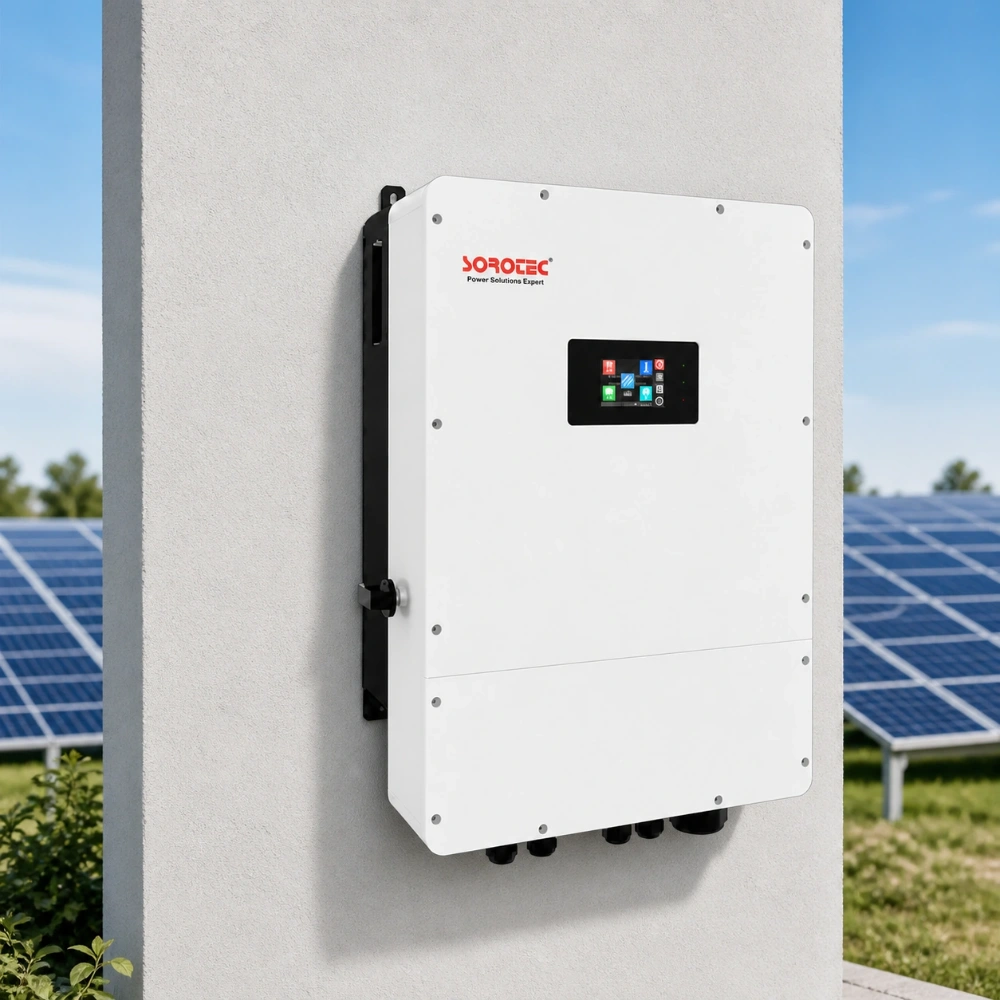
An IP65 solar inverter may fit an exposed project only when its enclosure, electrical design, cooling, cable work, and service access match the site.
Commercial rooftops, farms, and remote facilities can be costly to maintain. With more than 20 years of solar-equipment experience, Sorotec supplies varied inverter options, but selection still requires current documents and project review.
Why Does The IP Rating Matter For An Outdoor Solar Inverter Installation?
The IP code covers enclosure protection against solids and water under specified tests; it does not establish corrosion, flood, thermal, or universal outdoor suitability.
| Site exposure | Procurement question | Additional control to consider |
| Wind-driven dust | Can dust reach cable entries or cooling paths? | Correct mounting, sealed entries, and inspection access |
| Rain or irrigation spray | Is the unit sheltered, partially exposed, or fully exposed? | Canopy or revised mounting where permitted |
| Condensation and humidity | Can moisture form inside or around connections? | Drainage, ventilation, and approved cable routing |
| Flooding or standing water | Could water rise above the mounting position? | Higher mounting and site drainage |
| Coastal conditions | Is salt-laden air a concern? | Manufacturer guidance on corrosion exposure |
Assess The Site’s Actual Dust, Water, And Weather Exposure Risks
Define seasonal rain, wind, spray, dust, condensation, drainage, and mounting exposure before choosing a rating.
Assess coastal and flood risks separately because an IP rating does not prove resistance to salt corrosion, prolonged humidity, or immersion.
Distinguish Enclosure Protection Ratings From Overall Outdoor Installation Suitability
Check temperature and humidity limits, cooling, clearances, cable entries, and mounting orientation against current manuals; do not infer outdoor suitability from a short description.
Connectors and nearby equipment also need protection; a sealed inverter cannot compensate for a poor gland or isolator.
Decide Whether An IP65 Solar Inverter Is Appropriate For The Installation
IP65 can be a baseline when site conditions and manufacturer instructions support it; harsher exposure may need a higher rating, canopy, or other control.
A higher IP number is not electrical superiority or permission for immersion. Match the rating to identified hazards.
Which Electrical Specifications Should Commercial Solar Buyers Compare Before Selection?
Then compare the inverter with the AC system, PV array, storage, and operating priorities.
| Design variable | What to compare | Risk if overlooked |
| AC architecture | Rated output, voltage, phase configuration, load profile | Incorrect grid or load compatibility |
| PV input | Operating range, maximum limits, startup threshold | Poor string fit or delayed operation |
| MPPT design | Channel count, string allocation, current limits | Restricted array configuration |
| Storage | Battery architecture and communication protocol | Unsupported battery operation |
| Backup | Essential loads and transfer expectations | Inadequate backup performance |
| Expansion | Supported electrical and communications architecture | Costly redesign later |
Match Power Rating, Phase Configuration, And Inverter Topology To Project Needs
Match output to loads, peaks, future demand, and the single-phase, split-phase, or three-phase arrangement. Use a hybrid solar inverter only for documented storage or backup needs.
A small single-phase unit cannot replace a commercial system class unless an approved architecture supports coordinated equipment.
Check PV Input Limits, String Design, And MPPT Compatibility
Compare PV voltage limits, MPPT channels, string current, startup voltage, and temperature-adjusted open-circuit voltage using module data and local temperatures.
A higher startup threshold can delay weak-dawn operation or advance weak-dusk shutdown, so assess the complete array rather than one voltage figure.
Evaluate Battery, Backup, And Communications Requirements For Hybrid Systems
For hybrid systems, verify battery architecture, charging, backup behavior, monitoring, and energy management; never assume universal battery communication.
Use current compatibility and communication documents. Optional parallel operation must be confirmed for the selected model.
How Should An Outdoor Solar Inverter Be Sized For A Commercial Project?
Size an IP65 solar inverter from load data, array calculations, operating priorities, and environmental limits, not module capacity alone.
Base AC Capacity On Verified Loads, Peaks, And Operating Priorities
Separate continuous demand, peaks, motor starts, backup circuits, and approved expansion without relying on unsupported oversizing.
Commercial multi-inverter or higher-capacity designs must be officially supported and shown in the single-line diagram.
Review The DC-To-AC Design Relationship And Potential Clipping Risk
Clipping is determined by the relationship between available DC array power and the inverter’s AC conversion limit, not merely by high PV input voltage.
A larger DC array may capture more energy in low irradiance but clip above the AC limit. Evaluate the trade-off with module, irradiance, inverter, and yield-model data.
Account For Temperature Derating, Site Conditions, And Future System Expansion
Heat, sun, elevation, ventilation, enclosure temperature, and spacing can affect output. Review official derating data before confirming capacity and location.
Future PV, battery, or load additions must remain within supported voltage, current, communications, and system-architecture limits.
What Installation And Maintenance Practices Can Reduce Long-Term Outdoor Inverter Risk?
Installation quality protects the inverter and surrounding equipment while preserving practical fault and service access.
Choose A Safe Mounting Location That Supports Cooling And Service Access
Use a secure location with required clearances, limiting direct sun, standing water, debris, and mechanical impact.
A canopy may help at some sites, but it must not obstruct ventilation or conflict with the installation manual.
Protect Cable Entries And Other Vulnerable Balance-Of-System Components
Specify suitable glands, conduit, drip loops, grounding, surge protection, isolators, and drainage while retaining service access.
The inverter enclosure rating does not cover poor connectors or nearby components; follow local codes and each component manual.
Build A Documented Outdoor Inspection And Preventive Maintenance Plan
Inspect seals, fittings, ventilation, corrosion, water traces, alarms, firmware, and monitoring at intervals based on manuals and site severity.
Commercial portfolio records should include commissioning documents, serial numbers, photographs, maintenance reports, and alarm histories.
Which Confirmed SOROTEC Inverter Model Can Outdoor Commercial Buyers Evaluate?
The current solar inverter product range has different documented ratings. Compare them with required phase, load, storage, and environment.
Consider The REVO HES Series For Suitable Single-Phase Hybrid Projects
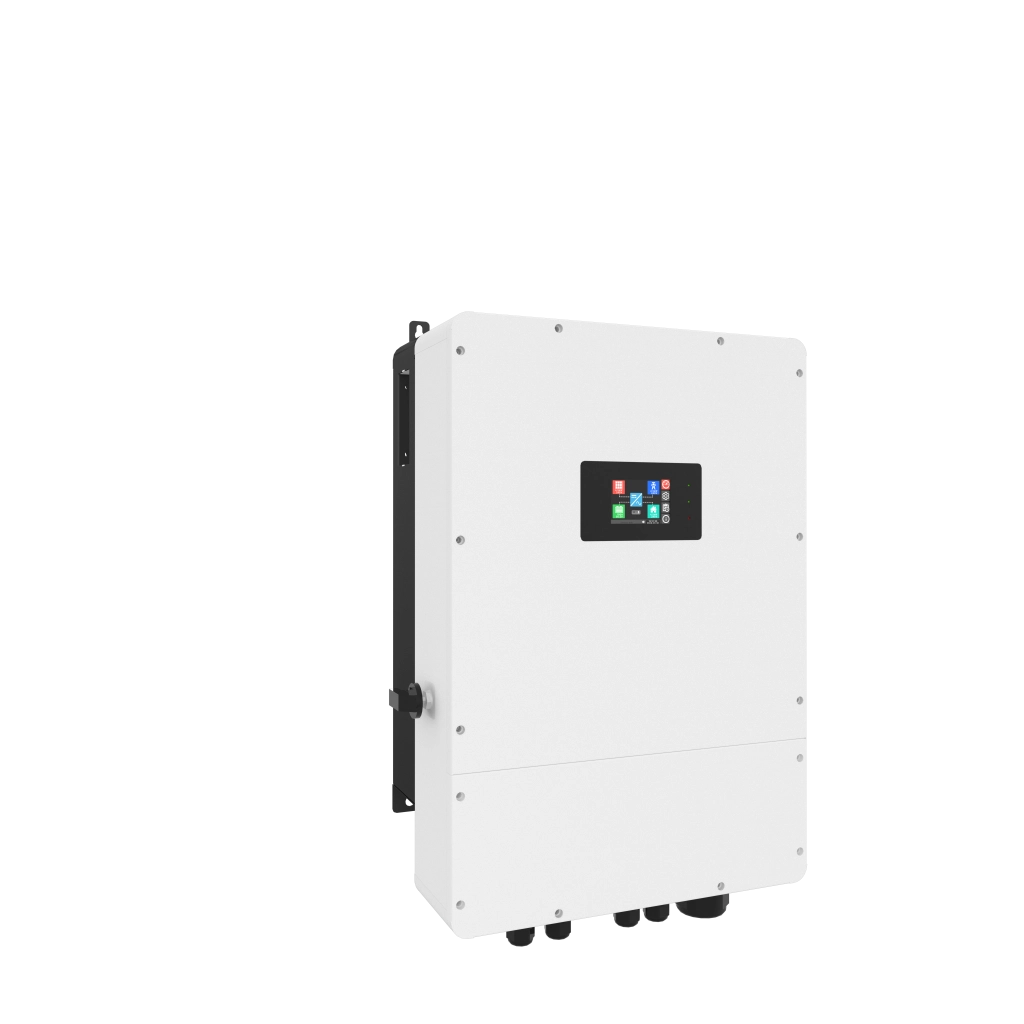
img.Single-Phase IP66 REVO HES Hybrid Energy Storage Inverter.webp
The Single-Phase IP66 REVO HES Hybrid Energy Storage Inverter 6/8/10kW is an outdoor-focused alternative for suitable projects.
This single-phase hybrid energy storage inverter is offered in 6kW, 8kW, and 10kW options. Its confirmed rating is IP66, not IP65, and it should not be relabeled to match an IP65 solar inverter search.
Verify Environmental, Electrical, And Commercial-System Fit Before Final Specification
The official product page lists an operating-temperature range of -25°C to 50°C and IP66 protection against dust ingress and powerful water jets. These specifications support outdoor evaluation but do not replace project engineering.
Specify it only when its single-phase architecture, capacity, battery design, and environmental limits fit. Request current manuals, battery compatibility, warranty terms, and compliance documents.
To match an outdoor hybrid inverter with the load, PV array, storage, and mounting environment, request project-specific selection support. Decide between an IP65 solar inverter, a higher-rated model, or added site protection.
FAQ
Is An IP65 Solar Inverter Suitable For Fully Exposed Outdoor Installation?
It may be, provided the manufacturer permits the mounting condition and the site assessment addresses rain, dust, drainage, temperature, condensation, cable sealing, and access. IP65 alone does not confirm flood, corrosion, or thermal suitability.
What Is The Difference Between IP65 And IP66 For Solar Inverters?
Both are enclosure-protection classifications. IP66 represents a stronger standardized level of water-jet protection than IP65. Neither rating should be interpreted as approval for immersion. Confirm the model’s certification and installation conditions.
How Do I Size An Outdoor Hybrid Solar Inverter For A Commercial Project?
Begin with continuous and peak loads, motor-starting demand, essential backup circuits, phase configuration, PV string calculations, storage requirements, temperature derating, and expansion plans. Final sizing should follow engineering calculations and the inverter’s current technical documents.