
An industrial energy storage system combines batteries, power conversion equipment, controls, protection, thermal management, and often solar or other power inputs. For a business, it can shift electricity use across tariff periods, manage demand peaks, retain surplus solar generation, and support selected loads during outages.
However, a solar energy storage system creates value only when it matches your load profile, tariffs, electrical architecture, site conditions, and operating priorities. With more than 20 years of solar-equipment experience, Sorotec offers power conversion and storage platforms for commercial and industrial applications.
What Makes an Energy Storage System Industrial?
Industrial systems are distinguished by their power requirements, energy capacity, control complexity, environmental exposure, and responsibility for business-critical loads.
Which Components Store, Convert, and Control Energy?
The battery stores energy, while the battery management system monitors and manages battery operation. A power conversion system converts electricity between DC and AC. The energy management system schedules charging and discharging.
Thermal management, electrical protection, and fire-suppression provisions address operating and site risks. An integrated system combines these functions; a standalone battery or conventional solar inverter does not.
| System element | Main function | Buyer verification point |
| Battery system | Stores electrical energy | Usable capacity and operating limits |
| BMS | Manages battery operation | Compatibility and protection functions |
| PCS | Converts power between DC and AC | Power, voltage, and phase fit |
| EMS | Controls energy dispatch | Scheduling and source coordination |
| Thermal and fire systems | Manage environmental and safety risks | Site suitability and protection design |
How Does Energy Move Through the System?
Energy may enter from solar, the grid, wind, or a compatible generator. It is converted as required, stored in the battery, and later discharged to facility loads.
The EMS can schedule this process around demand, tariffs, renewable availability, and reserve requirements. Backup performance and grid interaction still depend on the selected controls, switching design, and electrical approvals.
How Is Industrial Storage Different From a Smaller Commercial System?
Industrial installations usually serve larger or more variable loads and may coordinate several energy sources. They can also require more complex protection, controls, cooling, and integration.
Do not classify a project by industry name alone. Use interval load profiles, single-line diagrams, tariff data, environmental conditions, and verified equipment specifications.
Why Does Energy Storage Matter to Business Operations?
The business case normally combines cost management, continuity planning, and better use of on-site generation.
How Can Storage Support Peak Shaving and Time-of-Use Management?
Peak shaving reduces the facility’s highest demand by discharging storage when loads rise. Time-of-use management shifts electricity purchases by charging during selected periods and discharging during more expensive periods.
Savings cannot be calculated from battery capacity alone. You also need interval load data, tariff rules, efficiency assumptions, demand charges, and a realistic dispatch model.
How Can It Improve Energy Resilience?
A properly designed solar energy storage system may support critical controls, communications, refrigeration, safety equipment, or production loads during an interruption.
Runtime depends on usable stored energy, load size, reserve settings, conversion losses, and operating conditions. Storage is not automatically a substitute for every UPS or generator; transfer time and autonomy must match the application.
How Does Storage Increase the Practical Value of On-Site Solar?
Batteries can retain part of the surplus solar generation for later use, helping align variable production with operating hours.
Array design remains important. Solar clipping is determined by the DC-to-AC relationship, not simply by high input voltage. High-voltage start thresholds also require care because weak dawn or dusk irradiance may delay startup or advance shutdown compared with a lower-threshold system.
Where Can Businesses Apply Industrial Energy Storage?
Applications vary widely, so measurable electrical behavior matters more than a broad facility category.
Which Facilities May Benefit From Load Management?
Factories, processing plants, warehouses, logistics sites, campuses, and data or communications facilities may benefit when they have significant, uneven, or time-sensitive demand.
Review at least one representative operating cycle and seasonal variation before sizing the system.
When Is Backup Power a Primary Requirement?
Backup becomes central when an outage could interrupt critical processes, refrigeration, communications, controls, or safety systems.
Treat continuity and energy-cost reduction as separate design targets. They may require different battery reserves, power ratings, transfer times, and operating schedules.
How Can Storage Coordinate Solar, Grid, Wind, or Generator Inputs?
Multi-source systems can coordinate renewable generation, utility power, storage, and generators. Compatibility is product-specific rather than universal.
Interconnection design, protection settings, control logic, and source operating limits all require project-level engineering review.
Which SOROTEC Solutions Align With Different Project Scales?
The right platform depends on required power, usable energy, phase configuration, location, source mix, and switching requirements.
| Product | Confirmed positioning | Relevant selection factors |
| SES outdoor cabinet | Integrated 215kWh cabinet; IP55 | Outdoor exposure and multi-source projects |
| MPGS Series | 50–600KW platform | Higher-power commercial or industrial systems |
| REVO HMT | 6–12kW, three-phase, IP54 | Smaller loads or distributed site segments |
How Does an Integrated Outdoor Cabinet Simplify Deployment?
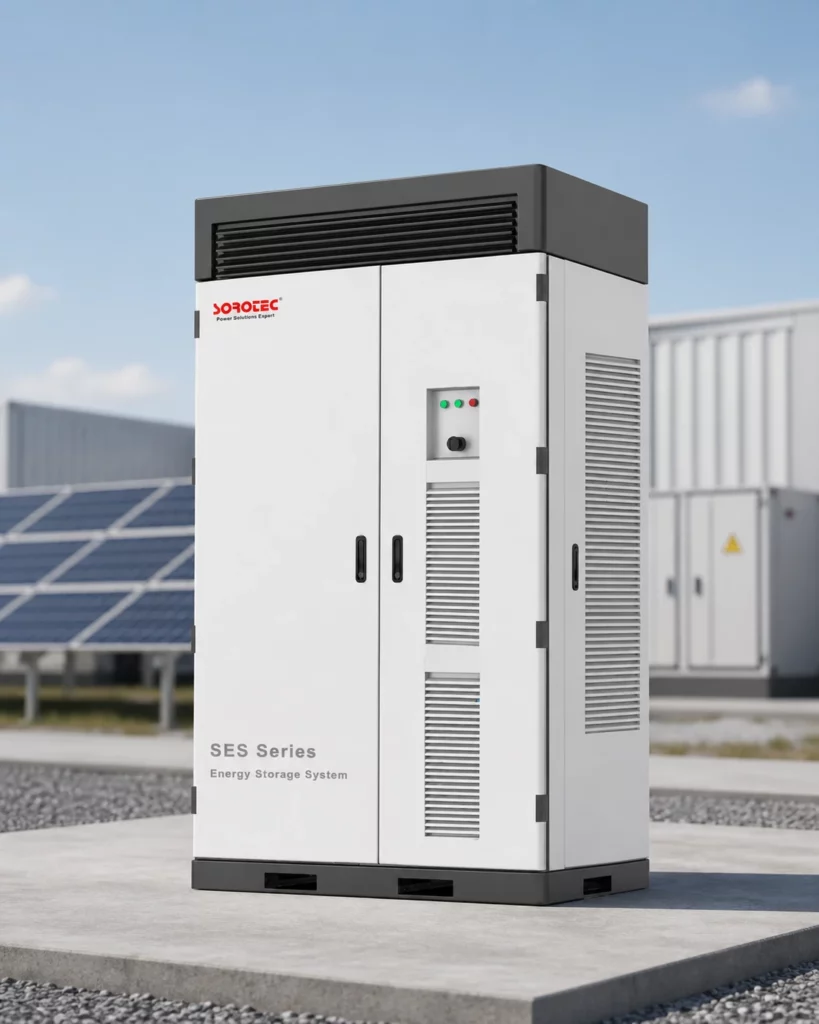
The SES Integrated Energy Storage System IP55 Outdoor Cabinet includes a pre-assembled 215kWh cabinet integrating the battery, PCS, thermal management, and fire suppression.
It has IP55 protection, operates from -40°C to +55°C and at 0–5000m altitude, and uses a 670–1000VDC battery range, 200–850VDC MPPT range, and 380/400VAC grid connection. It supports photovoltaic, wind, and diesel-generator inputs, while its EMS enables time-of-use scheduling, peak shaving, and valley filling.
Where Does a 50-600KW Power Platform Fit?
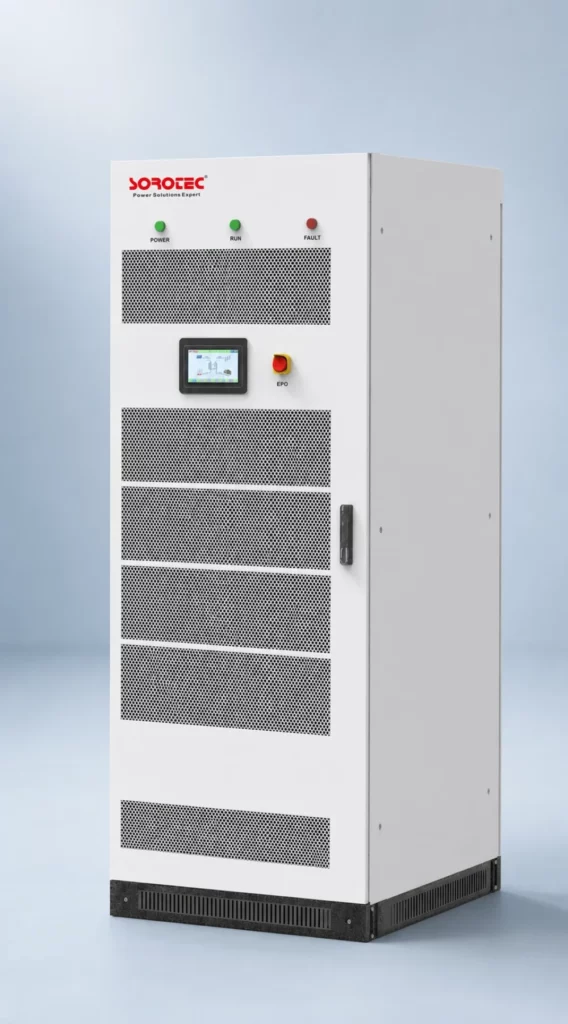
The On & Grid MPGS Series 50-600KW may suit higher-power commercial and industrial evaluations. Its features include MPPT, UPS functionality, BMS, EMS, peak-and-valley charging, an LCD touch screen, and off-grid switching below 10ms.
Buyers should verify configuration-specific topology, battery compatibility, certifications, and switching behavior.
When Might a Smaller Three-Phase Hybrid Inverter Be Considered?
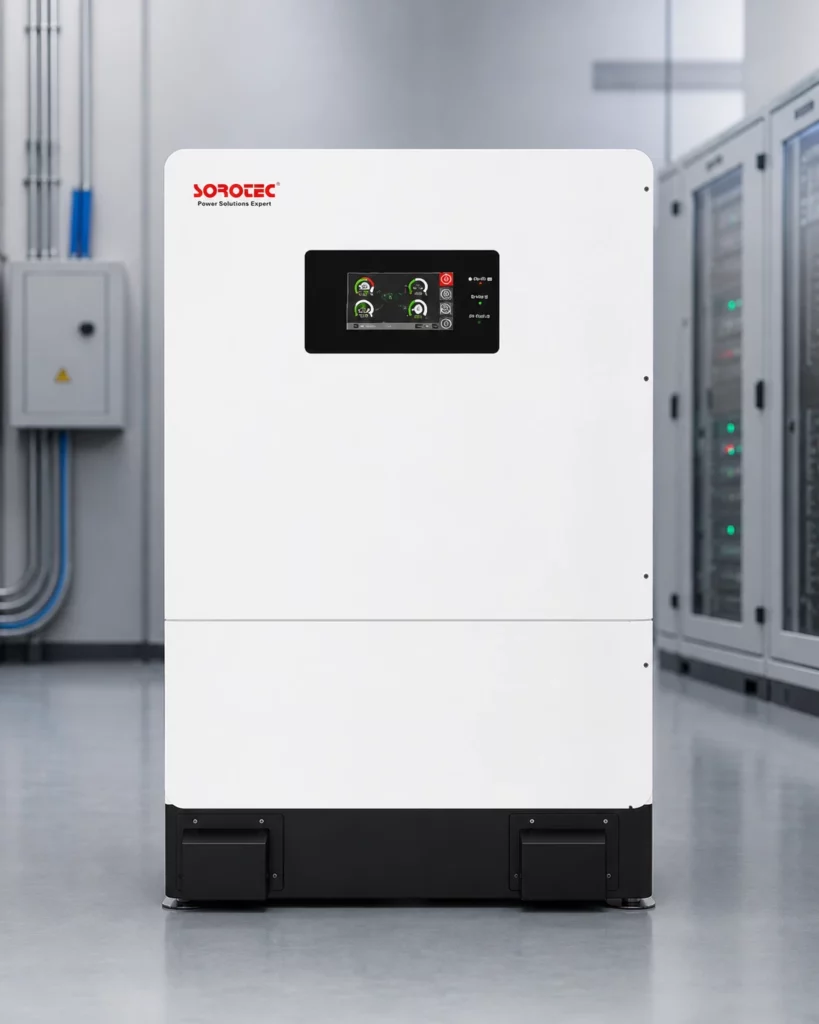
The Three-Phase IP54 REVO HMT IP54 L3P G2 Hybrid Energy Storage Inverter 6-12kW is a smaller three-phase hybrid option.
It may be evaluated for smaller commercial loads, distributed subsystems, or separate site segments rather than as the default platform for a large industrial plant.
How Should Buyers Select and Validate a System?
A disciplined selection process connects technical design with measurable operational and financial goals.
Which Load and Energy Data Should Be Collected First?
Collect interval load data, maximum demand, operating hours, critical-load requirements, solar estimates, outage history, and tariff details. Power rating determines how much load can be served at once; usable energy capacity influences service duration.
Which Technical and Site Requirements Need Verification?
Check voltage, phase, grid connection, battery compatibility, charge and discharge limits, enclosure protection, temperature range, installation space, thermal management, and fire provisions. Confirm requirements against current drawings, electrical rules, utility conditions, and project approvals.
How Should Financial and Supplier Due Diligence Be Structured?
Compare installed cost, projected savings, demand-charge effects, maintenance, warranty scope, replacement assumptions, and dispatch strategy. Test several scenarios covering tariff changes, load growth, solar variation, and backup reserves rather than relying on one payback estimate.
For a solar energy storage system evaluation, review the wider product portfolio and share your project requirements with load data, electrical configuration, operating objectives, and site conditions.