

Hybrid inverter battery compatibility cannot be confirmed from nominal voltage or rated power alone. Distributors, solar installers, EPC contractors, and project buyers must compare the PV array, battery bank, BMS protocol, AC service, load profile, and installation environment as one electrical system. A documented compatibility review reduces redesign work, rejected stock, commissioning delays, warranty disputes, and unplanned accessory costs across repeat orders.
SOROTEC supplies hybrid inverter options for different voltage, battery, and phase arrangements. B2B buyers should shortlist models through project calculations, compatibility documents, and sample validation rather than a product name or broad power category.
Which PV Input Limits Should Buyers Confirm?
PV compatibility involves several independent limits. Before approving a model for a project, tender, or distribution portfolio, compare array behavior across expected temperatures and irradiance conditions with every relevant DC input parameter in the model-specific datasheet.
Compare Array Voltage With The Supported Operating Window
Expected array operating voltage must remain within the inverter’s MPPT range during normal operation. Maximum string open-circuit voltage, including its cold-weather increase, must remain below the maximum DC input limit for the exact model and string design.
Treat each voltage figure as a separate procurement check:
| PV voltage term | Engineering meaning | Required procurement evidence |
| Open-circuit voltage | String voltage without load | Cold-weather maximum calculation for the proposed module and string length |
| MPPT range | Voltage window used for power tracking | Expected operating voltage across site temperatures and irradiance conditions |
| Maximum DC input voltage | Absolute inverter input limit | Signed string design showing calculated voltage remains below the limit |
| Startup voltage | Level required before operation begins | Model-level value reviewed against morning and low-irradiance behavior |
Nominal module or battery voltage cannot complete this assessment. The technical submittal should also record string length, module temperature coefficients, minimum site temperature, array layout, and tracker allocation so the same design assumptions can be reviewed before shipment.
Do Not Treat A High Input-Voltage Rating As Protection Against Clipping
A high PV input-voltage rating does not inherently prevent clipping. Clipping is determined by the relationship between array DC power, inverter AC output, and the inverter’s operating limits.
An array can be voltage-compatible but oversized on the DC side. Conversely, conservative DC sizing may reduce potential energy harvest. Require the design team to record the proposed DC-to-AC ratio, expected clipping periods, and exact model limits in the bid or purchase approval package.
Use REVO VM II PRO As A Model-Level Voltage Reference
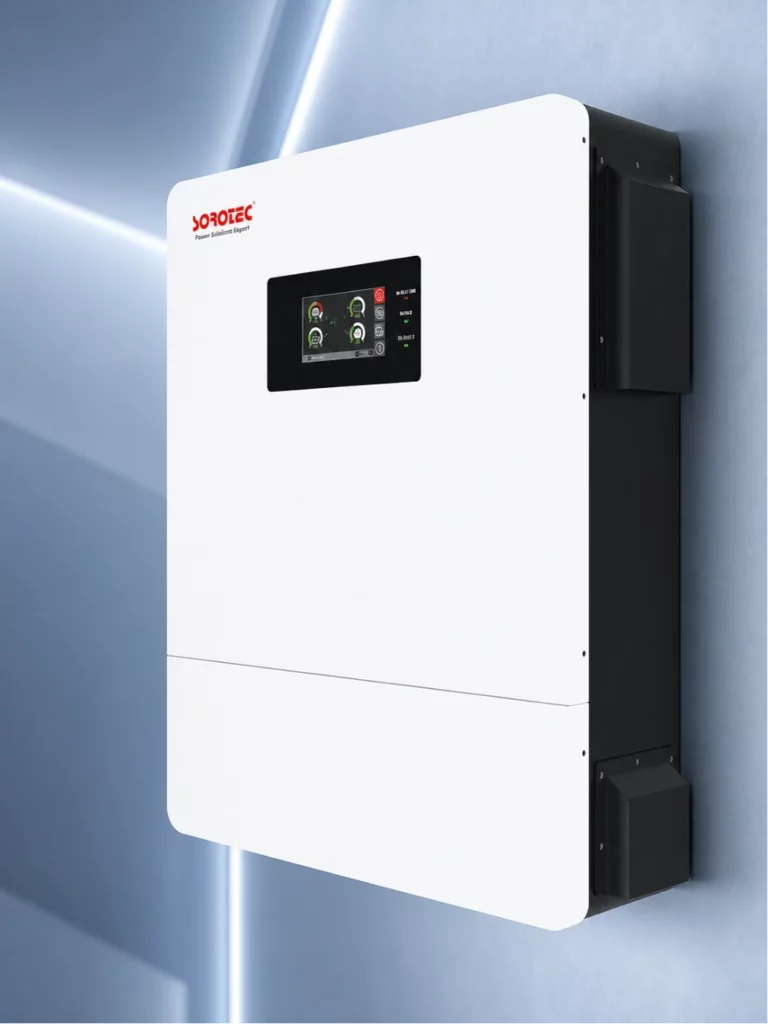
The Off Grid REVO VM IIPRO Series 1.6/3.2/4/6/8/10KW is a hybrid solar inverter intended for on-grid and off-grid applications. Its PV range is 60-450VDC.
The range is useful for initial product screening, but it does not replace a complete string calculation. Before sample approval or volume ordering, verify the maximum PV input, model-specific MPPT window, input-current limit, startup threshold, and proposed array configuration together.
How Should Buyers Verify Hybrid Inverter Battery Compatibility?
Hybrid inverter battery compatibility extends beyond nominal voltage. The inverter, battery modules, battery-management system, protection equipment, firmware, cabling, and operating settings must function as an approved package.
Check Battery Voltage, Current, And Charging Limits Together
Compare the battery bank’s nominal voltage and usable operating window with the inverter’s permitted battery range. Then review maximum charge current, discharge demand, cable capacity, protective devices, and the battery’s own current limits under the intended number of parallel modules.
Two products with the same nominal-voltage label may still have different operating windows or current requirements. Request a written compatibility schedule naming the exact inverter model, battery model, module quantity, firmware version, cables, and approved operating limits.
Confirm Battery Chemistry, BMS Protocol, And Protection Requirements
Battery chemistry affects charging behavior, voltage limits, protection settings, and operating controls. For lithium batteries, both the physical communication connection and the implemented BMS protocol must match; a shared connector type alone is not evidence of interoperability.
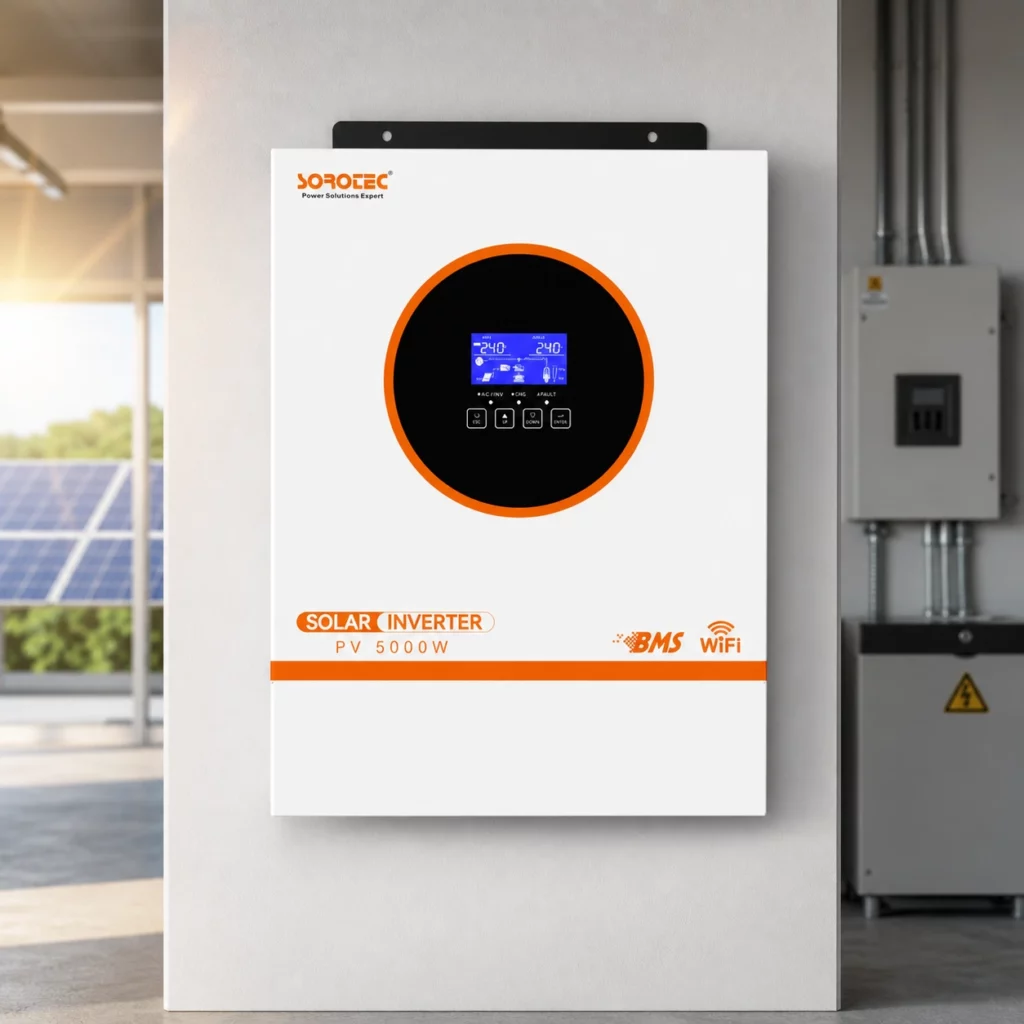
REVO VM II PRO reserves a CAN or RS485 communication port for BMS integration. This does not mean every CAN- or RS485-equipped battery is compatible. Confirm the protocol implementation, approved battery list, pin assignment, cable arrangement, firmware requirements, alarm handling, and fallback behavior before ordering.
Separate Battery-Ready Features From Approved Compatibility
REVO VM II PRO can operate without a battery and includes built-in Wi-Fi monitoring. These functions may support phased storage deployment or fleet monitoring, but they do not establish compatibility with a specific battery brand or module configuration.
Use this battery verification table during supplier review and sample approval:
| Battery compatibility item | B2B verification requirement |
| Voltage | Battery operating window matched to the exact inverter model |
| Current | Charge and discharge limits checked across inverter, battery, cables, and protection |
| Chemistry | Supported charging profile, voltage limits, and protection settings |
| Communication | Approved protocol, pin assignment, cable, firmware, alarms, and fallback behavior |
| Expansion | Permitted module quantity, current sharing, and cabinet or rack configuration |
| Parallel inverters | Exact model support, unit limit, accessories, firmware, and commissioning procedure |
Parallel operation is optional and model-specific. Buyers should require the supported unit count, communication accessories, current-sharing method, firmware conditions, and commissioning procedure in writing.
Which Phase Configuration Fits The Target Market?
Phase selection is determined by the destination market’s utility service, load distribution, backup design, and electrical rules. An appropriate kilowatt rating cannot compensate for the wrong phase architecture, so phase configuration should be treated as a market-specific SKU decision.
Match Single-Phase, Three-Phase, Or Split-Phase Service
Start with the site’s incoming supply and distribution board. Record phase-to-neutral and phase-to-phase requirements, then map critical and noncritical loads. For project quotations, also identify motors, pumps, compressors, or workshop equipment that may create surge demand or uneven phase loading.
| Configuration | Target-market condition | Buyer verification |
| Single-phase | Site and protected loads use single-phase service | AC voltage, frequency, output arrangement, and local rules |
| Split-phase | Market requires two line conductors with a neutral | Line-to-line and line-to-neutral output plus backup-panel design |
| Three-phase | Commercial site distributes loads across three phases | Phase sequence, load balance, surge demand, and backup arrangement |
Treat Split-Phase Compatibility As A Market-Specific Requirement
The Split-Phase IP54 REVO HMT IP54 L2P G2 Hybrid Energy Storage Inverter 8-12kW is a hybrid energy-storage inverter available in 8kW, 10kW, and 12kW options. It has an IP54 rating.
This model is relevant where split-phase output is specifically required. Distributors and project buyers should still verify utility conditions, backup-panel design, battery configuration, permitted operating modes, and local approval requirements for the destination market.
Verify Three-Phase Operation And Project Suitability
The Three-Phase IP54 REVO HMT IP54 L3P G2 Hybrid Energy Storage Inverter 6-12kW is a three-phase hybrid energy-storage inverter with 6kW, 8kW, 10kW, and 12kW options. Project-specific customization is available.
Before selection, confirm AC characteristics, phase loading, backup output behavior, grid requirements, battery configuration, and whether the proposed system matches the building’s distribution design. Record these points in the technical submittal instead of relying on a product-family description.
How Should Buyers Size Power And Operating Behavior?
B2B inverter selection requires both electrical compatibility and a realistic load profile. Nameplate totals can conceal startup demand, simultaneous operation, transfer requirements, and different output limits across operating modes.
Compare Continuous Loads, Surge Loads, And Backup Priorities
List continuous loads, intermittent loads, motor and compressor starting demand, critical circuits, and expected simultaneous use. Obtain the shortlisted model’s continuous output, surge capability, overload duration, transfer behavior, and mode-specific limits in the same technical schedule.
Project buyers should also account for planned facility expansion, while distributors should avoid promising one configuration for every installation. A design that only serves the present load may require premature replacement when equipment or protected circuits are added.
Evaluate DC-to-AC Sizing Instead Of Voltage Alone
Compare total array capacity with inverter AC output and operating limits. Record the calculation assumptions, expected site conditions, and possible clipping periods. Do not apply residential-scale product data to a larger commercial installation without a separate engineering calculation and model-level confirmation.
Voltage compatibility establishes whether the array can remain inside electrical limits. DC-to-AC sizing establishes how available solar power relates to conversion capacity. Procurement approval needs both checks, with the calculation basis retained for commissioning and after-sales support.
Compare Startup And Shutdown Behavior By Exact Model
Startup voltage, MPPT operating voltage, and shutdown behavior describe different conditions. A higher startup threshold may delay morning operation under weak irradiance and may bring shutdown forward near dusk compared with a lower-threshold design.
Compare these thresholds for the exact model and destination climate. Do not infer low-light performance from maximum PV input voltage or use one model’s values across an entire product series.
Which Installation And Supplier Claims Need Verification?
The final supplier review should cover environmental protection, operating modes, communications, optional functions, documentation, and commissioning support. Each point can affect equipment placement, the bill of materials, installer training, and after-sales responsibility.
Match Protection Ratings To The Actual Installation Environment
Match the inverter’s IP rating with dust, moisture, ventilation, temperature, enclosure exposure, and service access at the proposed location. Both HMT references above carry an IP54 rating, but the installation design must still address local environmental conditions.
An IP rating does not replace correct clearances, suitable mounting, environmental assessment, or compliance with local electrical requirements. Buyers should request the installation manual before finalizing the enclosure, cable routing, and service space.
Check Hybrid Modes, Grid Rules, And Backup Operation
Hybrid operation can combine solar conversion with battery control and grid interaction. Grid-connected, backup, and independent operation remain distinct modes with different technical, commissioning, and regulatory conditions.
REVO VM II PRO should be assessed as a hybrid solar inverter despite the legacy ‘Off Grid’ wording in its official product name. Verify grid-interconnection behavior, transfer operation, battery logic, required protections, documentation, and applicable approvals for each destination market.
Lock Optional Features Into The Purchase Order
Specify communications, monitoring, BMS integration, firmware, accessories, output options, labels, documentation, and parallel-operation requirements by exact model. Include them in the technical schedule and require configuration approval before shipment so sales samples and production units follow the same specification.
A controlled review of voltage, battery protocol, phase architecture, power sizing, firmware, and operating thresholds prevents the most common hybrid inverter battery compatibility failures. For model-level documentation, sample validation, and project configuration support, discuss your requirements with SOROTEC.
FAQ
What Documents Should A Buyer Request To Verify PV Input Compatibility?
Request the model-specific datasheet and installation manual, then compare the calculated cold-weather string open-circuit voltage and expected operating-voltage range with maximum DC input, MPPT window, input-current limit, tracker allocation, and startup threshold.
How Can A Distributor Confirm Hybrid Inverter Battery Compatibility?
Confirm the exact inverter and battery models, operating-voltage window, chemistry, charge and discharge limits, BMS protocol, pin assignment, firmware, protective devices, permitted module quantity, and approved communication cable. Complete sample testing before committing to repeat orders.
What Should An EPC Check Before Choosing The Phase Configuration?
Check the building’s incoming utility service, distribution-board arrangement, load voltages, backup circuits, phase balance, and local electrical requirements. The inverter output must match that architecture as well as the required continuous power, surge demand, and backup strategy.