

The right solar inverter system matches your facility’s load profile, PV array, electrical service, storage plan, installation environment, and expansion strategy. Do not select equipment from rated power alone. A technically defensible choice also accounts for peak demand, phase configuration, DC input limits, startup behavior, backup priorities, and utility rules.
Commercial buyers can review current inverter categories from Sorotec while building a project-specific shortlist. Product selection should still be based on the exact regional model and an engineered system design.
What Should Buyers Define Before Comparing Inverters?
Before comparing products, convert your commercial objectives into measurable electrical and operational requirements. This prevents attractive but unsuitable equipment from reaching the final procurement stage.
Document The Facility’s Load Profile And Peak Demand
Collect interval load data, peak-demand records, equipment schedules, operating hours, and expansion plans. Separate continuous consumption from short surges caused by motors, pumps, compressors, or other inductive equipment.
You should also distinguish critical backup circuits from loads that can remain offline during an outage. Monthly energy consumption alone cannot define inverter capacity, so arrange a qualified electrical assessment.
Establish The Grid, Storage, And Backup Objectives
Decide whether the project prioritizes grid-connected generation, self-consumption, battery charging, peak management, outage support, or several functions together.
For backup applications, define the required runtime, acceptable transfer interruption, critical-load capacity, and battery strategy. A hybrid inverter coordinates multiple power sources, but the “hybrid” label does not mean every model supports identical grid, storage, or backup functions.
Translate Site Requirements Into A Technical Checklist
Turn project conditions into mandatory and desirable criteria for the solar inverter system.
| Mandatory checks | Project questions |
| AC architecture | What output voltage, frequency, phase, and rated capacity are required? |
| PV interface | Do the array voltage, current, and string layout fit the MPPT design? |
| Storage and backup | What battery interface, transfer behavior, and backup capacity are needed? |
| Installation | What ingress protection and environmental limits apply? |
| Expansion | Is modular growth or model-specific parallel operation required? |
Require model-level specifications because products within the same family may have different electrical versions and capabilities.
Which Inverter Architecture Fits The Operating Strategy?
Inverter topology controls how PV generation, utility power, batteries, and protected loads interact. Match the architecture to the intended operating sequence rather than relying on broad category labels.
Compare Hybrid, Grid-Connected, And Backup-Oriented Designs
Grid-connected equipment primarily converts PV power for facility use or permitted export. Backup-oriented equipment maintains selected loads when the grid fails. Hybrid solar inverters can coordinate PV, utility power, and storage where the chosen model supports those functions.
Treat hybrid, on-grid, off-grid, and UPS operation as distinct technical concepts. Switching behavior, battery use, export control, and outage operation must be checked separately.
Evaluate A Flexible Low-Voltage Hybrid Option
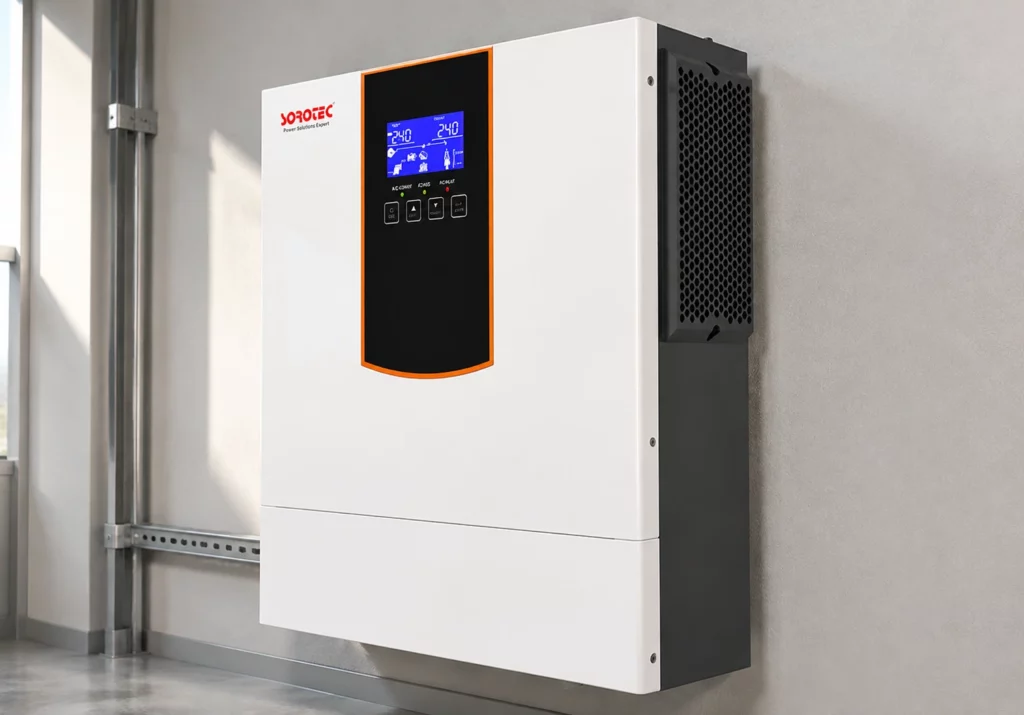
The Single Phase IP21 110V 120V REVO VM II PRO US Hybrid Solar Inverter with Battery-Free Operation & 80A MPPT is designed for compatible 110V/120V single-phase applications. Its screening characteristics include battery-free operation, an IP21 designation, and an 80A MPPT solar charge controller.
Before using it commercially, verify rated output, PV voltage limits, battery compatibility, transfer requirements, and any optional parallel capability against the site design.
Match Battery And Backup Functions To The Load Plan
Battery-free operation may reduce initial storage requirements, while immediate battery deployment can support defined critical loads. A storage-ready plan may also allow batteries to be added later, subject to model compatibility.
Review battery voltage, chemistry, charging limits, discharge capacity, protected-load demand, and transfer behavior as one system. Never assume backup output, storage support, or parallel operation is universal.
How Should Inverter And PV Capacity Be Sized?
Capacity selection must connect AC demand with PV production and operating restrictions. Both undersizing and unjustified oversizing can create technical or financial problems.
Match AC Output To Demand And Project Architecture
Size AC output around simultaneous demand, short-duration surges, export limits, backup priorities, and planned expansion. Depending on the project, you may consider one larger platform or several coordinated units, but multi-unit operation requires explicit model support.
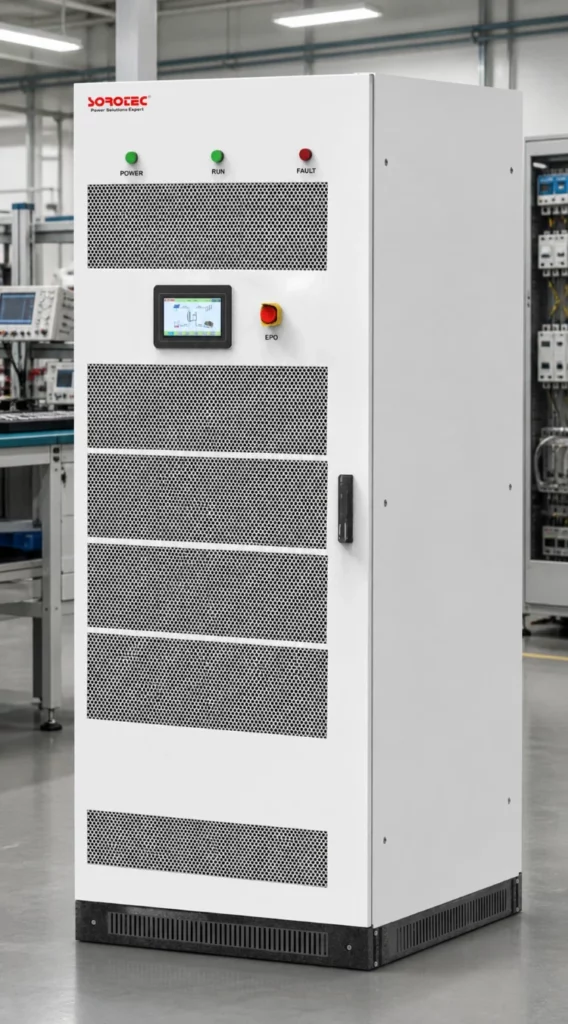
The On & Grid MPGS Series 50-600KW is a commercial-scale candidate with a stated 50–600KW range, built-in MPPT, and PV and UPS functions. Buyers should verify its exact phase arrangement, storage interface, grid behavior, switching logic, and regional configuration.
Analyze The DC/AC Relationship And Clipping Risk
Clipping occurs when available DC array power exceeds the inverter’s AC conversion capacity. It is determined by the DC/AC relationship, not merely by high PV input voltage.
Evaluate the proposed DC/AC ratio against local irradiance, array orientation, temperature, system losses, export constraints, and expected operating periods. A high-voltage inverter does not inherently prevent clipping.
Check MPPT Windows, Current Limits, And Startup Thresholds
Compare the array with the inverter’s maximum input voltage, MPPT operating range, input-current limits, tracker count, and string allocation. These are separate specifications and should not be treated as one voltage figure.
Startup voltage also matters. Under weak dawn or dusk irradiance, a higher startup threshold may delay morning operation or advance evening shutdown compared with a lower-threshold solar inverter system.
Which Electrical And Environmental Configuration Does The Site Require?
Your utility service and installation location eliminate many unsuitable options immediately. Confirm phase architecture and enclosure requirements before comparing secondary features.
Choose Single-Phase, Three-Phase, Or Split-Phase Equipment
Base phase selection on utility service, distribution design, voltage, load balance, project capacity, and interconnection rules. Do not substitute single-phase or split-phase equipment for a three-phase requirement without an engineered design.
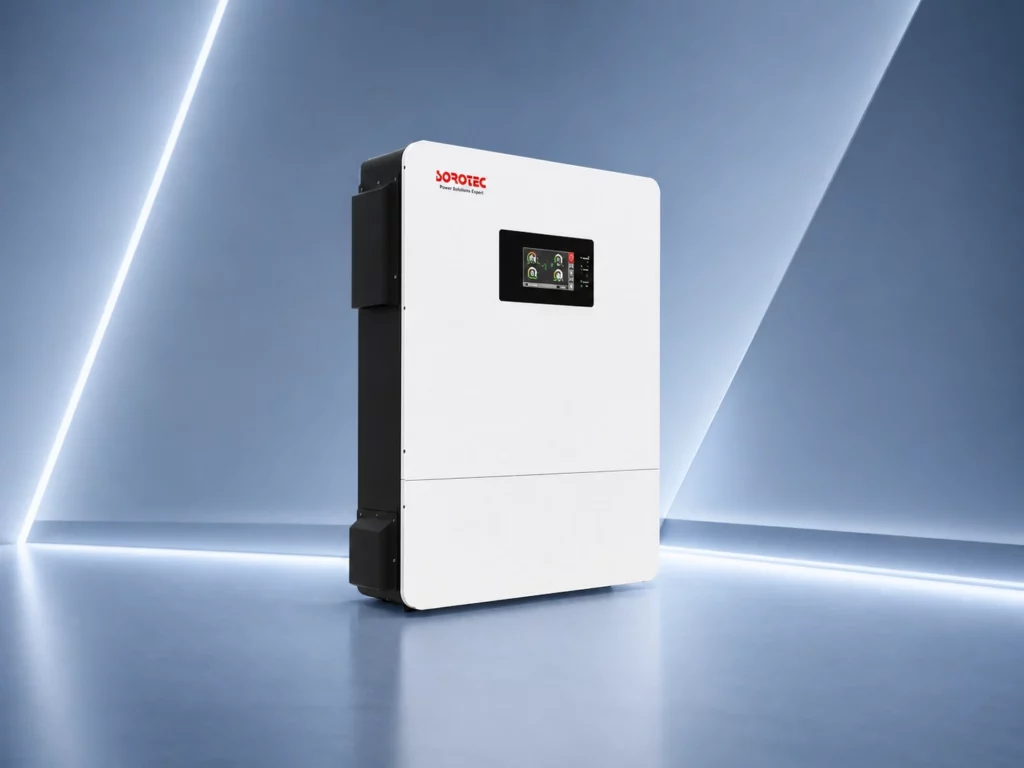
The Three-Phase IP54 REVO HMT IP54 L3P G2 Hybrid Energy Storage Inverter 6-12kW is a three-phase, IP54 hybrid option for appropriately sized 6–12kW applications.
Match Ingress Protection To The Installation Environment
Ingress protection is an initial screening factor, not a complete installation approval.
| Product | Verified configuration | Initial application screen |
| REVO VM II PRO US | US-standard single-phase, 110V/120V, IP21 | Suitable for 110V/120V single-phase applications with appropriate indoor or enclosure protection. |
| REVO HMT IP54 L3P G2 | Three-phase, 6–12kW, IP54 | Smaller three-phase hybrid storage projects |
| MPGS Series | 50–600KW, MPPT and UPS functions | Larger commercial capacity evaluation |
For indoor, sheltered, dusty, humid, or exposed locations, verify permitted installation conditions, temperature limits, ventilation, and derating. IP65 options should only be shortlisted after checking the exact current model.
Verify Scalability, Redundancy, And Optional Parallel Operation
Determine whether expansion requires modular units, independent inverter sections, a larger centralized platform, or optional parallel operation. Parallel capability is model-specific, not standard across all inverters.
Check supported unit count, communications, protection coordination, battery sharing, maintenance access, firmware requirements, and single-point-of-failure exposure.
How Can Procurement Teams Build A Defensible Shortlist?
A strong procurement process uses pass/fail technical gates before price comparison. This keeps commercial discussions focused on products that can actually meet the project design.
Compare Models With A Project-Specific Evaluation Matrix
Score each solar inverter system against topology, capacity, phase, grid compatibility, PV input design, storage requirements, backup performance, enclosure protection, monitoring, communications, and scalability.
Keep product roles distinct: low-voltage single-phase hybrid applications, smaller three-phase storage projects, and larger commercial-scale platforms should not be compared as interchangeable alternatives.
Request Model-Level Evidence Before Approval
Request current datasheets, installation manuals, certifications, warranty terms, communications protocols, monitoring details, battery compatibility information, and environmental limits.
Confirm that every quoted specification applies to the exact model, firmware, electrical version, and destination market. Commercial references should also match the proposed application closely enough to be relevant.
Validate The Final Design With The Supplier And Project Engineer
Submit the load profile, single-line diagram, PV string plan, utility requirements, battery design, backup-load schedule, and site conditions for technical review. Resolve conflicts between category labels, commercial descriptions, and engineering data before purchase.
For a project-specific solar inverter system shortlist, you can discuss your electrical architecture and operating objectives with the Sorotec team. Final selection should remain subject to qualified engineering, local codes, utility approval, and exact model verification.
FAQ
How Do I Determine The Right Inverter Capacity For A Commercial Facility?
Start with interval demand data, simultaneous loads, peak demand, motor-starting requirements, backup priorities, and future expansion. Then compare those requirements with inverter output, overload behavior, phase configuration, export limits, and the proposed PV capacity. Do not size the inverter solely from monthly electricity use.
Can A Commercial Hybrid Solar Inverter Operate Without A Battery?
Some models can. The REVO VM II PRO US supports battery-free operation for compatible single-phase applications. However, battery-free operation does not automatically provide stored-energy backup during low solar production or outages. Verify how the selected model coordinates PV power, utility power, critical loads, and future batteries.
How Do The DC/AC Ratio And Startup Voltage Affect Solar Production?
The DC/AC ratio influences how often available array power may exceed AC conversion capacity and cause clipping. Startup voltage determines when the inverter can begin operating. A higher threshold may reduce operation during weak dawn or dusk irradiance, so both factors should be assessed through site-specific energy modelling.