

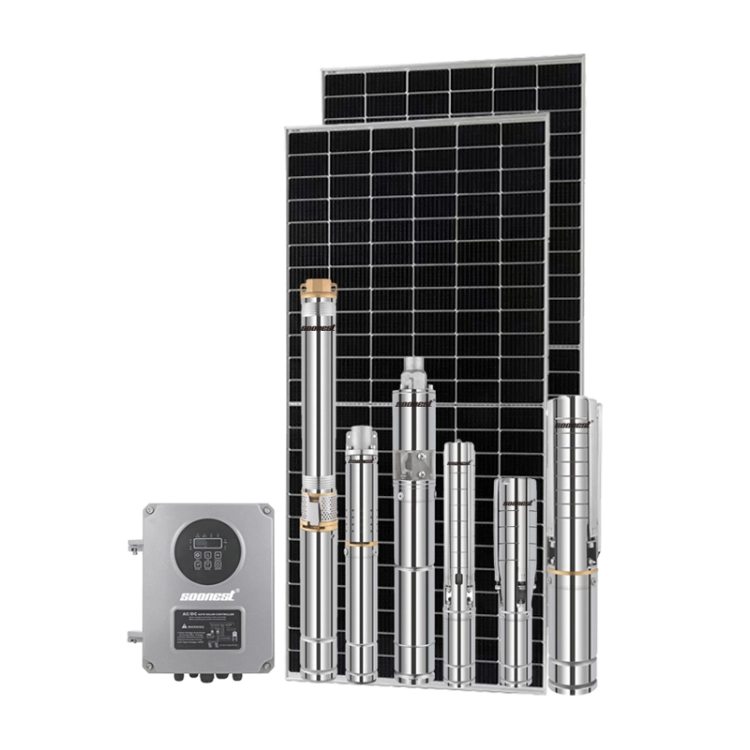
Dry season. Crops wilting. The diesel pump sputters and dies, and the nearest fuel seller is forty kilometers out. Every farmer in a remote area has lived some version of this story.
A solar water pump ends it. Sunlight hits the panels. The pump starts. No fuel to buy. No engine to rebuild. No grid connection to wait for.
How a Solar Pump System Works
Three parts, wired simply.
Solar panels generate DC power. A controller with MPPT (maximum power point tracking) squeezes the most out of those panels as light shifts through the day. The pump itself is a DC brushless unit. It turns that power straight into water flow.
Sun rises. Pumping starts on its own. Sun sets. It stops. Water tanks act as the buffer. Pump by day. Irrigate by night if needed. That loop replaces an entire fuel supply chain.
Why the Brushless DC Motor Matters
The motor is where cheap pumps fall apart. A quality brushless DC motor changes the math four ways.
Efficiency. Permanent magnet brushless designs convert more panel output into pumping. Gains of 15 to 20 percent over older motor types are typical. Some systems report up to 25 percent energy savings.
Longevity. No brushes to wear out. Fewer wearing parts means fewer mid-season failures and far less maintenance.
Sealing. Good units use aluminum housings with resin-cast windings. High waterproof ratings matter when a pump lives in a well or a paddy.
Starting. Old brushless designs were hard to start in low light. Modern controllers fixed that. Pumping begins earlier in the morning and runs later in the afternoon.
MPPT conversion rates around 85 percent are realistic on a well-matched system. That’s water you’d otherwise lose to a sloppy controller.
Built for Unattended Operation
Nobody wants to babysit a pump. Outdoor installations run for months without a person nearby. Protection features decide whether the system survives its first bad week.
Look for these in any pump controller:
Dry-run protection, so the pump never burns itself out when the well runs low. Overload and low-voltage protection. Reverse connection protection, because field wiring mistakes happen. High temperature shutdown. Speed control, so flow can match the crop.
With those in place, the system fits the classic off-grid profile. Install. Walk away. Collect water.
Where Solar Pumps Pay Off
Farm irrigation. Row crops. Orchards. Greenhouses. Panels can sit beside the field they water.
Livestock. Cattle stations in dry regions pump from boreholes all day. Nobody watches a fuel gauge.
Deep wells and villages. Communities without grid power get drinking water from the same technology.
Ponds. Fish farms. Gardens. Pool circulation. Anywhere water needs moving and sunshine is free.
The Middle East and Africa have made solar pumping a national priority for these reasons. Diesel logistics in remote districts cost more every year. Sunlight doesn’t.
Diesel vs Solar: The Honest Comparison
A diesel pump is cheap to buy and expensive to keep. Fuel. Oil. Filters. Injector service. Engine rebuilds. Plus the transport cost of every jerrican.
A solar pump costs more up front and almost nothing after. No fuel line. No oil changes. Payback on most farm installations lands within a few seasons. After that, the water is effectively free for the life of the system.
Noise matters too. A solar pump runs quietly. Livestock stay calmer. So do neighbors.
SOONEST AC/DC Solar Powered Water Pump
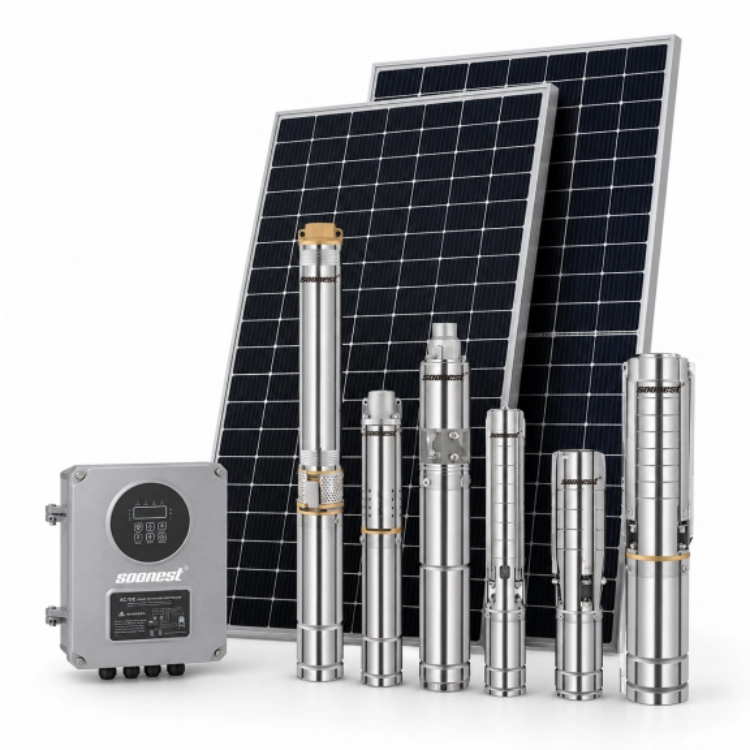
The SOONEST AC/DC solar water pump system targets this use case exactly. Farm irrigation with high head requirements and no grid in sight. The kit covers panel arrays, a solar charging controller, the DC pump, breakers, wiring, and tank connections.
Specs worth noting. DC brushless permanent magnet motor with up to 25 percent energy savings. Battery-free operation, panels drive the pump straight through the MPPT controller. Full protection suite. Reverse connection. Overload. Low voltage. High temperature. Dry run. Speed control on the controller. Direct panel connection, no separate inverter needed for the pump line.
The AC/DC design adds flexibility. Where a generator or grid point does exist, the system takes AC input too. Sunlight first. Backup second. Water always.
If the same property needs household or workshop power as well, a hybrid solar inverter can share the panel array between pumping and general loads.
Sizing a System in Four Steps
1. Daily water volume. Liters per day for crops, animals, people. Be honest about peak season.
2. Total head. Vertical lift from water surface to the highest outlet, plus friction losses in the pipe. Undersized head is the most common sizing mistake.
3. Sun hours. Peak equivalent hours at the site. That sets the panel array size.
4. Storage buffer. A tank sized for at least one cloudy day turns an intermittent source into a reliable one. Batteries are optional for pumping. Tanks are cheaper storage.
Suppliers who ask these four questions before quoting are the ones worth shortlisting. SOONEST engineering support runs this sizing process with distributors and farm operators before any order ships. If batteries ever do enter the picture, say for night irrigation without a tank, these lithium battery basics are worth ten minutes of reading first.
Three Mistakes to Avoid
Cheap panels. The pump motor may be excellent, but weak panels strangle the whole system. Panel grade decides daily output for twenty years.
Ignoring water storage. Pumping only while the sun shines sounds limiting until you pair it with a tank. Skip the tank and add batteries instead? That just burns money.
Buying on wattage alone. A big motor on a shallow well wastes money. A small motor on a deep borehole never fills the tank. Match the curve, not the number.
Conclusion
Fuel logistics are the quiet tax on every remote farm. Solar pumping removes that tax for good. Sunshine arrives every morning. The pump does its job. The fuel seller loses a customer.
Planning an irrigation project? Get a tailored pump and panel configuration from SOONEST, backed by two decades of photovoltaic manufacturing and a full certification portfolio.
FAQ
Does a solar pump work on cloudy days?
Yes, at reduced flow. MPPT controllers keep harvesting usable power in weak light. A storage tank bridges the gap on the worst days.
Can it run without batteries?
That’s the standard design. Panels feed the controller. The controller feeds the pump. Fewer components. Lower cost. Less to maintain. Pair it with a tank for after-sunset supply.
How long do these systems last?
Panels typically carry 20-plus year performance warranties. Brushless pump motors, properly sealed and protected, routinely outlast several generations of brushed or AC equivalents.