

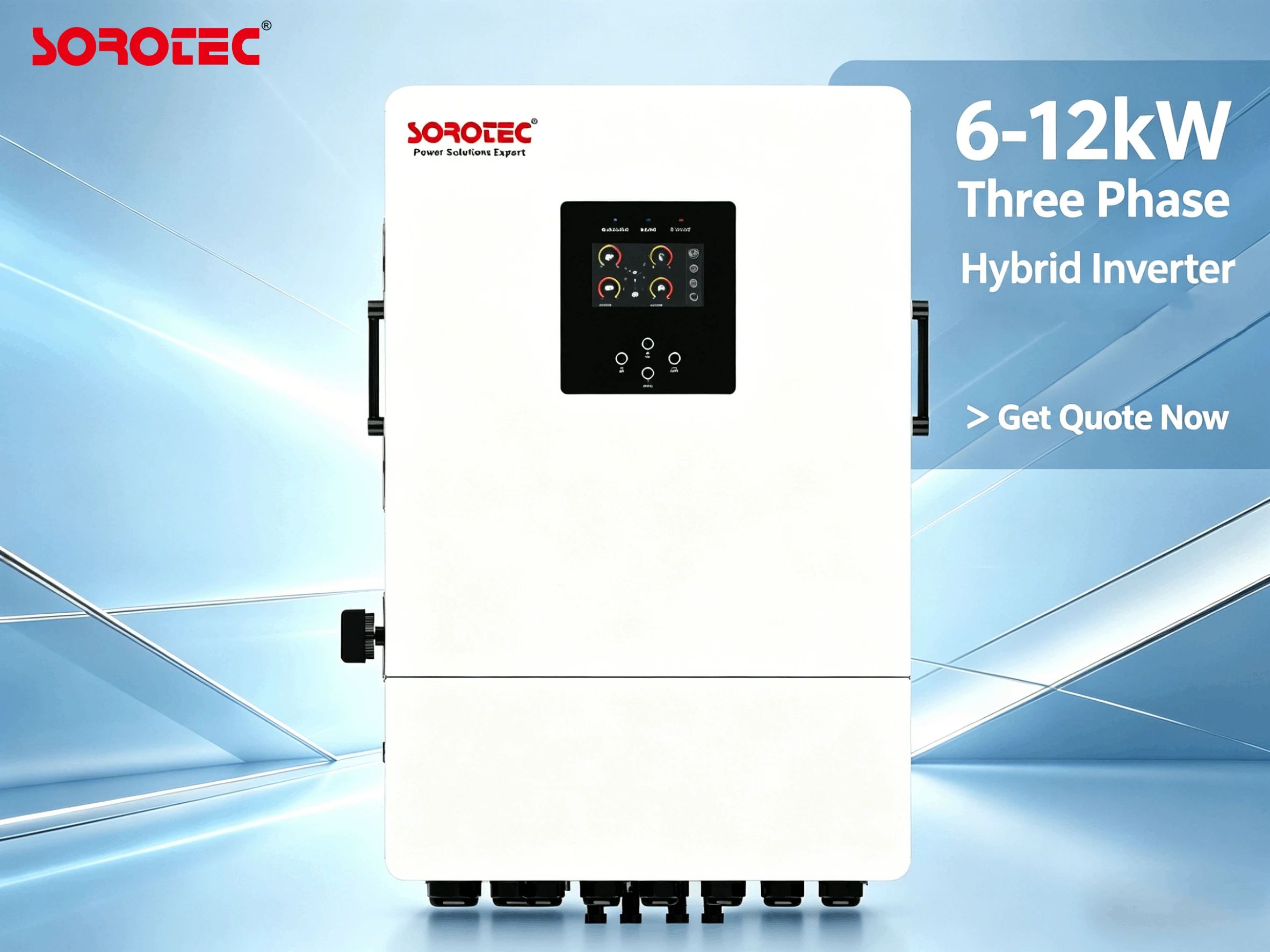
Commercial power bills are getting harder to ignore, especially when peak-hour tariffs, grid limits, and solar waste show up in the same month. An IP54 Hybrid Energy Storage Inverter helps you turn solar power into usable business value by shifting energy use, storing surplus PV output, and keeping key loads running with less dependence on high-priced grid power.
For commercial buyers, SOROTEC brings a practical background in power electronics and new energy systems, with products covering solar inverters, UPS systems, energy storage, telecom power, and power quality equipment. Its work since 2006, factory scale, certification base, and OEM/ODM support make it a serious supplier for buyers who care about both product fit and long-term service.
For a business, energy saving is not only about installing panels. Solar generation has to meet real load patterns. Battery charging has to match tariff windows. Three-phase loads need stable output. Outdoor equipment also has to handle heat, dust, splashing water, and daily site conditions that are not always neat. That is where the IP54 REVO HMT IP54 L3P G2 becomes a useful choice for small and medium commercial energy projects.
Why Are Businesses Paying More Attention to Energy Cost Control?
Most businesses do not waste power on purpose. The loss usually comes from timing. Solar power may arrive when loads are low. Grid power may be most expensive when the business is busiest. A short outage may stop equipment, payment systems, lighting, refrigeration, pumps, or network devices. These are not abstract problems. They show up as extra cost, lost working time, and annoyed staff.
Peak-Hour Electricity Pressure
Many commercial sites use more power during working hours, late afternoon, or evening peaks. If the tariff is higher during those windows, the business pays more even when total consumption does not look extreme. A hybrid inverter with battery storage can charge from solar power or low-price grid power, then discharge when tariffs rise.
Solar Power Mismatch
Solar panels may generate well at noon, but your business may not use all that energy at the same time. Without storage, surplus energy can be wasted, limited, or exported at a lower return. With a storage-ready inverter, extra PV output can move into the battery and come back later when the site needs it.
Backup Load Needs
Cost control also includes avoiding downtime. A shop may only need lights, payment systems, routers, and a few key appliances to stay open. A workshop may need selected tools or controls. A storage system does not need to power everything. It needs to power the right loads.
How Does an IP54 Hybrid Energy Storage Inverter Reduce Daily Power Waste?
The basic job sounds simple: connect PV, battery, grid, and load. In practice, the value comes from how well the inverter chooses between those power sources. A good setup does not treat solar, battery, and grid as separate pieces. It makes them work as one system.
Solar Priority Use
During the day, the system can feed business loads with solar power first. This reduces grid purchases and makes the PV system more useful. For stores, offices, farms, warehouses, and light commercial buildings, this matters because many loads already run during daylight hours.
Battery Charging Windows
When solar production is higher than the site load, the battery can store the surplus. In regions with time-of-use pricing, the battery can also charge when grid electricity is cheaper. Later, it can discharge during expensive periods. It is not a magic trick, just better timing.
Smarter Daily Scheduling
The IP54 REVO HMT IP54 L3P G2 supports time-of-use pricing management and remote monitoring through Web and App access. That helps you follow daily generation, battery status, and usage patterns without standing beside the inverter cabinet. A dusty wall in a service room is not the glamorous side of solar, but it is often where the savings are made.
What Makes an IP54 Hybrid Energy Storage Inverter Fit Business Sites?
Commercial sites are not all clean indoor rooms. Some inverters are installed near equipment areas, semi-open walls, farm buildings, utility corners, rooftops, or small industrial zones. So the enclosure, voltage platform, efficiency, and protection features matter just as much as the power rating.
Outdoor Protection and Temperature Range
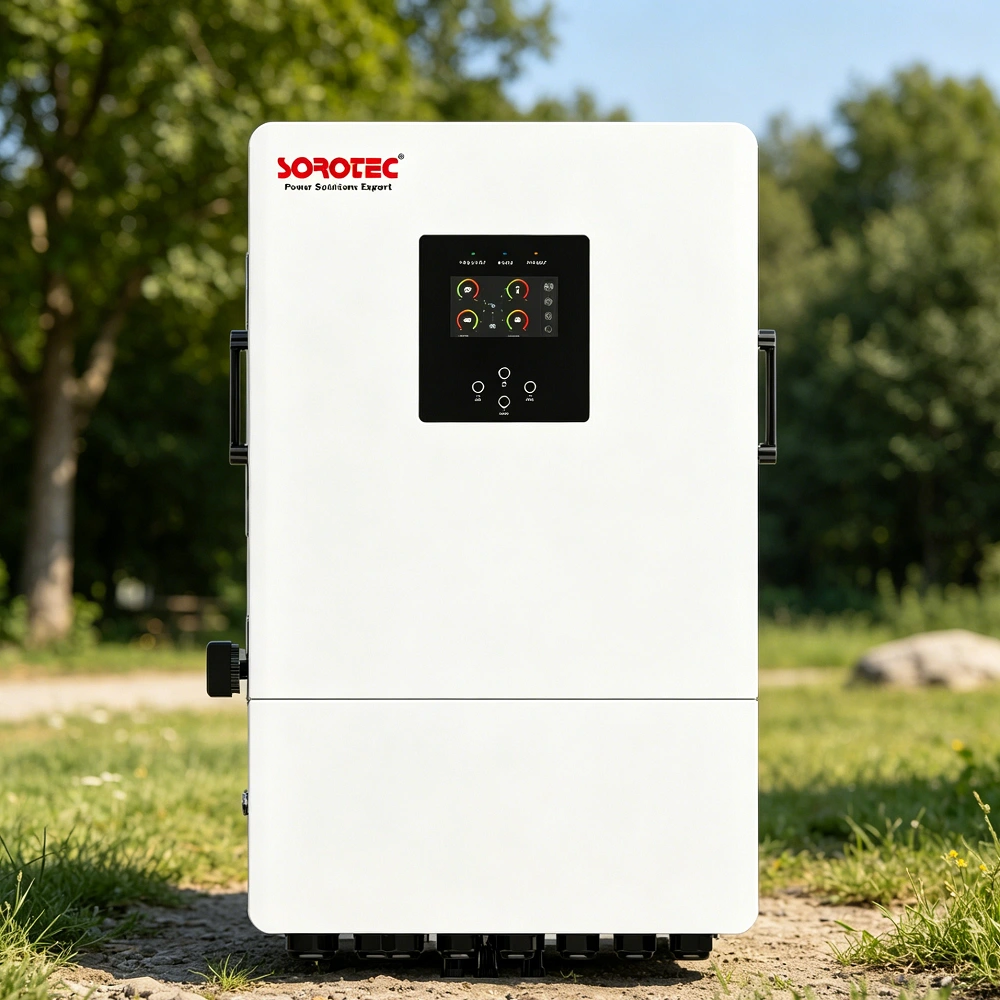
The IP54 REVO HMT IP54 L3P G2 has an IP54 protection rating for the whole unit. That means protection against dust ingress and splash water from all directions. It also works across a wide operating temperature range from-25°C to 60°C (with power derating above 45°C). For commercial buyers, this gives more freedom when the equipment area is not a perfect air-conditioned room.
High-Voltage PV Compatibility
The product supports up to 800VDC PV input voltage and a 200–650VDC MPPT operating range. This makes it easier to work with higher-voltage PV arrays and newer high-power modules. For a commercial rooftop or distributed PV project, a wider voltage platform can make system design less cramped.
High Conversion Efficiency
The inverter reaches up to 97.5% DC-side efficiency. That number matters because energy loss repeats every day. A small percentage can become meaningful over years of operation, especially when the site has steady solar production and regular battery cycling.
| Product Feature | IP54 REVO HMT IP54 L3P G2 Data | Business Value |
|---|---|---|
| Rated Power Range | 6–12kW | Fits small and medium commercial energy systems |
| Protection Rating | IP54 | Better for dust and splash-prone installation areas |
| Operating Temperature | -25°C to 60°C | Useful across hot, cold, and semi-outdoor sites |
| Maximum PV Input Voltage | 800VDC | Supports high-voltage PV system design |
| MPPT Operating Range | 200–650VDC | Gives more room for PV string matching |
| DC-Side Efficiency | Up to 97.5% | Reduces long-term conversion loss |
| Three-Phase Unbalanced Output | 100% | Helps handle uneven commercial loads |
| Single-Phase Load Capacity | Up to 50% of rated power | Useful when one phase carries heavier equipment |
How Does Three-Phase Load Management Cut Hidden Costs?
Commercial power use is rarely balanced perfectly. One phase may carry air conditioning. Another may carry lighting. A third may carry pumps, computers, or small machines. If the system cannot deal with uneven loads, you can face nuisance trips, unstable backup behavior, or a layout that needs extra correction.
Three-Phase Unbalanced Output
The IP54 REVO HMT IP54 L3P G2 supports 100% three-phase unbalanced load output, and single-phase loads can reach 50% of rated power. This is important for real sites, because equipment is not always neatly distributed. A bakery, a clinic, a farm office, or a small plant may all have uneven load behavior.
Critical Load Planning
You do not always need to back up the whole building. You need to decide which loads matter when the grid fails or prices spike. That may include lights, routers, POS systems, security systems, refrigerators, control units, and selected production equipment. A clean critical-load plan can cut system cost and still protect the daily operation.
Reverse Flow Control
The product includes smart energy management and protection features, including islanding protection, insulation monitoring, and optional AFCI. It also supports control functions used in grid-connected systems, including reverse-flow management through current detection. For sites with export limits or strict grid rules, this can be a major design point.
| Market Signal | Real Data | What It Means for Commercial Buyers |
|---|---|---|
| UK Solar Target by 2035 | 70GW | More building projects are moving toward solar-ready energy systems |
| UK Household PV Systems by March 2025 | Over 1.5 million | Solar adoption is becoming normal, not niche |
| UK Estimated Solar Saving per Home | About £530 per year | Energy saving is now part of mainstream policy talk |
| India Total PV Capacity by February 2025 | 102.6GW | Large solar markets are scaling fast |
| India New PV Capacity in 2024 | 30.7GW | Rapid growth increases demand for better inverter and storage design |
| India 2024 PV Growth Rate | 145% | Energy storage planning is becoming more important |
| India Rooftop PV Share from Commercial and Industrial Users | 73% of 16.28GW | Businesses are a major force in rooftop solar adoption |
What Should Buyers Check Before Choosing a 6–12kW Hybrid Inverter?
A 6–12kW system can be a very good fit, but only when the load and site conditions are right. Before you buy, check the basics. It is less exciting than talking about peak efficiency, but it prevents wrong sizing.
Load Profile Review
List your daytime loads, evening loads, and backup loads separately. Also check whether your largest single load starts suddenly, such as a pump or compressor. If your daily business demand sits within the 6–12kW range and you need three-phase output, this product range can make sense.
Battery and Communication Match
Battery communication affects safety, charging behavior, and system control. SOROTEC product lines support lithium battery communication through RS485 and CAN in several hybrid inverter designs, and the IP54 REVO HMT IP54 L3P G2 is made for smart energy storage use. Buyers should confirm battery type, voltage, capacity, and BMS communication before final system design.
Monitoring and Maintenance Habits
Remote monitoring is not only for checking charts. It helps you see abnormal power flow, PV generation drops, battery behavior, and energy use changes. For a business with no full-time energy manager, Web and App access can save time. Someone still needs to check the site now and then, of course. Loose cable routing and dirty equipment rooms have a way of causing boring but costly problems.
Why Choose SOROTEC for Hybrid Energy Storage Projects?
Choosing an inverter is also choosing a support path. You need product matching, project references, and a supplier that can answer technical questions before and after delivery. That is why it is useful to look beyond the product page.
Product Matching Support
If you are comparing commercial energy systems, SOROTEC can help match the inverter to your PV array, battery plan, load profile, and installation environment. The IP54 REVO HMT IP54 L3P G2 is worth considering when you need outdoor-grade protection, three-phase output, unbalanced load handling, high-voltage PV input, and time-based energy scheduling in one system.
Project Reference Value
Before ordering, it is worth checking the case study section. Real project references can help you judge whether a system layout suits your building type, local grid condition, and energy cost goal. Specifications tell you what a machine can do. Case references often show where it makes the most sense.
Company Background Check
For buyers who care about factory history, certificates, and production ability, just learn more about us for helpful context. SOROTEC was established in 2006, has a 20,000-square-meter production area, 350 employees, and certifications such as ISO9001, ISO14001, OHSAS18001, CE, and TUV CB. That background is useful when you are sourcing for commercial projects, resale channels, or long-term energy programs.
A good inverter should not only sit on the wall and convert power. It should help your business buy less high-price electricity, use more of its own solar power, and keep selected loads stable when the grid is not behaving well. If your site needs a compact three-phase system with outdoor protection and practical energy scheduling, the right IP54 Hybrid Energy Storage Inverter can become a quiet but important part of your cost-control plan.
FAQ
Q: Can an IP54 Hybrid Energy Storage Inverter really lower business electricity costs?
A: Yes, when it is sized and set correctly. It can store surplus solar power, charge during lower-price periods, discharge during peak tariff hours, and reduce grid purchases for selected business loads.
Q: Is the IP54 REVO HMT IP54 L3P G2 suitable for outdoor commercial sites?
A: It is built with IP54 protection and an operating temperature range from -25°C to 60°C, so it is suitable for many dust-prone, splash-prone, semi-outdoor, and commercial installation areas.
Q: What should you check before choosing a 6–12kW hybrid inverter?
A: Check your daily load curve, peak load, three-phase balance, PV array voltage, battery capacity, BMS communication, installation space, and whether you need backup for all loads or only critical loads.