

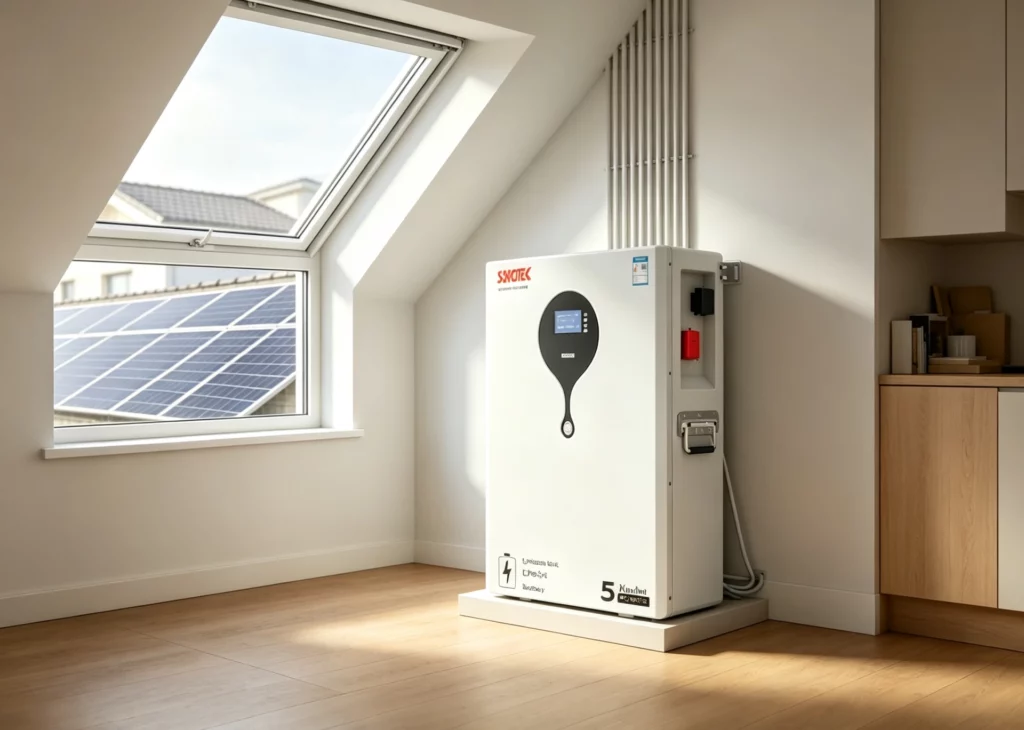
The LiFePO4 Battery Trend in 2026 is not simply about fitting more amp hours into a metal case. Solar buyers now look harder at usable capacity, inverter communication, cycle conditions, and the real cost of service. A strong data sheet can still disappoint once the battery meets a household load.
The engineering background behind this product is worth noting. SOROTEC has worked in power electronics since 2006, producing solar inverters, energy storage batteries, UPS systems, and power quality equipment. Its company profile also covers OEM and ODM work, export markets, and technical support. That background matters because a home battery must communicate with an inverter, accept solar charging, handle sudden loads, and remain serviceable.
Why Are Household LiFePO4 Batteries Getting Bigger?
Many residential systems use several small modules, but every extra unit adds cables, terminals, breakers, wall space, and another communication point. A larger pack can make the installation cleaner.
The LiFePO4 Battery Trend toward 300Ah Storage
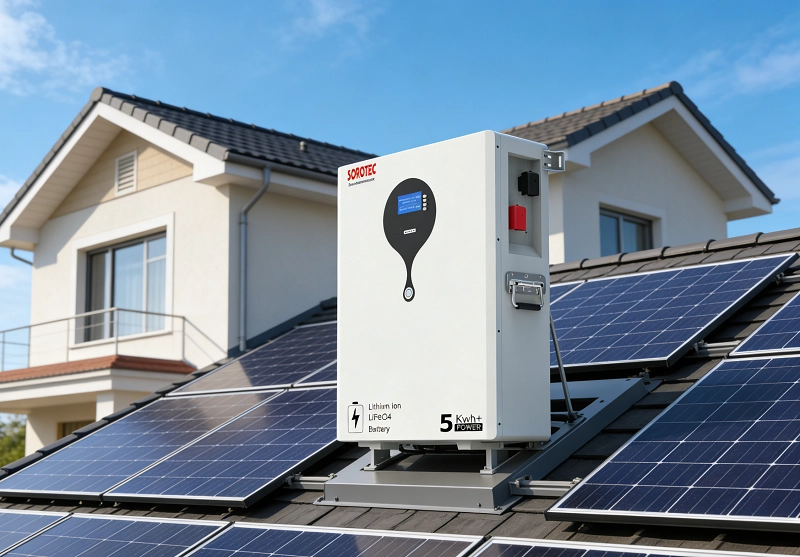
The IP20 SL-W/SL-R Series LiFePO₄ Battery is offered in 25.6V, 48V, and 51.2V versions, with capacities from 100Ah to 300Ah. The largest listed model combines 51.2V and 300Ah, giving 15.36kWh of nominal energy.
That figure is somewhat meaningless without comparing it to the load of your house. So while your lights, refrigerator, router, and a few sockets can draw power for many hours on a single pack of batteries, your oven, water heater and air conditioner will burn through the very same pack in a matter of hours. And don’t forget your kitchen kettle which can ruin the perfectly nice hours of runtime estimate in a matter of minutes.
Practical Runtime rather than Catalogue Capacity
If 90% of the nominal energy is available and the inverter works at 92% efficiency, a 15.36kWh pack can deliver about 12.7kWh of usable AC energy.
| Average AC Load | Estimated Runtime* |
| 1 kW | About 12.7 hours |
| 3 kW | About 4.2 hours |
| 5 kW | About 2.5 hours |
These figures are planning examples, not a performance promise. Temperature, cable loss, battery age, and changing loads affect the result. Even so, a larger lifepo4 battery can support evening use rather than only short emergency backup.
What Does a Smarter BMS Change in Daily Use?
A battery management system watches voltage, current, temperature, and state of charge, then limits charging or discharging outside a safe range.
Protection, Balancing, and More Useful Battery Data
The SL-W/SL-R platform lists protection against overcharge, overdischarge, overtemperature, overcurrent, and short circuit. Its LCD shows voltage, current, state of charge, and temperature. These plain features save time because a technician can see whether an issue comes from low charge, heat, or a current limit.
The published figure of more than 6,000 cycles also needs context. It is stated at 25°C and 100% depth of discharge. Real service life changes with heat, charging current, daily cycling, and the point used to define end of life. This is why the LiFePO4 Battery Trend is moving away from a single cycle number and toward the test conditions behind it.
CAN, RS485, and RS232 Communication
The three ports give installers several ways to connect the battery with an inverter or monitoring system. A matching socket does not prove compatibility. Protocol version, cable pinout, battery address, and inverter firmware still have to match.
When communication works, the inverter can receive state of charge, warning data, current limits, and charging instructions. Without it, the system may still run through voltage settings, but control is usually less precise. Before ordering, ask for written confirmation for the exact inverter model.
Why Can the Final Battery Quote Still Be Higher?
Falling cell prices do not always produce a cheaper battery delivered to the project site. A 2025 industry survey put average lithium ion packs at $108 per kWh, LFP packs at $81, and stationary storage packs near $70. Stationary storage was 45% cheaper than a year earlier.
| 2025 Battery Price Measure | Reported Average |
| Lithium-ion packs, all segments | $108/kWh |
| LFP packs, all segments | $81/kWh |
| Stationary-storage packs | $70/kWh |
| Stationary-storage change from 2024 | 45% lower |
Those are market averages, not finished system prices. A quotation may also cover the BMS, enclosure, testing, warranty, freight, and service.
This part of the LiFePO4 Battery Trend matters because buyers often compare only the final figure on a quotation. Compare cost per usable kWh, continuous current, cycle conditions, protocol support, warranty exclusions, and replacement freight. A cheap battery can become expensive after two site visits.
How Well Does the SL-W/SL-R Series Fit 2026 Solar Projects?
The series suits buyers who want a larger indoor battery without stacking separate modules. Its 300Ah option, wall mounted format, LCD, and multi protocol BMS fit projects focused on higher solar self use or longer backup.
Strong Applications and Clear Limits
Suitable locations include utility rooms, garages, and indoor energy cabinets. The IP20 rating matters. This is not an outdoor battery, and it should not sit in rain, heavy dust, or damp air. In a coastal building or basement with condensation, the enclosure plan deserves as much attention as battery capacity.
The LiFePO4 Battery Trend may favor larger units, but site conditions still decide whether a product is suitable. Buyers can review the manufacturer’s application records and project cases to see home energy, communication power, and other field uses in practical settings.
What Should You Verify Before Placing an Order?
Start with voltage. Confirm whether the inverter expects 25.6V, 48V, or 51.2V, then check its maximum charge and discharge current. Next, review the communication protocol, surge load, room temperature, wall strength, breaker rating, cable size, and ventilation space.
A Buyer’s Pre Order Checklist
What is covered with the 5 year warranty, how faults are diagnosed and who pays for return shipping for a replacement. Can you do later expansion, and if so, do parallel batteries need to be of the same production batch or if they are firmware matched as well.
This is another practical LiFePO4 Battery Trend. Service is becoming part of the product, not an extra added after delivery. When something does fail, access to a technician, a clear fault process, and spare parts can matter more than a small saving on the first order.
Why Consider This Manufacturer for Your Next Storage Project?
The SL-W/SL-R series deserves a place on the shortlist when you need up to 15.36kWh, 300Ah capacity, indoor wall mounting, visible operating data, and several communication choices. It is less suitable for exposed sites, while 300Ah may be more than a small household needs.
Final Recommendation and Service Contact
The LiFePO4 Battery Trend for 2026 favors larger storage and smarter BMS control, but the right purchase still depends on your load profile, inverter, room conditions, and service plan. Before approving the configuration, send your daily energy use, peak load, inverter model, PV size, and installation details to the technical service team. That step can prevent sizing and communication mistakes.
FAQ
Q: What Is the Most Important LiFePO4 Battery Trend for Home Solar Buyers in 2026?
A: Larger capacity is useful, but reliable BMS communication may have a greater effect on daily performance because the inverter needs accurate state of charge data, current limits, and charging instructions.
Q: How Long Can a 51.2V 300Ah LiFePO4 Battery Power a House?
A: Its nominal energy is 15.36kWh. Using the assumptions in the runtime table, a steady 3kW AC load would run for about 4.2 hours, although actual time changes with temperature, efficiency, and load movement.
Q: Can the SL-W/SL-R Battery Be Installed Outdoors?
A: No. Its IP20 enclosure is intended for dry indoor locations. Outdoor or high humidity sites need extra protection or a battery with a higher enclosure rating.