
Energy costs are climbing rapidly across global markets in 2026, pushing more business owners and facility managers to generate their own power. Picking the right hardware dictates your facility’s long-term financial return. At the heart of this decision, solar inverters act as the true brain of the operation. They convert raw direct current from roof panels into usable alternating current for your heavy machinery. But you have to choose an architecture that fits your specific daily needs.
As you navigate the complex power electronics market in 2026, Shenzhen Soro Electronics Co.,Ltd.. distinctly stands out. Since 2006, this national high-tech enterprise has established a massive global footprint in smart new energy infrastructure. They provide much more than basic hardware. Their portfolio covers complete data center solutions, active filters, and advanced hybrid systems specifically built for industrial applications. If you run a commercial facility, their gear is designed to handle harsh outdoor environments and highly complex grid requirements without missing a beat. You get top-tier build quality that fully complies with strict international certification standards. You can visit their main hub at SOROTEC to see exactly how they drive true energy independence for businesses around the world.
Basics of Commercial Solar Inverters
The power your solar array produces is completely useless to a commercial building until it passes through a conversion device. You need a reliable gateway to manage the flow of electricity efficiently throughout the day.
Core Functions of On-Grid Systems
These units tie directly into the local utility lines. If your factory consumes less power than the panels generate, the extra energy flows backward into the public grid. They constantly monitor the grid frequency to stay perfectly synchronized with municipal infrastructure.
Essential Capabilities of Off-Grid Setup
Some businesses operate miles away from municipal infrastructure. Here, the system works completely alone. It feeds the building and pushes any excess juice straight into a massive battery bank to cover the night shift without any outside help.
Key Differences in Energy Management
The fundamental gap lies in isolation. When the public utility fails, grid-tied units stop dead. Off-grid units simply keep running using stored energy. High-quality solar inverters handle this daily stress easily, dictating how your building reacts during a blackout.
Table 1: Technical Comparison of On-Grid vs. Off-Grid Systems
| Feature | On-Grid Systems | Off-Grid Systems |
|---|---|---|
| Grid Connection | Required for operation | Completely independent |
| Battery Requirement | Optional (but recommended) | Absolutely mandatory |
| Blackout Behavior | Shuts down for safety | Keeps running continuously |
| Primary Business Goal | Monthly bill reduction | Absolute power independence |
Assessment of On-Grid Solar Inverters
Urban commercial properties usually default to grid-tied architectures because they cost less upfront. You do not need to buy expensive battery banks right away to start seeing a drop in your overhead.
Utility Grid Interaction
The machine reads the utility voltage and matches it exactly. It uses built-in scanning algorithms to pinpoint the maximum power point of the solar panels, adjusting the input voltage so they always deliver maximum yield.
Net Metering Benefits
You sell your excess power. Depending on your local utility rules, spinning the meter backward cuts down your monthly operational expenses. It is a straightforward financial setup for daytime businesses that use a lot of power before sunset.
Limitations During Power Outages
Grid regulations demand a strict safety feature called anti-islanding protection. If a storm knocks out the municipal power, traditional solar inverters shut down completely. This protects the linemen fixing the wires outside, but it leaves your business in the dark.
Assessment of Off-Grid Models
Think about a dusty processing plant in rural Texas. The cost of running miles of high-voltage cable to that site is astronomical. Standard electronics choke in that environment, but industrial power setups run flawlessly, which is where isolated architectures shine.
Complete Energy Independence
You become your own micro-utility. The system generates power, handles the immediate load, and manages the surplus without any external approval or interference. You never receive a utility bill again, granting total freedom from fluctuating market rates.
Battery Storage System Integration
This architecture lives and dies by its battery bank. In 2026, lithium iron phosphate technology dominates the commercial space. These batteries deliver thousands of cycles and handle extreme temperatures far better than old lead-acid blocks. A large 120AH LiFePO₄ battery stores approximately 1.5 kWh of energy.
Higher Initial Investment
You have to pay for that independence upfront. Buying enough batteries to run a factory overnight requires a large capital layout. Yet, when you compare it to a $100,000 municipal grid extension fee, the math often works out highly in your favor.
Hybrid Models as the Ultimate Solution
Why choose one when you can have both? Hybrid setups bridge the gap, giving you the financial perks of grid-tying alongside the security of an off-grid setup.
Seamless Switching Capabilities
When the municipal power drops, the hybrid unit acts incredibly fast. It cuts the grid connection and pulls from the battery bank in under 10 milliseconds. Most of your office computers and sensitive machinery won’t even reboot.
Intelligent Load Management
The machine decides where the power goes based on your rules. It can feed the server room first and ignore the break room air conditioning if the battery gets low. It actively manages your load instead of just passing current blindly.
Maximum Return on Investment
You charge the batteries late at night when electricity is cheap. You run the factory off those batteries at 2 PM when grid prices hit their peak. This peak-valley arbitrage drastically cuts your expenses, saving businesses a massive amount of cash.
Table 2: Economic Impact of Energy Storage in Commercial Settings
| Commercial Scenario | System Configuration | Primary Economic Benefit | Payback Period |
|---|---|---|---|
| Small Processing Plant | 10kW / 50kWh battery | 70% reduction in diesel generator fuel costs | 4-5 years |
| Island Resort Facility | Custom Microgrid | 40% reduction in total energy expenses | Variable based on load |
| Industrial Park | 500kW PCS / 1MWh battery | 30%-50% cut in demand electricity charges | ≤5 years |
Details of the SOROTEC REVO HMT
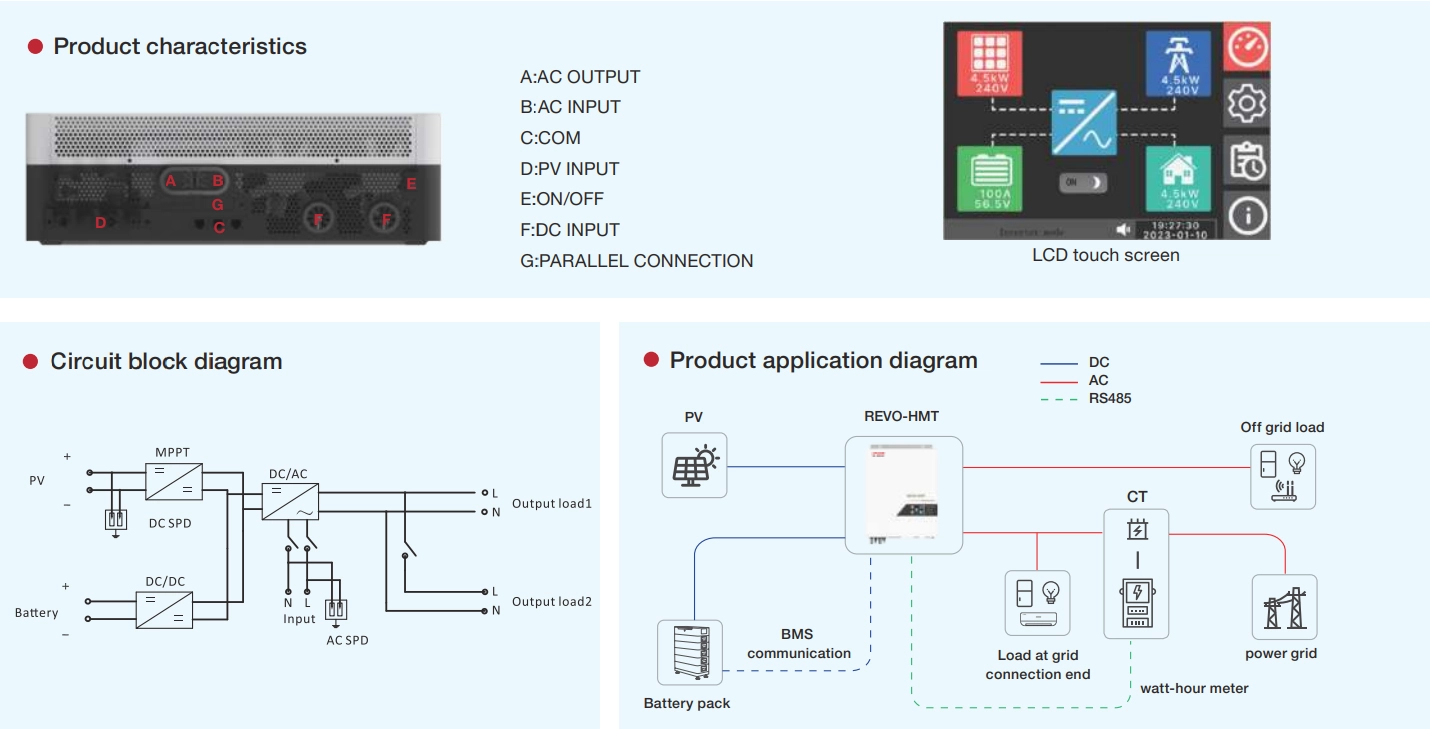
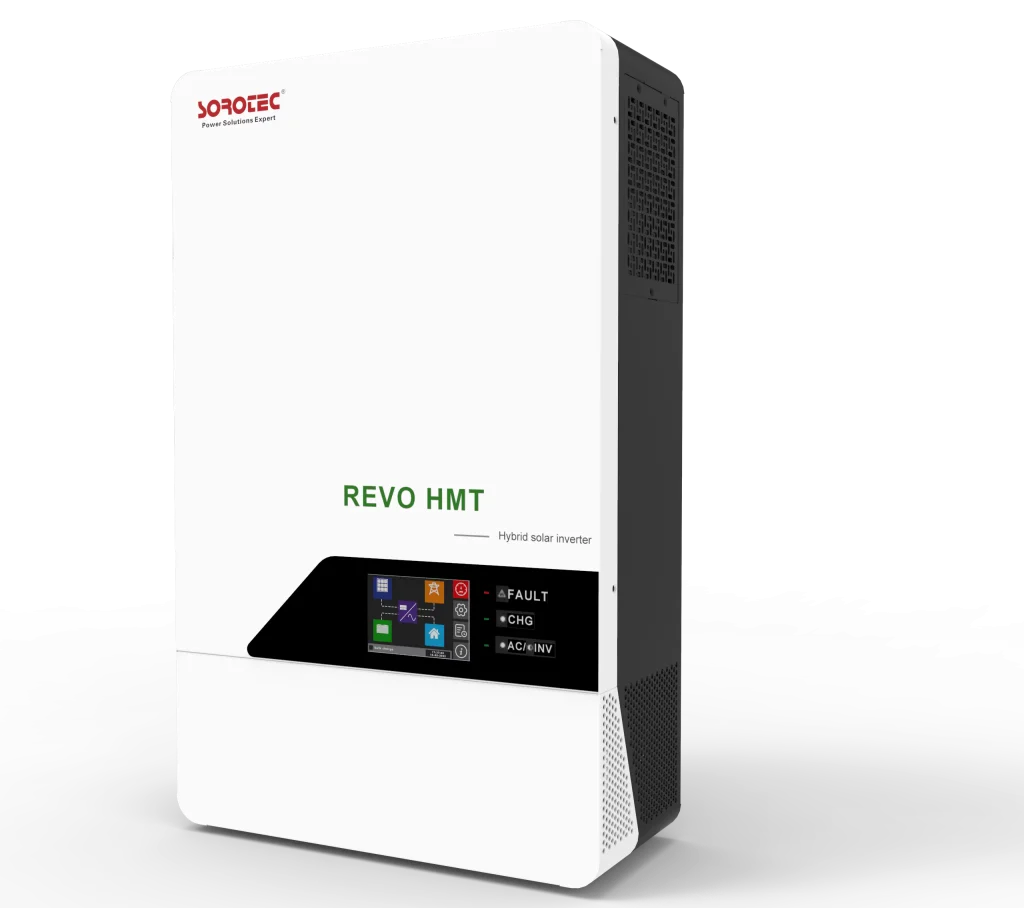
Standard equipment often chokes under heavy industrial demands. You need a machine built for abuse. The On & Off Grid REVO HMT delivers incredible performance for commercial environments that demand absolute reliability every single day.
High PV Input Current Adaptability
Modern solar panels push a lot of current, and ordinary solar inverters struggle with it. The REVO HMT handles it effortlessly. The 4/6 kW models accept up to 27A, while the larger 8/11 kW units handle a massive 40A input.
Flexible Parallel Expansion
As your business grows, your energy needs scale up. You can wire up to six of these machines together in parallel. This lets you build a robust single-phase or three-phase output system that expands naturally with your facility.
Smart Remote Monitoring
Nobody wants to walk down to the electrical room every afternoon. The unit features built-in Wi-Fi and connects straight to a mobile app. You pull out your phone, check the real-time generation data, and get back to running your business without the headache.
Upgrade Your Commercial Energy Strategy
Picking the correct hardware matters, but choosing the right manufacturing partner makes or breaks the project. Investing in reliable solar inverters dictates your company’s operational uptime, so you need a team with a proven track record.
Comprehensive Case Studies
Do not just trust a spec sheet. Look at the real-world deployments. Browsing through their Case Study archive shows you exactly how these systems perform in extreme temperatures and heavy industrial scenarios globally.
Professional OEM and ODM Services
Sometimes an off-the-shelf product does not fit your unique corporate deployment. The company offers extensive OEM and ODM services worldwide. They build the equipment to match your exact technical specifications and corporate branding requirements.
Contact Our Expert Team
Stop guessing about voltage drops and battery chemistry. Get real advice and service from the people who actually build the hardware. Reach out to the contact us today to design a commercial power layout that truly meets your long-term financial goals.
FAQ
Q: What happens to grid-tied solar inverters during a blackout?
A: They shut off completely. It is a mandatory safety feature called anti-islanding protection. This stops the system from pushing electricity into the dead street wires, protecting the repair crews working outside.
Q: Can I upgrade a standard grid-tied system to a hybrid system later?
A: Yes, but it usually involves adding an AC-coupled battery system or swapping out your main unit entirely. Starting with a hybrid model from day one is much cheaper and causes far fewer headaches in the long run.
Q: How long do lithium batteries last in a commercial off-grid setup?
A: In 2026, premium lithium iron phosphate batteries easily last 8 to 10 years. They handle thousands of deep charge cycles without the heavy, annoying maintenance that old lead-acid batteries constantly required.