

Look Behind the Main Switch First
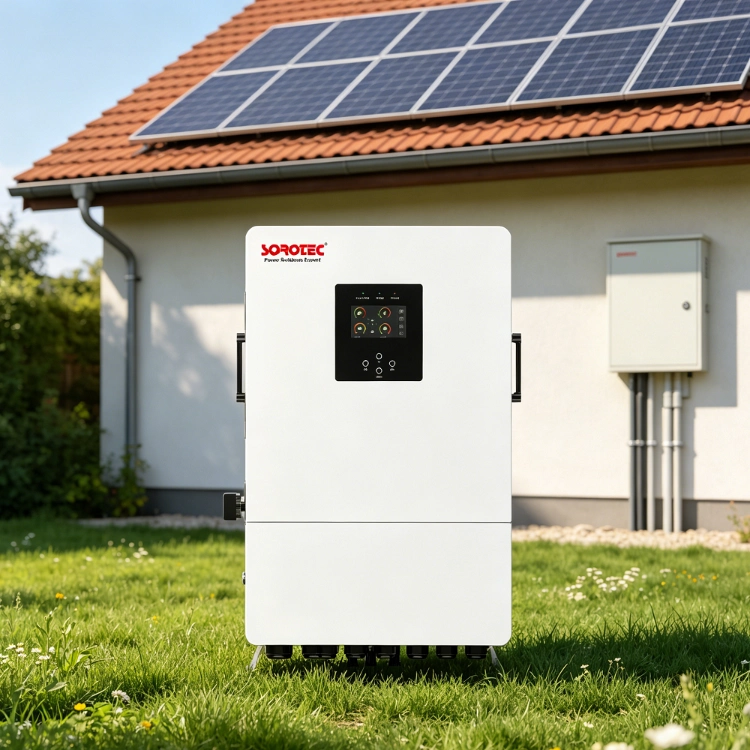
The supply to a building is described by the number of its live conductors and by the voltage between them, and the machine that is to work with it is chosen to suit that service and the loads upon it.
The Straightforward Single Phase Case
On a compatible one-phase service, a single-phase inverter is the natural family to review. Homes are an obvious application, and some small offices and shops use the same arrangement for their protected circuits. SOROTEC shows the single-phase REVO HMT G2 hybrid inverter as a 4 to 11 kW family, and that range is used to open the discussion rather than to pick the final variant. The quotation still has blanks for the voltage, the operating role, the battery design, the installation location and the functions. Load shape matters as well, because a site with a modest steady demand may still have a difficult compressor or a pump start. Running power and starting behaviour belong on the load list, and the circuits that must remain live are marked, since moving every circuit onto the backup output creates a design that is larger than the site needs. The inverter line against which the enquiry is narrowed is set out at SOROTEC inverter range. For a one-phase service the range to review is the single-phase REVO HMT G2 hybrid inverter.
Why Split Phase Needs Its Own Line on the RFQ
Split-phase service is often shortened to single phase, yet the equipment decision is different. With a 120/240 V split-phase supply, two hot legs and a neutral serve circuits at either voltage, and some loads sit from a leg to the neutral while others run across the two legs. The electrician checks each leg before looking at the combined figure. SOROTEC lists the REVO HMT IP54 L2P G2 split-phase family for 120/240 V output in 8, 10 and 12 kW versions. Calling one of them a single-phase inverter removes the detail that the warehouse needs most, so the words split phase and 120/240 V are repeated on the inquiry, the confirmation, the packing list and the receiving check. The two legs are totalled separately, because one crowded group of 120 V circuits can set the limit while the combined figure still looks modest. Where suitable circuits can safely change legs, panel rebalancing may recover useful margin, but the licensed designer and not the sales desk makes that change. For a split-phase service the family to review is the REVO HMT IP54 L2P G2 split-phase family.
The loads are grouped by phase and listed with their starting behaviour. Currents are read on each line rather than inferred from one reading, and the neutral is treated as a live conductor that carries current when loads are unequal.
When the Site Calls for Three Phase
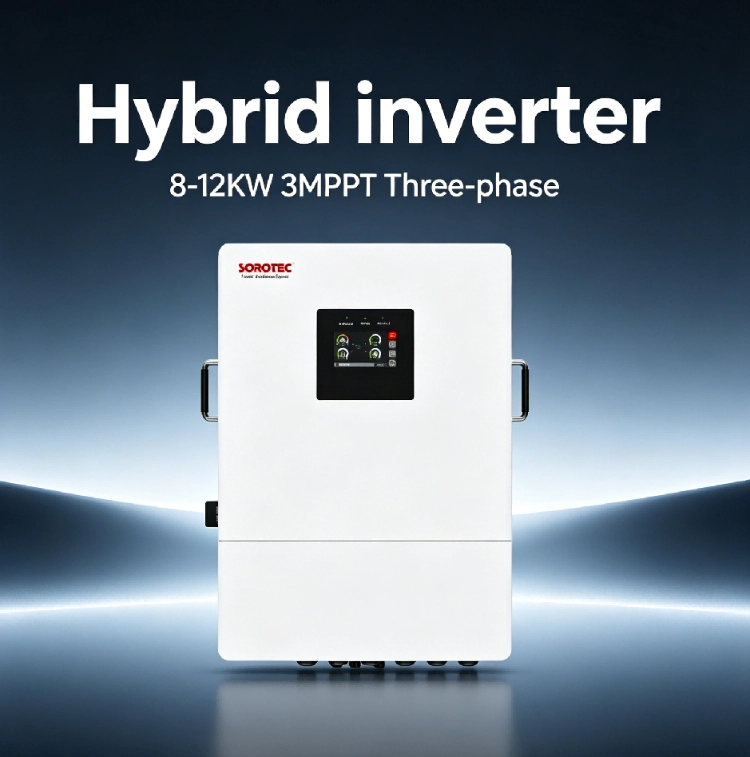
Commercial and industrial buildings often bring three phases to the board, particularly for motors or larger air-conditioning loads, but a three-phase building says little about how the branch circuits were divided. Lights and socket outlets can sit from one phase to the neutral, leaving the three lines with different currents. SOROTEC shows the REVO HMT IP54 L3P G2 three-phase family in ratings from 6 to 12 kW, and the page mentions capability with unbalanced loads, which makes the exact model worth checking, though it does not remove the need for the phase schedule. The technical review still needs the running demand by phase, the relevant starting behaviour, the neutral details, the operating mode, the temperature and the backup sequence. Where a packaged storage route is considered, SOROTEC also presents the iHESS Series, and the specifications of one family are not transferred to another. For a three-phase service the family to review is the REVO HMT IP54 L3P G2 three-phase family. Where a packaged storage route is contemplated, the iHESS Series 1P-3P-EU is reviewed on its own documents.
The designers first ask the supplier whether the load can run at all from the proposed output, then what starting headroom the source can provide, and finally how the load should be started, whether in sequence or with a controlled start. Devices with high inrush current, such as certain motors, transformers or contactor coils, belong in the same discussion. The site should still check the load behaviour against the family specification for the exact model, since a general description is not a guarantee for a specific motor.
Loads that are not needed during an outage should stay off the backup output.
Turn the Survey Notes Into an RFQ
The supplier should not have to guess what an empty field means, and five compact blocks are usually enough for the first inquiry. The first block is the AC service: the phase arrangement, the voltage, the frequency, the neutral, the earthing and the grid connection, with the one-line drawing attached. The second is the load schedule, where normal loads are separated from backup loads and each important circuit is given its phase, its running value, its starting or peak behaviour, its duty cycle and its priority. The third is the battery and the array design. The fourth is the operating requirement, listing only the functions requested for the job. The fifth is the document set, which should belong to the model rather than to the family name.
When values of current at the battery terminals are given, they are quoted with the battery voltage and with the operating condition at which they were measured. The backup current depends on the battery voltage and on the load, and the charging current follows the array, the state of charge, the temperature and the setting of charge limits.
Three quantities are kept apart on the forms and in the conversation.
The required autonomy is a design time that applies to the batteries and the load, and it is not a warranty period for the product. A warranty duration is stated in the product document, where its terms and exclusions are set out.
The design depth of discharge leaves a reserve in the battery, and the depth of discharge is the portion that has been used. Capacity is stated together with the battery voltage, because a capacity at one voltage does not describe the energy of a battery at another.
The battery and the inverter have separate limits, and each is checked against the load.
The continuous and the short-time ratings are kept apart. A starting behaviour is permitted a short excursion, while a running load must stay within the continuous rating.
The battery drawing starts from the running demand of the backed-up load, not from the size of the property.
Four Mistakes That Send the Quote Back
The first common mistake is to use the project country as the electrical specification. The second is to quote from the kilowatt rating alone. The third is to mix single-phase, split-phase and three-phase items under one generic model description. A further problem appears when a distributor treats the backup loads as identical to the total building load, because the two lists are often different; a dedicated essential-load board can reduce the required capacity and make commissioning clearer, provided the site design supports it. Finally, an equivalent phase arrangement should not be accepted after order confirmation, because technical approval opens again if the model, the voltage, the connector, the firmware or the accessory pack changes.
A compact load table is more useful to the designer than a general building description. For each circuit that is to run during an outage, the table should carry its name, its phase or leg, its nominal voltage, its continuous current, its starting behaviour and its running duty, with a note on the permissible downtime and a priority class. The total connected load is recorded, but the figure that matters is the expected coincident running load on the backed-up circuits, not the sum of every item on the site.
A Better First Reply to an Inquiry
When the inquiry is only a request for a rated output, the reply is a set of questions rather than a model number. The voltage and the phases are asked for, together with the loads that must remain on backup, the battery, the array and the installation conditions. That short exchange costs less than a redesign after delivery. SOROTEC can then review a defined application rather than an ambiguous rating, and purchasing, engineering, receiving and installation work from the same reference. The final approval uses the exact model documents and the local electrical requirements, and the local rules and the utility decision still control the job.
The supply defines the service, and the load schedule defines the work. A split-phase property is not treated as a generic single-phase site, nor is a three-phase building assumed to be balanced. A machine is chosen against the exact service, the exact load behaviour and the exact documentation, and the technical approval remains open while any of those details is unresolved.
The choice of the machine is made from the supply and the loads of the particular site, and the maker’s technical confirmation is sought where the service or the loads are not plain.
FAQ
Is split phase simply ordinary single phase?
No. A split-phase service has two live conductors and a neutral, with a line-to-line voltage and a line-to-neutral voltage that differ. It is written as its own line in the enquiry.
Can the total power of a building decide the phase?
No. The phase architecture is decided from the supply and the loads, not from the total power alone.
Why put the three conductors on separate lines?
Because the service is read from which conductors are present, and a note that mixes them cannot be matched to a machine.
What should be shown for backup loads?
The loads that must be carried when the supply fails, given apart from the whole load of the building, since a machine is chosen to suit the loads it will carry.
When should the maker be asked to confirm?
Where the service or the loads are not plain. The enquiry carries the survey notes, and the maker’s confirmation settles the choice.
Conclusion
The service is read before the machine is chosen. A quotation built on the power of the building rather than the service and the loads will be returned, and the site will wait for a second survey.