

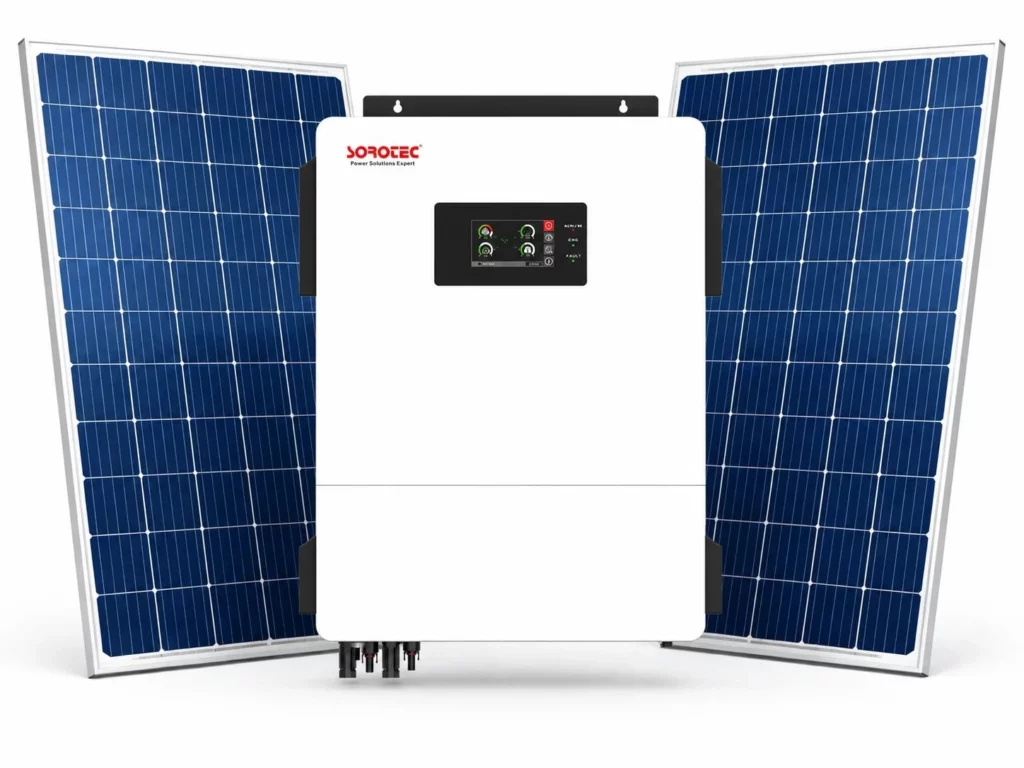
A Three-Phase System does not tell you, by itself, how large your solar array should be. The real starting point is how much electricity your business uses, when it uses it, and how much demand you want solar to cover. If your first question is “How Much Solar Power Do You Need?”, look first at kWh consumption, peak demand, local sun hours, roof space, and future load growth.
What Determines the Right Size for a Three-Phase System?
Good sizing separates daily energy demand from short power peaks.
Daily Energy Consumption
Divide monthly electricity use by the billing days to estimate average daily kWh. Then check what share occurs during daylight. Different businesses can have very different daytime demand even with similar monthly consumption.
Peak Demand and Load Profile
List equipment that may run at the same time, especially pumps, compressors, HVAC, refrigeration, and machinery. Also check whether single-phase loads are concentrated on one phase.
Solar Resource and Roof Space
Sun hours, shading, orientation, and usable roof area can limit the array. One practical design used 3.6 sun hours per day and a 0.8 system efficiency factor, with 40 modules rated at 440 W for 17.6 kW installed capacity.
| Project Input | Actual Value |
| Module rating | 440 W |
| Module count | 40 |
| Installed PV capacity | 17.6 kW |
| Design sun hours | 3.6 h/day |
| System efficiency factor | 0.8 |
If your building has a different load or roof layout, comparing similar project case studies can help you spot assumptions worth checking before the final design.
How Much Solar Power Do You Need Based on Business Consumption?
Once daily use is clear, estimate PV capacity and check the roof and electrical design.
Monthly kWh to Daily Energy Demand
Start with monthly kWh divided by billing days. Next, choose the share you want solar to cover. For many businesses, covering daytime base load makes more sense than offsetting every kWh after sunset.
Solar Yield and System Losses
A useful first-pass formula is:
Required PV capacity ≈ daily solar energy target ÷ (peak sun hours × system performance factor).
Temperature, cable loss, dust, shading, and seasonal sunlight change the final result, so treat this as a planning calculation.
Self-Consumption and Export Targets
More panels are not always better. If midday generation exceeds site demand and export compensation is weak or restricted, a smaller array with higher self-consumption may produce a better commercial result.
How Should Solar Capacity Match Three-Phase Business Loads?
In the middle of the design process, the Three-Phase System should be reviewed for uneven phase loading, daytime loads, and startup peaks.
Balanced and Unbalanced Phase Loads
Commercial buildings often mix three-phase equipment with single-phase lighting, office circuits, tools, and air conditioning. They rarely divide perfectly across L1, L2, and L3, so phase imbalance belongs in inverter selection.
Daytime Base Loads
Solar works well against steady daytime demand such as HVAC, refrigeration, pumps, servers, and production equipment. These loads can consume PV output as it is produced, cutting grid purchases.
Motor and Startup Loads
PV capacity and inverter capacity are not the same decision. Motors and compressors may draw more power during startup than during normal operation. Check those peaks separately to reduce the risk of nuisance trips.
Why Does Inverter Selection Matter for Business Solar?
“How Much Solar Power Do You Need?” answers only part of the project. The inverter must also accept the PV string voltage, manage uneven phases, work with storage, and suit the installation environment.
6–12kW Power Matching
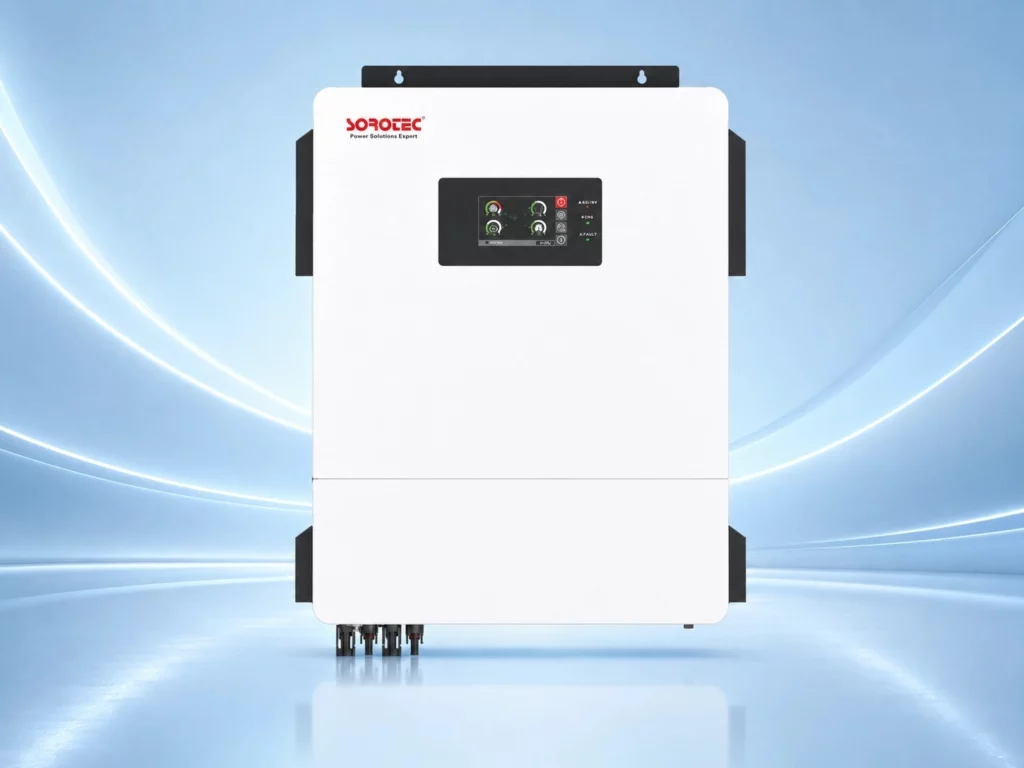
For small and medium commercial projects in this range, the Three-Phase IP54 REVO HMT is worth considering. Its 6–12 kW range lets you match inverter power to calculated loads rather than simply buying the largest unit.
PV Voltage and MPPT Range
The inverter supports up to 800 VDC PV input and a 200–650 VDC MPPT range. It carries an IP54 rating and operates from -25°C to 60°C, useful for service rooms, workshops, farms, and semi-outdoor sites.
| Product Parameter | Published Value |
| Power range | 6–12 kW |
| Protection rating | IP54 |
| Operating temperature | -25°C to 60°C |
| Maximum PV input | 800 VDC |
| MPPT range | 200–650 VDC |
| Three-phase unbalanced output | 100% |
| Single-phase load allowance | Up to 50% of rated power |
| Maximum stated efficiency | Up to 97.5% |
Hybrid Energy Management
The platform supports time-of-use management, Web/App monitoring, islanding protection, insulation monitoring, and optional AFCI. For storage projects, these functions help control when energy is used or charged.
What Sizing Mistakes Can Reduce Solar Project Returns?
Array size, inverter power, load timing, and storage need separate checks.
Excessive PV Oversizing
A sensible DC/AC ratio can be useful, but too much DC capacity relative to inverter AC power can increase clipping during strong irradiance. Higher PV input voltage by itself does not remove that issue.
Weak Load and Storage Planning
If panels peak at noon but your business peaks later, adding more PV may not solve the mismatch. Storage can help, but tariffs, battery cycling, export rules, and critical loads should be checked first.
Missing Future Load Growth
New machinery, extra air conditioning, EV charging, electric heating, or another work shift can change demand quickly. Leave room for realistic growth without paying today for unlikely future demand.
Why Choose SOROTEC for Your Three-Phase Solar Project?
Once the electrical numbers make sense, supplier support becomes part of the project.
Power Electronics Manufacturing Experience
SOROTEC has worked in power electronics and new energy since 2006. It combines solar inverter and energy storage production with independent testing and OEM/ODM service, which is useful when a buyer needs more than a standard catalog unit. The company operates a 20,000-square-meter production area with 350 employees and lists about 20 years of solar manufacturing experience.
Project and Customization Service
Before discussing load power, PV voltage, storage, installation conditions, and operating schedules, review the company’s manufacturing background and define what must be customized. The Three-Phase IP54 REVO HMT is offered with project-specific customization.
Direct Project Contact
A well-sized Three-Phase System should fit your load curve, roof, inverter window, storage plan, and likely expansion. If you are still asking “How Much Solar Power Do You Need?”, prepare recent electricity bills, peak-load details, working hours, roof information, and future plans, then contact the technical team for service and project matching.
FAQ
Q: Is a Three-Phase System automatically larger than a single-phase solar setup?
A: No. Supply type affects electrical architecture, but PV size still depends on energy use, load timing, solar resource, roof space, and your target solar contribution.
Q: Should inverter power equal installed PV panel power?
A: Not always. PV DC capacity and inverter AC rating can differ. The right ratio depends on irradiance, expected generation, clipping tolerance, load behavior, and local design rules.
Q: Is battery storage necessary for a commercial hybrid inverter?
A: Not always. Storage is most useful for backup power, later tariff periods, or a clear mismatch between daytime generation and business demand.