

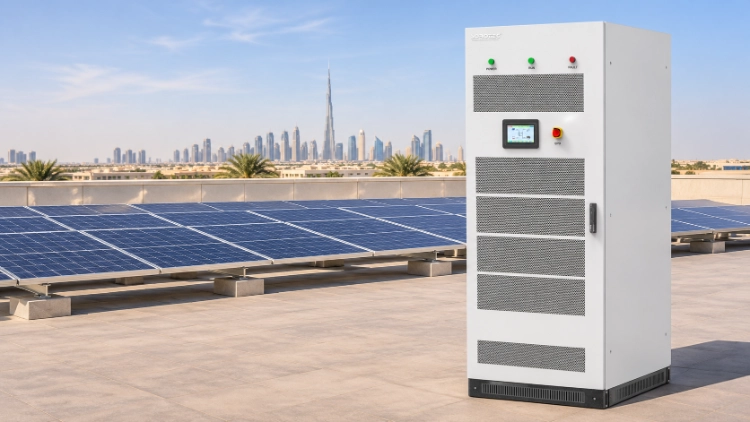
A request for a 10 kW or 20 kW price says surprisingly little. In Dubai, that request might come from a villa, a shop or a refrigerated warehouse. The useful starting point is the building: its voltage and phases, when it uses power, and what the owner expects during a cut.
Answering the questions below gives the consultant something firmer than a catalogue price to review.
What Should Be in the First Email
You do not need a finished drawing. You do need the facts already known.
Describe the Electrical Service and Load
Write the site location, service voltage and number of phases. Add the connected load and the PV capacity being considered. If the owner wants backup, name the circuits rather than saying “whole building”. A till, router and cold room are a clearer brief than a general request for emergency power.
Show the Proposed Installation Location
Show the proposed mounting point to the solar inverter supplier in Dubai. A rooftop wall behaves differently from a shaded service corridor or a cooled plant room. Send a wide photo and a close view with rough clearances; they reveal more than calling the location simply “outdoor” or “indoor”.
Separate Current Scope From Future Storage
Finally, say what has not been decided. “Battery in phase two” is honest. It lets the supplier keep expansion in mind without inventing a battery quantity for the first price.
Why Does the Exact Model Matter to DEWA
A Dubai rooftop project moves through DEWA’s Shams Dubai process, from design review and application to inspection, metering and connection. The inverter named in the paperwork therefore matters throughout the job.
Match the Submission to the Exact Model
Submit the model, not just the brand. Its file must correspond to the offered AC rating, DC input, output voltage, phase arrangement, enclosure and compliance evidence. If the quotation names only a product family, it is not yet specific enough.
DEWA’s eligible equipment list is helpful, but DEWA describes it as non-exhaustive. Search the code written on the offer. If the last letters differ, ask why. They may identify a different variant, certificate or market version.
Use Current Connection Documents
Do not rely on a PDF copied from an earlier job. Ask for current documents and let the enrolled consultant check them against the current connection requirements.
How Much Does Dubai Heat Change the Choice
Enough to affect both the model and its location.
Check Temperature and Enclosure Limits
DEWA’s connection guidance uses 50°C as the outdoor design maximum. It discusses derating, sunlight, ventilation and dust. It also refers to IP65 for outdoor inverter applications and, in the ordinary indoor case, IP54.
None of that means an IP65 unit will produce its full nameplate power on an exposed wall in August. The useful document here is the temperature derating curve. It shows what happens to output as the air around the inverter gets hotter.
Inspect the Mounting Point
Visit the proposed wall in mid-afternoon. Look for shade, nearby condensers and blocked air paths. Mark the intended clearance on a photograph. If the unit is indoors, look at dust as well as cooling. An air-conditioned room with open doors and clogged filters is not a protected environment for long.
Do You Need Grid Connected Solar or Hybrid Backup
Ask what the owner expects to happen when the grid disappears.
Grid Connected Solar for Daytime Savings
If the answer is “nothing special”, a grid-connected design focused on daytime consumption may be the cleanest route. It follows the load profile, PV strings and approved export arrangement. Paying for battery functions would not create a benefit by itself.
Hybrid Backup for Selected Loads
If selected circuits must remain live, the conversation changes. Now the supplier needs their running power, starting power and desired runtime. Refrigeration and pumps can have short starting events that matter more than their steady load.
Commercial Storage as a Complete System
Large commercial storage is a different scale again. A factory or hotel may need a conversion cabinet, batteries, metering, switchgear, controls and commissioning. Comparing cabinet prices without those surrounding items is like comparing engines while ignoring the vehicles they are meant to move.
Which SOROTEC Families Are Relevant
iHESS L3P G2 for Smaller Three Phase Hybrid Projects
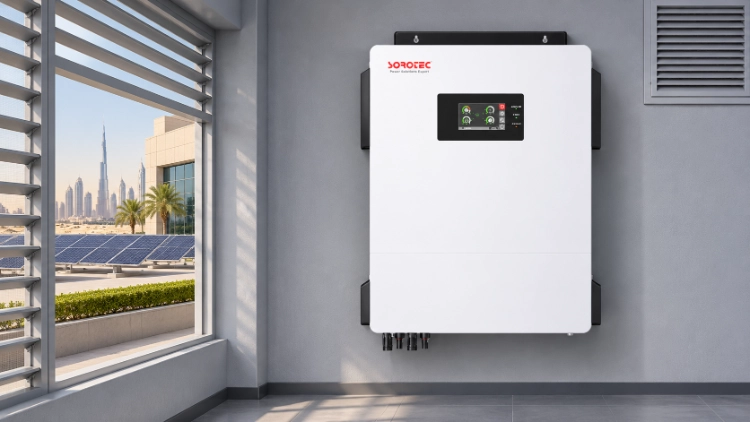
For a smaller three-phase hybrid job, one family to review is SOROTEC iHESS L3P G2. Published variants run from 6 kW to 12 kW, with IP66, a 200-650 VDC MPPT range and backup transfer stated below 10 ms. The page also describes parallel operation for as many as six units.
Those figures help to narrow the catalogue. They do not replace approval of the exact variant, nor do they show that a six-unit layout is the right architecture for the site.
MPGS for Larger Commercial Projects
For a larger commercial job, SOROTEC’s MPGS series covers 50-600 kW and brings PV, battery and UPS-related functions into the discussion. Quoting “MPGS” alone leaves the important choices open: power level, battery side, transformer, cooling, grid interface and operating mode must all be stated.
How Should Two Quotations Be Compared
Before comparing totals, put both offers against the same scope.
Normalize the Equipment Scope
One price may cover a meter, data logger and commissioning while the other ends at the inverter. Mark each accessory as included, optional or supplied by the installer. Repeat the check for breakers, current transformers, battery cables and protection.
Compare Commercial and Warranty Terms
Read the commercial lines separately from the hardware. Currency, Incoterm, destination, lead time and quotation validity should be visible at a glance. Record who handles a warranty case as well as its duration. For remote commissioning, identify the technician at site and the person receiving the logs.
When only one offer includes storage, ask for the battery package as an option. Compare the common grid-connected base first; the higher total may otherwise reflect extra equipment rather than a higher price for the same job.
What Should You Check Before Ordering
Complete the Final Technical Check
Read the model code once more. Match it to the datasheet and the documents being submitted. Check expected output at the installation temperature. Confirm the phase arrangement and backup loads. Look for every accessory that the installer assumes will arrive with the shipment.
Confirm the Support Route
Then ask one very practical question: who responds when the system reports a fault? A long warranty is useful only when the route from site log to technical answer is clear.
These questions should make a Dubai quotation quicker to settle, because the supplier is no longer guessing at the load or the site. For a SOROTEC proposal, send the electrical brief and photographs through the SOROTEC contact page. Ask for current documents tied to every model code on the offer.
FAQ
What does a Dubai inverter supplier need for a first quote
A first quote needs the location, voltage, phase type and connected load. Add the proposed PV size and name any circuits that must remain live. Send photos of the wall or room, including the available clearance. Mention future storage separately so it can be allowed for without appearing in today’s battery price.
Is a DEWA listed inverter enough
No. Read the model code on the offer character by character and match it to the current documents. A related model on a list does not clear a different variant. The consultant still has to check the proposed connection and the conditions at the site.
When is a hybrid inverter worth specifying
It becomes relevant when the owner can name loads that must stay on during a cut. Those loads, their start-up demand and the required hours drive the battery decision. If an outage can simply stop the site, a grid-connected design may be the cleaner and less expensive brief.
Does IP65 make a unit suitable for a hot outdoor wall
No. IP65 deals with ingress, whereas the Dubai wall may fail the installation on temperature. Check that wall in the afternoon, then read the derating curve. Shade, airflow and service clearance still matter even when the enclosure rating is correct.