Home solar setups have evolved far beyond basic additions. Nowadays, they integrate seamlessly into everyday electricity needs, emergency power strategies, and efforts to manage utility expenses. Picking the appropriate solar inverter stands as a crucial element that determines the overall reliability, adaptability, and readiness for future upgrades in such a setup.
This overview outlines five essential aspects that property owners and technicians ought to evaluate when opting for a home solar inverter. The content draws from practical household scenarios and draws on SOROTEC’s hybrid inverter and battery options, which see frequent use in domestic energy storage initiatives across various regions.

1. What Are the Power and Voltage Requirements for Your Home System?
Prior to examining specific brands or advanced capabilities, one must first grasp the fundamental aspects of the setup. The electricity needs and electrical configuration essentially dictate which inverter truly suits a household. Gaining this insight prevents frequent issues, such as systems that prove too small or ones that restrict later growth.
Residential Load Calculation and Power Matching
In a usual contemporary home, various devices operate simultaneously, including lights, fridges, cooling units, cooking tools, and gadgets. Data from the U.S. Energy Information Administration (EIA) indicates that during busy periods, the standard home electricity usage typically falls between 3 kW to 7 kW, and it can surge even higher whenever heating, ventilation, and air conditioning (HVAC) units kick in.
For households intending to incorporate energy storage units and emergency supply, selecting the inverter size requires accounting for steady usage as well as brief power peaks.
| Household Type | Typical Peak Load (kW) | Recommended Inverter Size |
| Small apartment | 2.5 – 3.5 kW | 3 – 5 kW |
| Standard family home | 4 – 6 kW | 6 – 8 kW |
| Large home with HVAC | 6 – 9 kW | 8 – 10 kW |
The Single-Phase IP66 REVO HES Hybrid Energy Storage Inverter (6/8/10 kW) aligns nicely within these parameters, so it works effectively for the majority of rooftop installations and combined storage arrangements in homes.
Battery Voltage and System Compatibility
The selection of voltage significantly influences the setup’s performance and minimizes wiring inefficiencies. Systems operating at lower voltages, like 24V or 48V, remain popular for modest home configurations, whereas elevated-voltage battery arrays enhance output for bigger installations.
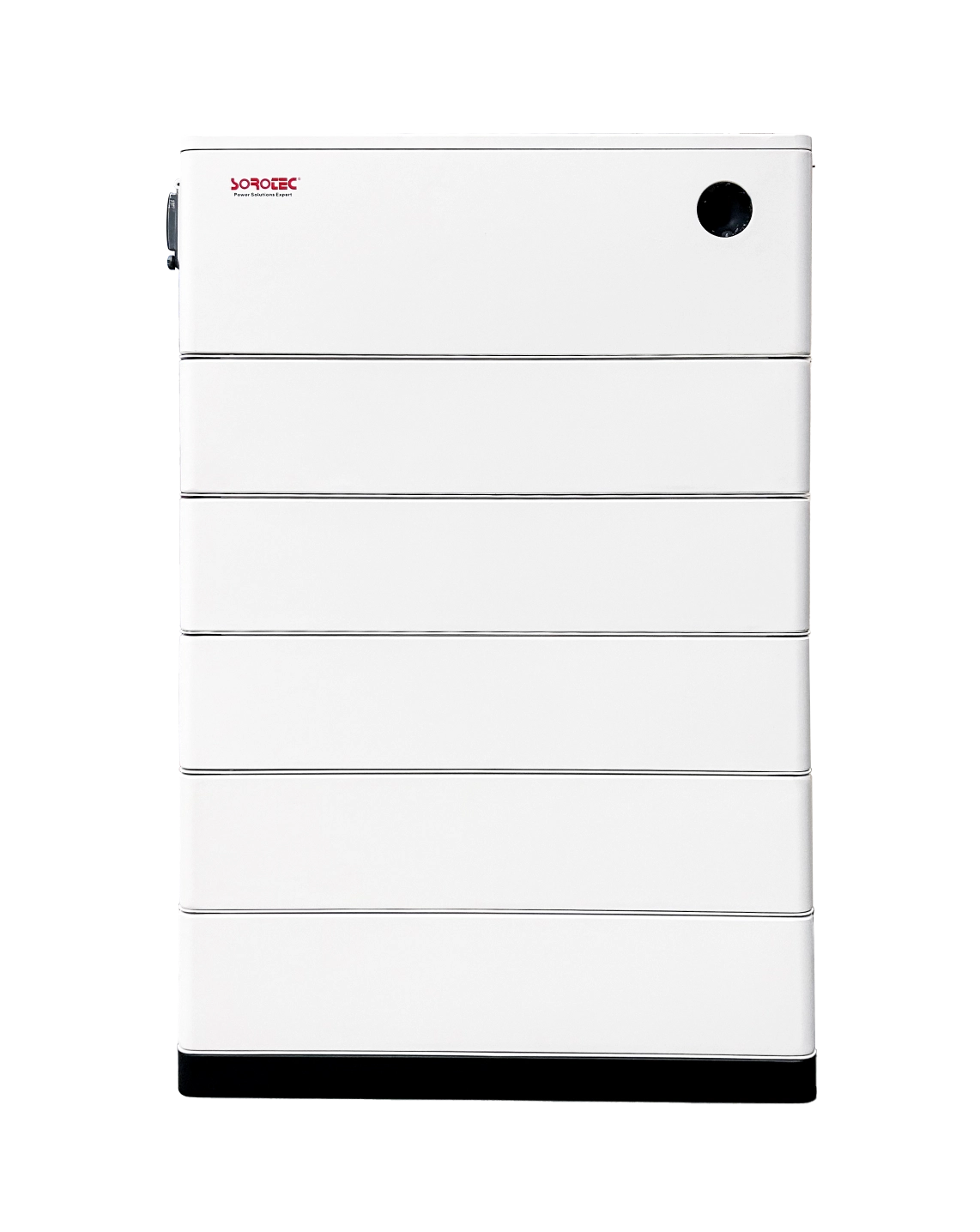
SOROTEC’s SL 24V/48V-T/W battery series (100Ah) accommodates versatile low-voltage home applications. Moreover, when it comes to greater storage volume and extended emergency runtime, the SL-RH/S/EU high-voltage battery system (153.6V to 614.4V) caters specifically to sophisticated hybrid configurations that handle substantial energy requirements.
Future Scalability and Expansion Considerations
Quite a few home setups begin modestly and expand gradually as needs change. It’s routine to incorporate additional panels, storage units, or even charging stations for electric vehicles down the line. Thus, inverters that facilitate modular additions to batteries and broader voltage options lessen the necessity for overhauling the whole system later on.
SOROTEC’s hybrid framework enables enhancements to battery capacity without overhauling the overall design, a feature that proves vital for sustained household energy strategies.
2. How Important Is Efficiency and Conversion Performance?
The level of efficiency plays a direct role in transforming solar power into practical electricity for use. Even minor variations in this area can accumulate substantially across many years of service. Although this aspect often gets sidelined, it genuinely shapes the routine energy yield and cumulative financial benefits.
High Efficiency Conversion for Daily Energy Use
Contemporary home inverters generally achieve efficiencies ranging from 95% and 98%. Based on standard IEC testing data that the sector commonly cites, just a 1% variation in efficiency might equate to several hundred kilowatt-hours annually in a standard household installation.
| Inverter Efficiency | Annual Energy Loss (5 kW System) |
|---|---|
| 95% | ~730 kWh |
| 97% | ~438 kWh |
| 98% | ~292 kWh |
Combined inverters such as the REVO HES series aim to sustain strong conversion rates during both solar generation and battery functions, thereby cutting down on losses amid regular charging and discharging routines.
MPPT Tracking Under Changing Conditions
Solar panels seldom function in ideal settings, as shifting clouds, partial shadows, and fluctuating temperatures alter their performance all day long. MPPT (Maximum Power Point Tracking) technology enables the inverter to make real-time adjustments accordingly.
Effective MPPT mechanisms boost the amount of energy harvested in early mornings, late afternoons, and situations involving intermittent shading, which frequently occur on home roofs.
Long-Term Impact on Home Energy Costs
Superior efficiency translates to fewer losses in energy and greater amounts of practical power throughout the installation’s duration. Consequently, over a span of 10 to 15 years, these advantages show up clearly in reduced electricity statements and enhanced dependability for backups, particularly in dwellings that depend on storage during power failures.
3. Is the Inverter Compatible with Energy Storage and Hybrid Systems?
Home solar installations are advancing past basic connections to the grid alone. Incorporating storage batteries and combined operations has turned into a norm in numerous places. As a result, ensuring the inverter pairs well with batteries emerges as a fundamental necessity.
Battery System Integration and Voltage Range
Not every inverter accommodates a broad spectrum of battery voltages or types of materials. When there’s a mismatch, it often results in suboptimal output or restricted storage utilization.
SOROTEC’s SL-RH/S/EU high-voltage battery systems facilitate expandable setups from 153.6V to 614.4V, which lets households tailor their storage scale to actual consumption patterns instead of rigid boundaries.
Hybrid Operation for Grid and Backup Power
Inverters designed for hybrid use can effortlessly transition among grid supply, solar generation, and battery reserves on their own. Such capability proves essential amid blackouts or when the main power supply wavers.
The REVO HES hybrid inverter handles grid-tied, independent, and reserve functions within a single device. For everyday home users, this setup eliminates the requirement for extra equipment and intricate cabling.
Support for Common Battery Chemistries
Batteries based on lithium iron phosphate (LiFePO₄) have gained widespread adoption in home storage thanks to their secure nature and durability over cycles. Inverters tailored for these current lithium variants minimize pairing problems and refine the precision of charging management.
4. What Safety, Protection Levels, and Environmental Ratings Matter?
Home systems tend to run for extended periods with little oversight. Thus, safety measures and resilience to environmental factors represent essential attributes rather than mere extras. These elements shape the installation’s dependability and ongoing upkeep expenses.
IP Rating and Outdoor Installation
A good number of home inverters end up placed in sheds, lower levels, or exposed areas. The IP ratings specify how well they resist particles and moisture.
| IP Rating | Protection Level | Typical Use |
|---|---|---|
| IP20 | Indoor only | Utility rooms |
| IP54 | Limited outdoor | Covered areas |
| IP66 | Dust-tight & water-resistant | Outdoor installation |
The IP66-rated REVO HES inverter suits mounting on exterior surfaces and tough surroundings, which eases placement options and cuts down on the need for protective housings.
Electrical and Thermal Protection
Home inverters ought to feature safeguards against excessive voltage, electrical shorts, excess heat, and disruptions in the grid. These safeguards lower the chances of fires and shield linked devices from harm.
Performance in Hot and Cold Climates
Ambient temperature can shorten an inverter’s useful life if not managed well. Installations equipped with solid heat regulation deliver consistent performance despite scorching heat in summer or chilly conditions in winter, a key aspect for ensuring home system steadiness.
5. Why Do Warranty, Support, and Brand Experience Matter?
Solar installations qualify as enduring commitments. The backing for the product holds equal weight to its technical details. Opting for a dependable producer helps alleviate concerns throughout the setup’s active years.
Warranty Coverage and System Lifespan
Home inverters commonly provide 5 to 10 years of warranty. A straightforward warranty signals trust in the item’s construction and production standards.
The REVO HES hybrid inverter includes a 5-year warranty, aligning with typical home standards and installation mandates.
After-Sales Support and System Service
Accessible on-site expertise, ready access to replacement components, and straightforward guides assist both fitters and residents in resolving problems swiftly. In turn, this approach shortens interruptions and trims expenses related to prolonged operations.
Proven Residential Project Experience
SOROTEC brings substantial know-how from projects in homes, businesses, and storage applications. This foundation informs designs that address genuine on-site hurdles, extending beyond mere testing in controlled environments.
FAQ
Q1: What inverter size is suitable for a typical residential solar system?
A: For most family dwellings, a 6–8 kW hybrid inverter performs reliably, varying with the demands of devices and cooling systems. Bigger properties might call for 10 kW units.
Q2: Is a hybrid inverter necessary for residential solar?
A: Hybrid inverters aren’t required in every case, yet they enable adding batteries and reserve power. In regions facing grid instability or steep power rates, these setups provide valuable versatility.
Q3: Can a residential system be expanded later with more batteries?
A: Absolutely. Configurations employing expandable batteries like the SL-RH/S/EU series permit increasing capacity sans swapping the inverter, thereby aiding ongoing energy strategies.


