

Household power systems have changed a lot over the past decade. Homes now run more electronics than ever, and the push toward solar-plus-storage setups keeps rising every year. Because of this shift, many homeowners start to question whether the old square wave inverter designs still fit the needs of a modern home. They were once common, but things are different now—appliances, loads, and user expectations all moved forward. To understand whether square wave inverters still make sense, it helps to look at how they work and how they compare with today’s mainstream choices.
What Makes Square Wave Inverters Different From Other Inverter Types?
Before judging whether square wave inverters are a match for home use, it makes sense to see how they differ from modified sine wave and pure sine wave units. Waveform quality is at the core of this comparison.
Basic Operating Characteristics
Square wave inverters create a very simple waveform—basically a block-shaped output. This design is cheap and straightforward. Because of the simple switching pattern, production cost and circuit complexity stay low. But the output is far from the smooth AC power supplied by the grid. While the shape works for older, low-sensitivity appliances, it isn’t friendly to many household devices today.
Common Residential Performance Limitations
Moving from the basic design to real-world performance, the gaps become clearer. Fans can buzz. Lights might flicker a little. Motors often run hotter than they should. These side effects appear because the wave is “choppy,” and appliances must work harder to deal with it.
Impact on Sensitive Home Appliances
The biggest limitation shows up when sensitive devices enter the picture. Laptops, LED TVs, modern refrigerators, routers, induction cookers—most of them expect a clean sine wave. A square wave can stress power supplies, shorten component life, or cause malfunction. Even if the appliance runs, it may not run well. Many manufacturers directly state that warranty may not cover damage caused by poor-quality power.
Can Square Wave Inverters Meet Modern Household Power Requirements?
With homes now filled with electronics that were rare ten years ago, it’s worth asking if square wave inverters still meet general household expectations.
Growing Demand for Clean Power Output
Homes use more DC-powered devices, high-efficiency appliances, and smart equipment that talks to each other. These devices use sensitive internal circuits. The market shift is obvious when you look at global demand: according to data from the International Energy Agency (IEA), over 78% of new residential solar-plus-storage installations in 2023 used pure sine wave inverters, not square wave. This reflects a clear preference for smoother power output.
Compatibility Issues With Sensitive Appliances
As electronics become the standard rather than the exception, compatibility matters more. A fridge compressor might survive, but a smart TV or a gaming console may not. Square wave systems also tend to cause heat build-up inside adaptors and chargers. And nobody wants a warm laptop brick humming on the floor.
Efficiency and Noise Considerations
Another concern is efficiency. Square wave inverters normally lose more energy as heat, especially under partial load. On top of that, users often complain about humming sounds from transformers or motors. These factors compound into a simple truth: they may power the load, but they do not do it gracefully.
Are Pure Sine Wave Inverters a Better Alternative for Residential Users?
To understand whether square wave systems are still suitable, a direct comparison with pure sine wave inverters is helpful. Pure sine wave output behaves almost the same as the national grid, which is why homeowners gravitate toward them.
Stable Output for Modern Electronics
The smooth curve of a pure sine wave helps electronics run cooler and steadier. There’s less distortion, less noise, and far fewer surprises. Power supplies inside appliances like TVs or smart speakers work much closer to their intended design.
Higher Efficiency and Longer Equipment Lifespan
Efficiency ranges vary by brand, but most pure sine wave inverters hit 90%–94%, while many square wave units struggle around 75%–85% under mixed loads. That gap seems small on paper, but in daily use it means lower heat, less waste, and better durability.
Improved User Experience With Lower Noise and Heat
Motor-driven devices—fans, pumps, washing machines—sound noticeably smoother. A home feels calmer without the faint buzzing noises associated with square wave systems. Over long-term use, this comfort matters more than people think.
Real-World Comparison Table
Below is a small, fact-based comparison that reflects typical residential inverter performance ranges:
| Feature / Parameter | Square Wave Inverter | Pure Sine Wave Inverter |
|---|---|---|
| Typical Efficiency | 75–85% | 90–94% |
| Appliance Compatibility | Low–Medium | High |
| Noise Level | Noticeable hum | Very low |
| Price | Low | Medium |
| Clean Power Output (THD) | 20%+ | <5% (grid-like) |
| Suitable for Sensitive Devices | Not recommended | Recommended |
(THD = Total Harmonic Distortion. Values based on international inverter testing data and manufacturer specifications.)
How Do SOROTEC’s Pure Sine Wave Solutions Address Household Energy Challenges?
The above comparisons explain the technology differences, but homeowners also want practical options. SOROTEC offers several inverter models designed specifically to handle modern residential demands. Each model fits different kinds of home setups—from simple backup power to full hybrid solar energy systems.
Off-Grid REVO VP/VM Series – Flexible Backup for Home Use
Transitioning from the general market to SOROTEC’s lineup, the REVO VP/VM Series stands out in off-grid home power scenarios. These models (1.2/2.2/3.2/5kW) deliver true pure sine wave output, which means stable performance for lights, refrigerators, routers, and entertainment devices. They support solar input, making them ideal for areas with unstable grids or full off-grid cabins. The design is fairly compact, and the LCD interface makes daily use simple—something homeowners appreciate.
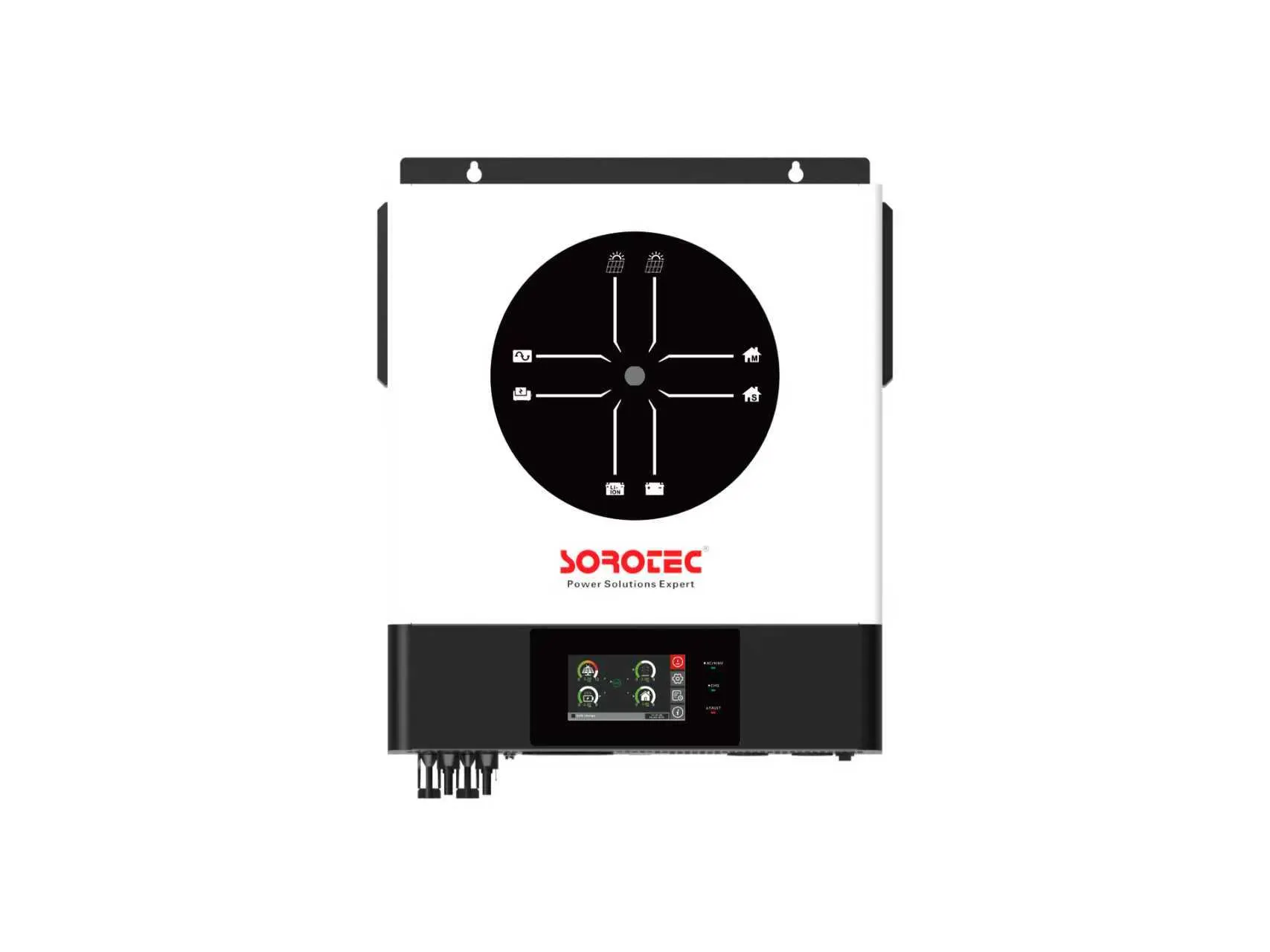
REVO VM V Hybrid On & Off Grid Inverter – Smart Residential Energy Storage
Some homes want both solar and backup power without switching between separate devices. Moving to this hybrid category, SOROTEC’s REVO VM V Hybrid Inverter offers on-grid and off-grid modes in one unit. It supports battery charging from solar or grid, and its pure sine wave output keeps the household power stable even during grid changeovers. For many residential users in regions with inconsistent electricity supply, this hybrid setup provides smooth transitions without flicker or rebooting.
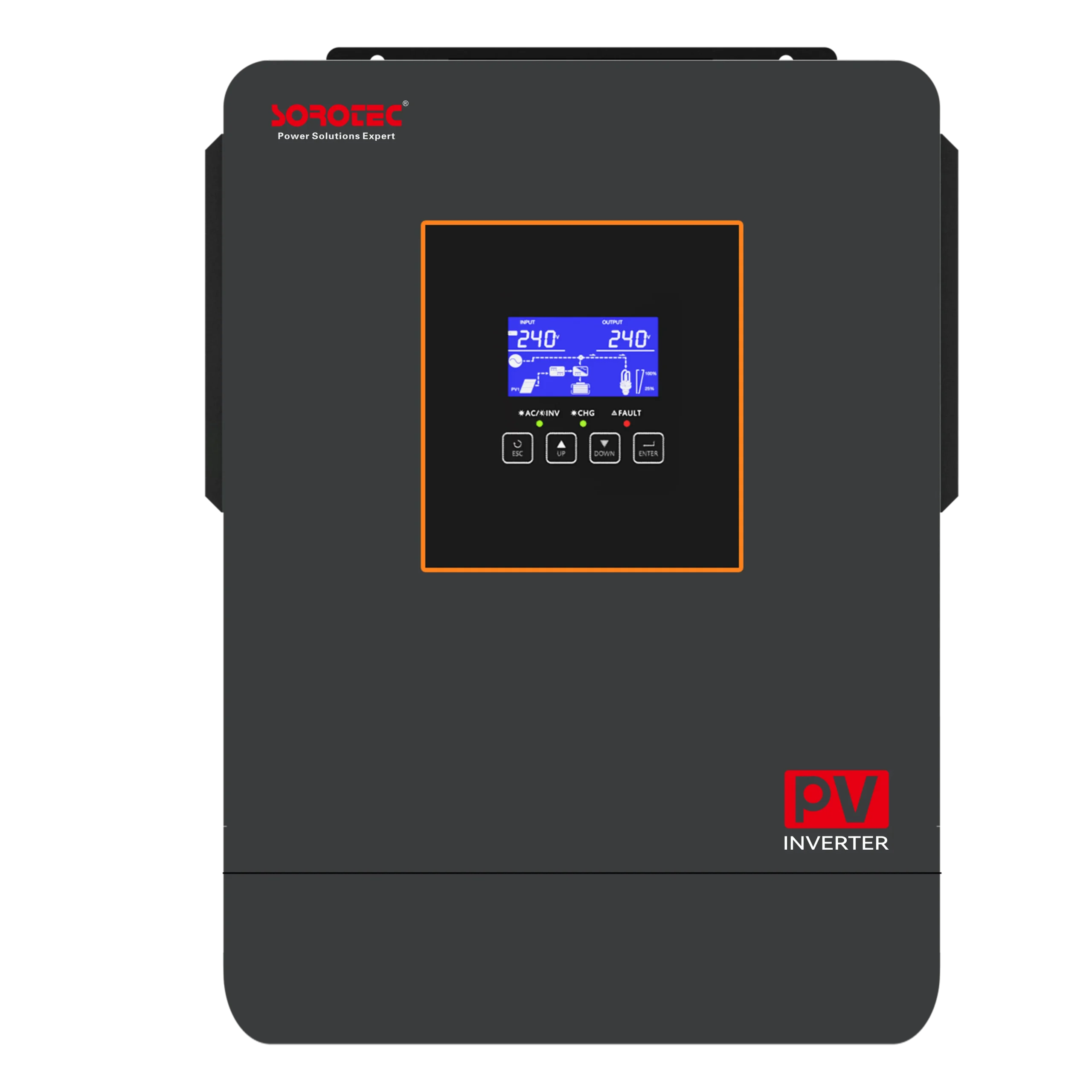
REVO MPI Photovoltaic Inverter – Dual-Rating Pure PV Power Supply
For homes running mostly on solar or for users with daytime-heavy loads, the REVO MPI PV Inverter is built for pure photovoltaic off-grid use. Available in 6kW and 10kW, it supports dual power rating. Many off-grid homes pair this model with higher panel capacity to run appliances like pumps, washing machines, or even small workshops during the day. The pure sine wave output helps maintain stable performance even under surge loads.
Performance Snapshot of SOROTEC Residential Inverters
| Model | Power Rating | Waveform | Application Scenario |
|---|---|---|---|
| REVO VP/VM Series | 1.2–5kW | Pure Sine Wave | Off-grid homes, cabins, backup power |
| REVO VM V Hybrid | 3–6kW range | Pure Sine Wave | Hybrid solar + grid households |
| REVO MPI 6/10kW | 6kW / 10kW | Pure Sine Wave | Daytime solar-heavy, pure PV off-grid |
When Should Homeowners Avoid Square Wave Inverters Entirely?
Although square wave designs still work for simple loads, there are several situations where using them is simply not worth the risk or inconvenience.
Homes With High Electronics Usage
Modern homes are full of chargers, laptops, routers, TVs, smart home devices, and kitchen appliances. These loads expect smooth, grid-like power. A square wave might keep them on, but long-term wear can get expensive.
Solar-Plus-Storage Residential Systems
As solar adoption grows, clean AC output becomes even more important. Pairing square wave inverters with lithium batteries, MPPT chargers, and modern solar controllers is rarely practical.
Appliances Requiring Stable, Low-Distortion Waveforms
Anything with an internal SMPS board (switch-mode power supply), digital control panel, inverter compressor, or induction heating coil always performs better with pure sine wave output.
FAQs
Q1: Are square wave inverters still used today?
A: Yes, but mostly in small, low-budget setups or for simple tools. They are rarely recommended for homes filled with modern electronics.
Q2: Do pure sine wave inverters really make appliances last longer?
A: Generally yes. Because the waveform is smoother, appliances run cooler and face less electrical stress.
Q3: Is SOROTEC suitable for residential solar systems?
A: Yes. SOROTEC’s REVO VP/VM, REVO VM V Hybrid, and REVO MPI series are all designed for home power use, especially where clean AC output and solar compatibility matter.