

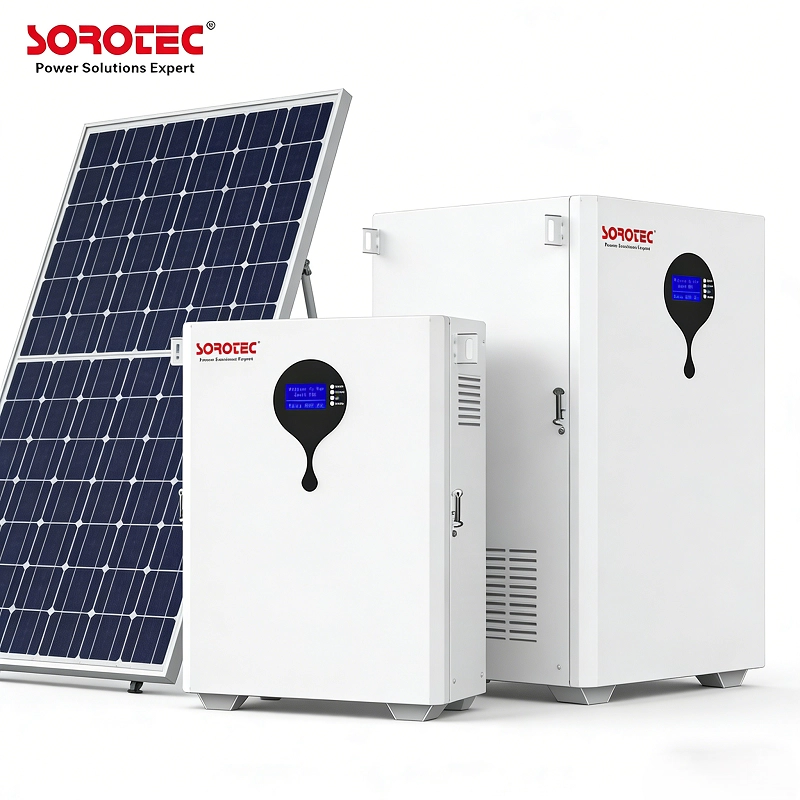
A LiFePO₄ Battery Backup is not just a larger battery box. For a shop, clinic, office, villa rental, farm office, or small workshop, it is a quiet insurance policy against blackouts, voltage dips, and messy generator habits.
SOROTEC is worth a closer look here because it comes from the power electronics side, not only the battery side. The company has worked in UPS, solar inverters, telecom power, energy storage, and power quality equipment since 2006, so its storage products sit inside a wider system view. That matters when you need a battery, inverter, BMS, service response, and real load planning to work together. The SL-W/SL-R LiFePO₄ Battery fits this practical backup market well: compact, indoor, long-cycle, and built for solar storage.
Why Does Business Backup Power Need More than a Basic Battery?
For business users, backup power is less about comfort and more about continuity. A fridge, POS terminal, router, security camera, water pump, server cabinet, lighting line, or access control system may look small on paper. But when power fails, each load has a different priority. A cheap battery may run something for a short time. A better system keeps the right loads alive, avoids risky discharge behavior, and speaks properly with the inverter.
Outage Cost and Load Priority
The first job is not buying capacity. It is sorting loads. A café may care most about refrigeration and payment systems. A clinic may put vaccine storage, computers, lighting, and small medical devices first. A small office may only need routers, laptops, lights, and a gate system.
A LiFePO₄ Battery Backup works best when you split essential loads from comfort loads. Air conditioning, heaters, and large motors can eat storage fast. It is not glamorous work, but a load list prevents oversized spending and ugly surprises.
Runtime Stability for Critical Equipment
The real test is not whether the battery turns on. It is whether voltage, current, and BMS control stay stable during discharge. Sudden startup loads from pumps or compressors can stress weak systems. That is why discharge current and inverter matching matter.
The SL-W/SL-R series supports high current output, with model-dependent 100A or 200A continuous discharge. For small business backup, this gives more breathing room than low-current storage made only for light residential use.
Safer Chemistry for Indoor Storage
Most small businesses do not have a dedicated battery building. The battery may sit in a utility room, garage, cabinet area, or indoor electrical space. That makes chemistry important.
LiFePO₄ is known for strong thermal stability compared with many other lithium chemistries. It is also widely used in solar storage because it offers long cycle life and less daily maintenance. Still, safe installation is not automatic. Ventilation, spacing, cable sizing, breaker selection, and indoor protection level should be checked before installation. A battery is not furniture, even if the wall-mounted design looks clean.
What Makes LiFePO₄ Battery Backup Safer and Longer Lasting?
If your business cycles storage often, cycle life becomes a hard cost issue. Lead-acid systems can look cheaper at purchase, but frequent replacement, heavier cabinets, slower charging, and deeper maintenance can change the math. LiFePO₄ Battery Backup is attractive because it handles repeated cycling better and works well with solar charging patterns.
Stable Chemistry and Lower Thermal Risk
LiFePO₄ chemistry uses a stable crystal structure, which helps reduce thermal runaway risk. That is one reason it is common in stationary solar storage. For business users, this is not just a lab point. It affects where the battery can be placed, how often it can cycle, and how comfortable installers feel when designing indoor systems.
The SL-W/SL-R battery adds built-in BMS protection against overcharge, over-discharge, over-temperature, over-current, and short circuit. Those protections are not nice extras. They are the electronic guardrails that keep daily use from turning into battery abuse.
6000-Cycle Life and Daily Use Value
The product page states more than 6000 cycles at 25°C and 100% DOD, with a design life over 10 years. That is the key reason this battery deserves attention for business backup. A system that cycles daily for solar self-use and backup duty needs endurance.
A simple rule: if the battery will only sit unused for emergencies, many products can claim to work. If it will charge from solar by day, discharge in the evening, and still stand ready for outages, cycle life becomes the real spec.
Maintenance-Free Operation
Small businesses usually do not want battery babysitting. Watering, regular equalization, acid concerns, and bulky battery banks are not friendly in a modern shop or office. LiFePO₄ storage removes much of that routine maintenance.
This is also where the built-in LCD display helps. Voltage, current, state of charge, and temperature can be checked quickly. Some installers still prefer app-based systems, sure, but a local display is useful when the internet is down or when a technician is standing in front of the unit.
Where Does the SL-W/SL-R LiFePO₄ Battery Fit in a Business Power System?
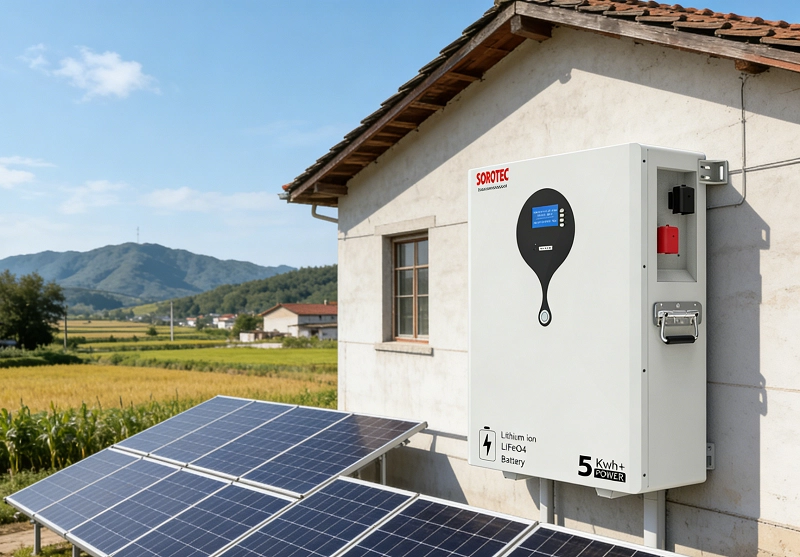
The SL-W/SL-R LiFePO₄ Battery is not a huge containerized energy storage system. It is better read as a wall-mounted or rack-style battery for residential and light commercial storage. That middle market is busy now. Too big for a camping power station, too small for a megawatt system. This is exactly where many real buyers are.
100Ah to 300Ah Capacity Options
The series covers 100Ah to 300Ah battery capacity options, with 25.6V, 48V, and 51.2V voltage choices. For buyers, that means the system can be built around actual load needs rather than one fixed battery block.
| Battery Example | Voltage | Capacity | Stored Energy Calculation | Energy |
|---|---|---|---|---|
| Small Storage Unit | 25.6V | 100Ah | 25.6 × 100 ÷ 1000 | 2.56kWh |
| Standard 48V Class Unit | 48V | 100Ah | 48 × 100 ÷ 1000 | 4.8kWh |
| 51.2V Daily Backup Unit | 51.2V | 100Ah | 51.2 × 100 ÷ 1000 | 5.12kWh |
| Larger Business Backup Unit | 51.2V | 300Ah | 51.2 × 300 ÷ 1000 | 15.36kWh |
These numbers are clean, but real runtime still depends on inverter loss, battery reserve, temperature, and load behavior.
2.56kWh to 15.36kWh Storage Range
A 2.56kWh unit is more suited to lighter backup needs. A 15.36kWh unit is much more useful for business loads that must last through longer grid cuts. For example, payment systems, routers, lighting, security cameras, and refrigeration can be planned into a clear backup group.
Do not size only by “hours.” Size by “which loads, at what wattage, for how long.” That is the difference between a working LiFePO₄ Battery Backup and a battery that looks good in a catalog.
100A/200A Current Support
Capacity tells you stored energy. Current tells you how hard the battery can work at one time. The SL-W/SL-R series supports up to 100A charging and 200A discharging depending on model. This makes it a practical partner for hybrid solar inverters, especially when short surges are part of the site.
For solar charging, higher current support also helps the battery accept energy faster during strong sunlight hours. In places with unstable grids, that window can matter.
How Should You Size Backup Storage for Real Outage Scenarios?
Good sizing is boring, but boring is good in power systems. The aim is not to run every load. The aim is to keep the business alive without burning budget on unused capacity.
Critical Load Audit
Start with a list. Keep it honest. Add wattage for routers, lights, cameras, POS terminals, refrigerators, computers, small pumps, fans, and control systems. Then remove anything non-essential.
| Critical Load Group | Example Load | Raw Runtime with 15.36kWh Battery |
|---|---|---|
| Router, POS, LED Lights | 300W | 51.2 Hours |
| Small Medical or Food Refrigerator | 500W | 30.7 Hours |
| Office Essentials and Network Cabinet | 1000W | 15.4 Hours |
| Pump or Mixed Small Equipment | 2000W | 7.7 Hours |
This table uses raw energy math only: 15.36kWh divided by load power. In the field, leave room for inverter loss, battery reserve, and starting surge. A careful installer may keep 10% to 20% margin. It is not wasted. It keeps the system calmer.
Runtime and Depth-of-Discharge Planning
The official spec mentions 6000 cycles at 100% DOD. That is strong, but system design should still avoid unnecessary stress. For daily cycling, a little reserve helps battery life and keeps backup available when the grid fails after sunset.
If your site has frequent outages, plan backup around the worst common outage, not the best day. A two-hour outage and an eight-hour outage are different systems.
Solar, Grid, and Inverter Matching
A battery alone does not create a good storage system. The inverter must match voltage, communication, current, and backup output needs. The SL-W/SL-R battery supports CAN, RS485, and RS232 communication, which helps the battery and inverter exchange charge status and protection data.
For hybrid systems, pairing this battery with a compatible inverter allows solar charging, grid charging, and backup output to work as one system. This is where a LiFePO₄ Battery Backup moves from “battery storage” to actual energy control.
What Should Buyers Check before Buying a Battery Backup System?
The risky part of storage buying is that many products share similar words: long life, smart BMS, safe, solar-ready. The details decide whether the system is easy to install and stable in daily work.
BMS Communication and Protection Logic
Check the communication protocol first. CAN, RS485, and RS232 support gives the SL-W/SL-R battery good system flexibility. The BMS can share state of charge, voltage, temperature, and warning data with compatible inverters.
This matters because poor communication can cause rough charging behavior. It may still work, but not beautifully. For a business owner, “it works most days” is not a good standard.
IP20 Indoor Installation Limits
The SL-W/SL-R series has IP20 protection. That fits indoor spaces, not wet outdoor walls. Keep it away from direct rain, hose wash areas, heavy dust, and places where tools may hit the cabinet.
A clean electrical room, garage wall, indoor battery corner, or protected cabinet area is more suitable. Small detail, big difference. Many after-sales problems start with the wrong installation spot.
Warranty, Cycles, and Supplier Support
The product page states a 5-year warranty and more than 10 years of design life. Those are useful numbers, but buyers should also ask about system drawings, cable requirements, inverter compatibility, parallel connection rules, and local service response.
For business storage, paperwork is not just paperwork. It is how you avoid mismatch before goods arrive.
Why Use Official Service and Contact Support before Final Design?
The last step is not clicking “buy.” It is checking whether the storage design fits your business load, your solar array, your inverter, and your installation space. The company profile is helpful for background, while the case study section gives a quick feel for application thinking.
Inverter and Battery Ecosystem
This battery becomes more valuable when placed inside a proper inverter and solar storage system. If you already use a hybrid inverter, confirm communication and voltage. If you are planning a new system, ask for a full matching plan rather than a battery-only quotation.
Case Study Review
Reviewing project cases is useful before buying. It shows how products are discussed in practical environments, including commercial solar storage, harsh environments, and system design issues. Case studies do not replace engineering, but they help buyers ask better questions.
Service and Contact Check
Before purchase, feel free to contact us to ask for battery sizing, inverter matching, service support, shipping details, and installation notes. A LiFePO₄ Battery Backup should be selected like business equipment, not a loose accessory. The SL-W/SL-R series is a strong option when you want long cycle life, safer chemistry, indoor installation, smart BMS communication, and scalable storage for real outage planning.
FAQ
Q: Is LiFePO₄ Battery Backup suitable for small business use?
A: Yes, especially when your site needs safer chemistry, long cycle life, and stable backup for critical loads such as routers, POS terminals, lighting, refrigeration, access control, and office equipment. The SL-W/SL-R series is suitable for residential and light commercial storage, but final sizing should be based on real load data.
Q: How long can a 15.36kWh battery run business equipment?
A: Raw runtime equals battery energy divided by load power. A 15.36kWh battery can theoretically run a 1000W load for about 15.4 hours before losses. In real use, keep margin for inverter loss, battery reserve, temperature, and startup surge.
Q: Why choose the SL-W/SL-R LiFePO₄ Battery instead of lead-acid storage?
A: It offers longer cycle life, higher energy density, faster charging, maintenance-free use, built-in BMS protection, and CAN/RS485/RS232 communication. For daily solar storage and backup work, those points usually matter more than the lower first cost of lead-acid batteries.