

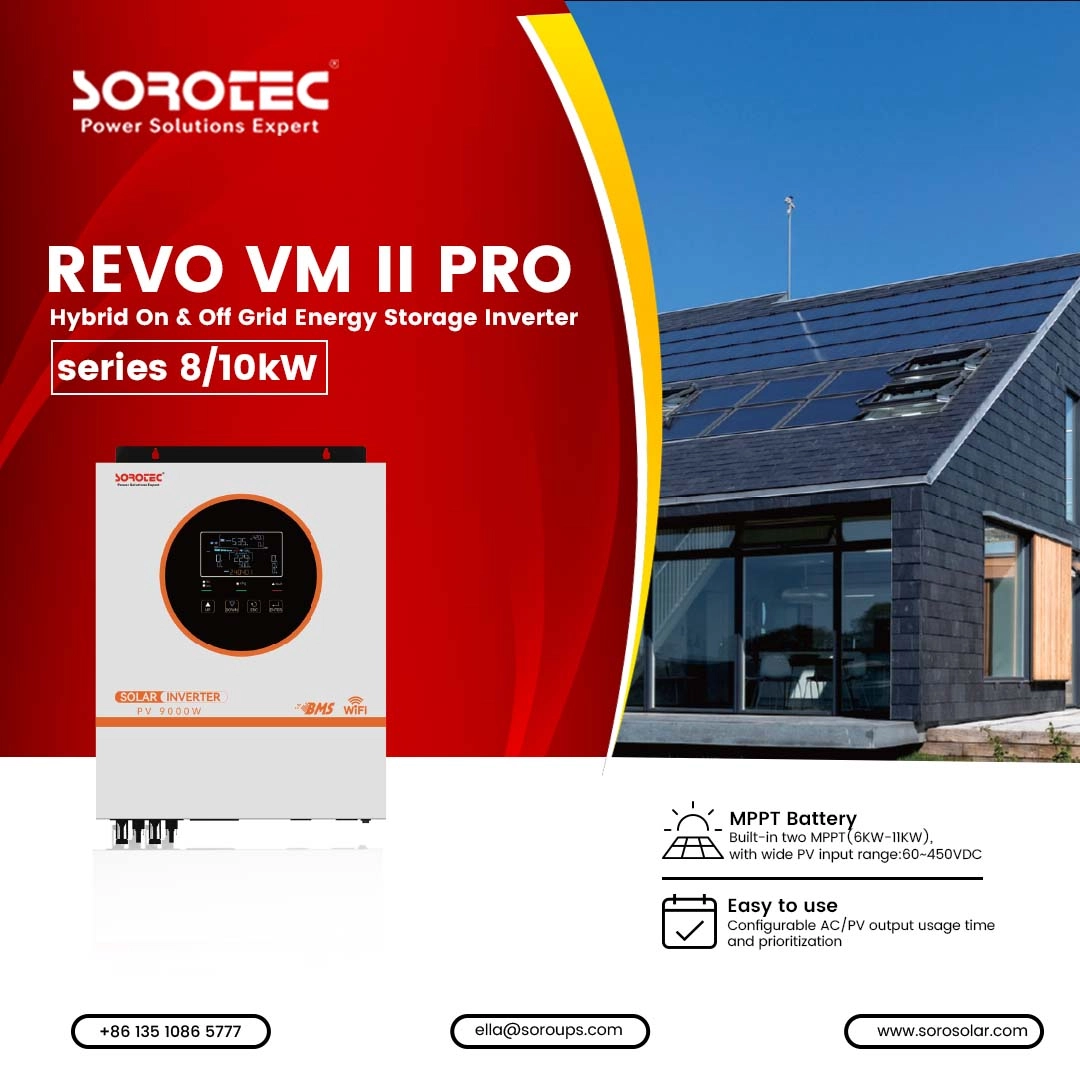
When homeowners compare lithium and lead-acid batteries for solar storage, they often start with price, lifespan, and usable capacity. Those questions matter, but one technical detail now deserves more attention: BMS Communication. A battery and an inverter should not behave like strangers sharing the same wall. If the system uses lithium storage, communication between the battery management system and the inverter can affect charging control, protection logic, and how smoothly the whole setup runs day after day.
SOROTEC has worked in power electronics and renewable energy since 2006, developing solar inverters, storage products, and power solutions for residential and commercial projects. That experience matters because home solar is no longer a simple “panel plus battery” purchase. Buyers want systems that match their actual load, leave room for future upgrades, and do not create avoidable service issues later. The company also holds a long-term manufacturing experience, export reach, and support for global project needs.
Why Battery Chemistry Changes Home Solar Decisions
Battery choice shapes the whole storage system. It affects cabinet space, charging rules, maintenance habits, and the inverter features you should care about. The difference becomes sharper once you compare modern lithium systems with conventional lead-acid banks.
Home Storage Priorities
A homeowner rarely buys a battery just to admire the chemistry. The real goals are easier to name:
- store daytime solar energy for evening use;
- keep selected loads running during outages;
- reduce waste from excess PV production;
- avoid a system that becomes difficult to manage after installation.
Lithium batteries have become attractive in many solar projects because they work well in compact systems and fit modern monitoring habits. Lead-acid batteries remain familiar and widely used, especially in simpler or cost-sensitive systems. The better choice depends on the project, not on a slogan.
Battery Behavior and Charging Needs
Lead-acid and lithium batteries do not ask for the same kind of control. Lead-acid systems need careful charge management, attention to over-discharge, and sensible maintenance practices. Lithium systems are more closely tied to electronic battery supervision, especially in applications that rely on cell-level management and system data. NREL notes that lithium-ion batteries typically require a battery management system, while lead-acid systems need particular care in string design and should not mix old and new cells in the same bank.
Inverter Compatibility Risks
This is where battery chemistry begins to influence inverter selection. A home solar inverter that only handles basic charging may still work in some setups, but it may not be the best match for modern lithium storage. If the battery has a BMS and the inverter offers the right communication port, the system can behave in a more coordinated way. Without that connection, setup choices may rely more heavily on manual parameter settings. That does not automatically make the system unusable, but it can make the design less elegant.
Lithium vs. Lead-Acid in Daily Home Solar Use
The battery debate becomes clearer when you move away from abstract chemistry and look at ownership experience. Homeowners care about usable storage, replacement patterns, service burden, and whether the system still feels practical after a few years.
Usable Capacity and System Planning
One common mistake is comparing nameplate capacity without asking how the battery will be used. A battery bank may advertise a large figure, but the usable share depends on chemistry, charging strategy, depth of discharge limits, and the controls around it. The uploaded industry material notes that discharge depth should be managed carefully for both lead-acid and lithium-based systems, while NREL emphasizes that battery lifetime depends strongly on cell choice, temperature, depth of discharge, and operating profile.
Maintenance Burden and Expansion Limits
Lead-acid batteries are not obsolete. They remain relevant where budget, familiarity, or simple replacement logic carry more weight. Yet they do need more careful string planning, and NREL specifically warns against combining old and new lead-acid cells. Lithium installations, by contrast, may support more modular expansion because of the integrated battery management layer. That point becomes important in homes where energy demand may grow later due to larger appliances, more backup loads, or EV charging.
| Design Topic | Lithium-Ion Battery Systems | Lead-Acid Battery Systems |
| Battery Management | Typically require a BMS | Managed more through traditional charge settings and string design |
| Future Expansion | Can be easier with an integrated BMS architecture | String count and bank configuration need closer attention |
| Mixing Old and New Cells | Depends on system design and manufacturer guidance | Old and new cells should not be mixed in the same bank |
| Recycling Note | Recycling remains less mature in the cited NREL comparison | More than 90% of material can be recycled, according to NREL |
Long-Term System Cost
The lowest upfront price does not always produce the lowest ownership cost. NREL’s microgrid study found that technology choice, battery replacement timing, and site conditions all shape life-cycle cost. The exact economics of a home solar system will differ from a microgrid, of course. Still, the design lesson carries over: battery purchases should be judged through a full system lens, not only through the first invoice. A cheap battery choice paired with a poor inverter match can become expensive in a quieter, more irritating way.
Why BMS Communication Ports Matter
BMS Communication for Real Battery Coordination
BMS Communication matters because lithium batteries are not just containers of stored energy. They are managed systems. The BMS tracks battery conditions and protects the pack according to its own logic. When the inverter has compatible communication ports, the battery and inverter can coordinate more directly rather than acting through isolated settings. NREL describes the BMS as central to lithium battery management, while the product documentation for the inverter discussed below lists reserved CAN or RS485 communication ports for BMS integration.
Charge and Discharge Coordination
In a home solar system, good coordination is practical. It affects how confidently you can match a lithium battery to the inverter, how cleanly the system behaves during charging, and how much manual tuning is needed during commissioning. BMS Communication does not replace correct installation or battery compatibility checks. It simply gives the inverter a better path to work with the battery’s own management system.
Protection Against Mismatch Risks
Battery mismatch rarely announces itself dramatically on day one. It often shows up as nuisance alarms, awkward parameter edits, conservative charging behavior, or avoidable calls to technical support. Ports that support BMS integration reduce that design gap. They matter most when the buyer wants lithium compatibility now, or may switch to lithium later.
How REVO VM II PRO Supports Smarter Battery Integration
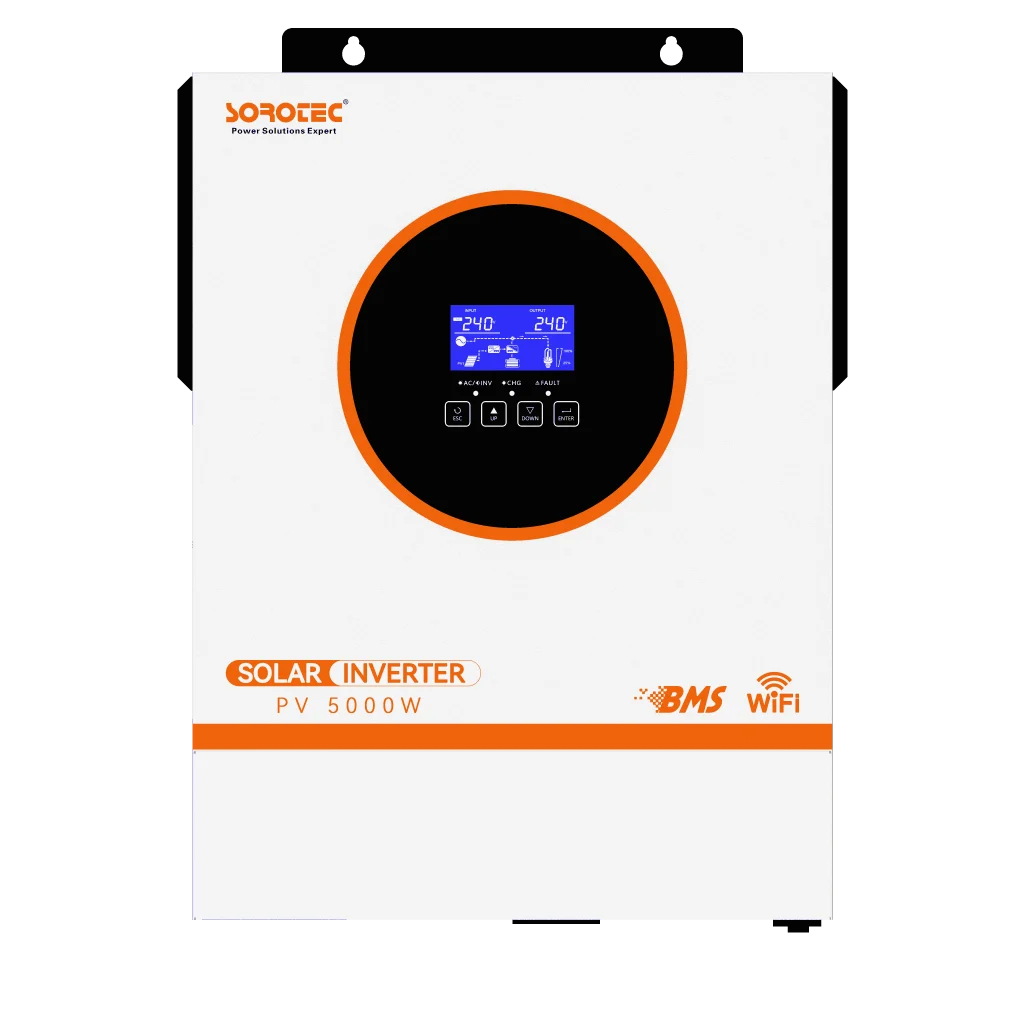
The REVO VM II PRO is a practical example of how an inverter can serve both simple solar setups and more modern battery expectations. It is positioned for off-grid use with optional on-grid capability, and it adds several details that matter in real home solar projects.
RS485 and CAN Communication Ports
The product page lists reserved CAN or RS485 communication ports for BMS integration. That directly supports BMS Communication in lithium-based systems. The attached product summary also notes lithium battery communication support through RS485 and CAN ports, which reinforces the same point from the supplied material.
PV Input Range, Battery-Free Start, and Monitoring
The unit also lists:
| Feature | Published Product Detail | Why It Matters |
| PV Input Range | 60–450VDC | Fits a wider range of PV string layouts |
| Battery-Free Start | Supported | Useful for some staged solar installations |
| BMS Port | CAN or RS485 reserved communication port | Helps battery and inverter work together |
| Mobile Monitoring | Built-in Wi-Fi | Easier daily system access |
| Dust Protection | Built-in anti-dust kit | Helpful for less pristine installation spaces |
| MPPT Charger | 80A or 120A, depending on model | Supports solar charging across several system sizes |
A Better Fit for Flexible Home Solar Projects
The series covers 1.6kW, 3.2kW, 4kW, 6kW, 8kW, and 10kW options. That range gives installers and buyers more room to choose a size that fits the house rather than forcing a one-size-fits-all compromise. The product page also highlights pure sine wave MPPT design, smart load management on selected models, and remote monitoring features. Together, these points make it a strong recommendation for homeowners who want a more future-aware inverter platform instead of a very bare-bones unit.
How to Choose a Battery-Inverter Match for Your Home
Battery selection becomes much easier when you stop treating it as a chemistry contest and start treating it as a system match.
Battery Type and Project Goal
Start with the purpose of the battery:
- lower evening grid use;
- short backup for essential circuits;
- larger off-grid operation;
- gradual system expansion over time.
If the project uses lead-acid, the bank design and charging setup deserve close attention. If it uses lithium, communication capability becomes much more relevant. That is why BMS Communication should appear on the shortlist, not as an afterthought.
Load Profile and Backup Expectations
A small home with lights, fans, and a refrigerator has a different design need than a larger house with pumps, air conditioning, and workshop loads. The inverter rating, solar input range, charger capacity, and battery integration all matter. A model that supports multiple power levels and modern monitoring gives more design freedom without creating unnecessary complexity.
Practical System Matching Checklist
A compact checklist helps:
| Question | Why It Matters |
| What battery chemistry will be used? | Changes charging and communication needs |
| Is lithium planned now or later? | Makes BMS-ready inverter selection more useful |
| What loads must run during an outage? | Shapes inverter size and battery capacity |
| Will the solar array expand? | Affects PV input range and charger choice |
| Is remote monitoring useful? | Helps with maintenance and service support |
A checklist sounds basic, but it prevents a surprising amount of regret. Systems fail less often from one huge mistake than from several small choices that never quite fit together.
Why Product Support Still Matters
A suitable inverter helps, but the project still benefits from solid support. You may want technical guidance, application references, and evidence that similar solar storage work has been done before. The case-study library gives a helpful look at inverter and energy project use cases, which is more useful than another generic claim about “smart energy.”
For home solar buyers comparing lithium and lead-acid systems, BMS Communication is not a minor checkbox. It is one of the details that helps the inverter fit modern battery design more naturally. The right combination makes the system easier to commission, easier to monitor, and less likely to feel mismatched later. For product service and contact support, the official inquiry channels on the site provide the next step.
FAQ
Q: Is BMS Communication needed for every home solar battery?
A: It is especially important for lithium battery systems that rely on a battery management system. Lead-acid systems can operate differently, but lithium-compatible inverter communication is a valuable feature when you want a more coordinated setup.
Q: Can one inverter work with both lead-acid and lithium batteries?
A: Some inverters are designed for broad battery compatibility, but battery settings and communication requirements still matter. When using lithium, choose a model that supports the needed battery management interface and confirm compatibility before installation.
Q: Why does an inverter need CAN or RS485 ports?
A: These ports provide a communication path for integration with a battery management system. In a lithium-based solar setup, that can help the inverter and battery work together more cleanly than relying only on fixed manual settings.