
Solar buyers have changed. They no longer ask only how many panels fit on a roof. They ask what happens during a blackout, whether the dryer still runs, and why the battery did not charge fast enough before sunset.
That is why Split-Phase Hybrid Inverters now sit near the center of many 2026 project talks. If you need a supplier that feels more like an engineering partner than a catalog seller, SOROTEC is worth a close look. It has worked in power electronics since 2006, with solar inverters, UPS, energy storage, telecom power, and OEM/ODM capability across global markets. In plain installer language: the catalog is wide, but not random. It is built around power continuity.
Why Installers Are Moving Toward Split-Phase Power
Real Household Load Patterns: A modern home is not a neat little lighting circuit. You may need to support refrigerators, routers, well pumps, air conditioners, garage tools, induction cooking, dryers, and sometimes EV charging. Some loads want 120V. Others need 240V. A basic inverter can look fine on paper, then feel weak once real appliances start cycling.
That is where a split-phase hybrid design makes sense. It matches the electrical habits of North American-style homes better than a single-voltage setup. You avoid the messy feeling of selling solar while still telling the customer, “Well, not that appliance.”
Battery Backup as a Core Feature: Backup power has moved from luxury to expectation. Public grid data explains why.
| Market Signal | Verified Data | Why It Matters to You |
|---|---|---|
| Global Solar PV Added in 2024 | 602 GW | More solar means more demand for storage-ready inverter designs |
| Global Solar PV Capacity by End of 2024 | 2,247 GW | Installers now compete in a mature, crowded market |
| Global Solar PV Additions in 2025 | Over 600 GW | Solar growth is still accelerating, not cooling down |
| Average U.S. Power Interruption in 2024 | 11 hours per customer | Backup power is becoming a sales argument, not a side note |
These numbers do not sell an inverter by themselves. But they show the pressure behind the market. Your customer wants solar that works when the grid behaves badly. A hybrid inverter gives you one box to handle solar, battery, grid, and load logic. Less drama on the wall. Less explaining at the kitchen table.
Why Split-Phase Hybrid Inverters Fit Real Homes
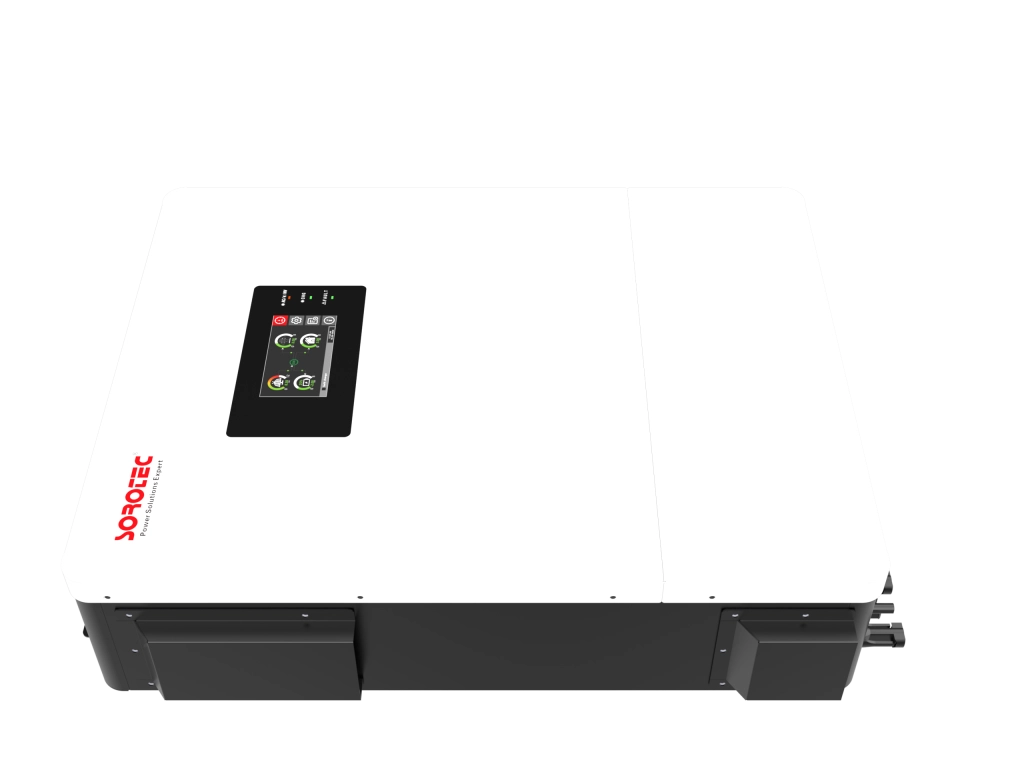
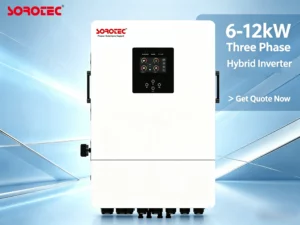
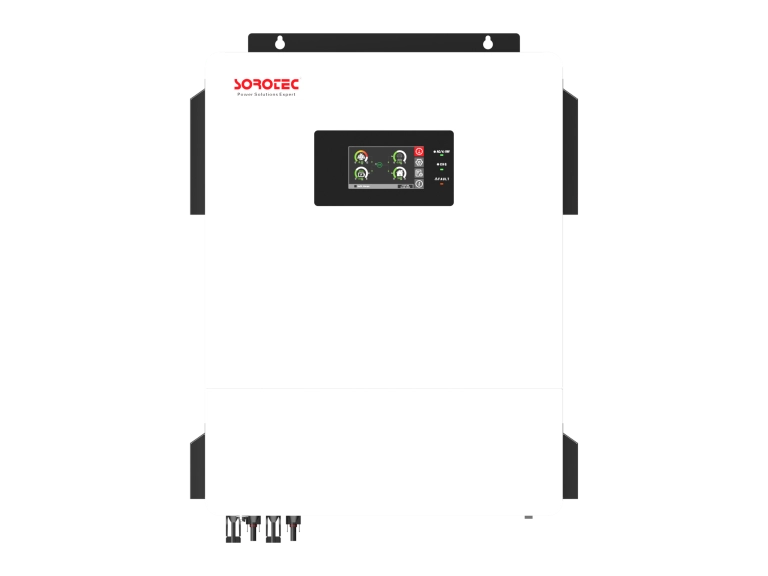
Split-Phase Hybrid Inverters fit projects where the customer wants one energy system for everyday savings and outage support. The Split-Phase IP54 REVO HMT lands in that exact lane. It comes in 8kW, 10kW, and 12kW options, supports 120V/240V split-phase output, and suits U.S.-style distribution systems.
That sounds like a spec-sheet sentence, sure. But for an installer, it means fewer awkward workarounds. For a homeowner, it means the system feels closer to normal utility power.
What Buyers Actually Care About Before Saying Yes
Whole-Home Compatibility
Buyers rarely ask about topology. They ask, “Will my home work?” You need an answer that is clear, not too technical.
The product supports line-to-neutral voltage from 100-120VAC and line-to-line voltage from 200-240VAC. That makes it practical for ordinary 120V loads and larger 240V appliances. Lighting, outlets, refrigerators, AC units, dryers, and EV chargers can be discussed in one system plan.
Good Split-Phase Hybrid Inverters let you design for daily living instead of a narrow backup panel only. You still need proper load calculation. No serious installer skips that. But the platform gives you a better starting point.
Fast Charging Windows
Solar charging speed is one of those specs buyers often miss. Then the first cloudy week arrives.
This model supports up to 200A solar charging current, backed by dual independent MPPT controllers. Each controller handles up to 22A input current, with a 60-450VDC working range. That matters when roof sections face different directions or suffer uneven shade. Real roofs have vents, trees, chimneys, and that one weird dormer nobody mentioned during the first phone call.
| Product Detail | Data | Practical Value |
|---|---|---|
| Power Classes | 8kW / 10kW / 12kW | Covers large homes and light commercial loads |
| AC Output | 120V/240V Split-Phase | Fits North American-style residential wiring |
| Protection Rating | IP54 | Good for semi-outdoor spots such as shaded patios or garage walls |
| Solar Charging Current | Up to 200A | Faster battery charging during short sun windows |
| MPPT Design | Dual Independent MPPT | Better handling for mixed roof strings |
| MPPT Voltage Range | 60-450VDC | Wider PV design room for installers |
| Control Access | LCD, Local Network, Mobile App, Optional WiFi | Easier checks after handover |
Cost Control Through Tariff Scheduling
Energy storage is not only about blackouts. It is also about timing.
The inverter supports Time-of-Use tariff configuration. In simple terms, you can charge when electricity is cheaper and discharge when it costs more. That helps customers who live with peak pricing. It also gives installers a smarter answer when buyers ask why they should add storage now instead of later.
Compared with a traditional grid-tie inverter, Split-Phase Hybrid Inverters do more than convert DC to AC. They help decide when energy should move, where it should go, and which loads deserve priority. That logic is where the money story begins.
Inside the Split-Phase IP54 REVO HMT
IP54 Semi-Outdoor Flexibility
The IP54 housing is useful, not just decorative. It gives you more placement options: garage exterior walls, shaded patios, tool sheds, and other semi-outdoor locations. Do not read that as “mount anywhere in a storm.” It is still smart to avoid brutal direct exposure when you can. Good installation habits never go out of style.
For installers, though, flexible placement saves time. Sometimes the cleanest wall inside the house is already taken by shelves, pipes, or a homeowner’s very serious bicycle collection. A semi-outdoor option can make the whole layout easier.
Smart Load Management
This model includes intelligent load management. That phrase gets thrown around a lot, but the idea is simple: not every load deserves the same priority during an outage.
A refrigerator matters. A router matters. A water pump may matter a lot. A luxury heater in the garage? Maybe not. Smart load control helps you design around real needs and prevent the system from being judged by one overloaded moment.
For installers, Split-Phase Hybrid Inverters reduce post-install complaints because the system behavior can match the customer’s expectations more closely. It is not magic. It is better control.
Monitoring That Cuts Truck Rolls
The product offers access through an LCD touchscreen, local network, mobile app, and optional WiFi remote communication. That matters after the job is paid.
If a customer calls and says “the battery looks weird,” you want data before you roll a truck. Remote monitoring helps spot normal cycling, grid events, PV input issues, or setting problems. Sometimes the fix is not a wrench. Sometimes it is one setting and a calm explanation.
How to Position the Inverter in 2026 Sales Talks
The Better-Than-Basic Argument
The cheapest inverter may win a spreadsheet. It may not win a real installation.
A basic setup can be fine for a small grid-tied roof with no storage plan. But once the buyer asks about backup, 240V appliances, tariff control, or future battery expansion, the conversation changes. At that point, the product becomes easier to recommend because it was built for solar-plus-storage from the start.
The Right Fit, Not the Biggest Box
Not every customer needs 12kW. Some homes fit 8kW. Others need 10kW. A few need the upper end because they have larger loads or a light commercial use case. The point is not oversizing. The point is matching the inverter to the load profile, roof layout, battery plan, and local code path.
A boring load sheet beats a heroic guess. Always.
The Proof Behind the Pitch
Before choosing hardware, smart installers check real applications, not just brochures. The company’s field project examples give you a better feel for how its equipment appears across inverter, storage, telecom, UPS, and controller projects. You can also review the company background when you need to check manufacturing depth, certification claims, and support structure.
That matters for distributors too. A product can look strong, but long-term supply and service are part of the deal.
Final Recommendation for Installers
A Practical Shortlist Choice
The Split-Phase IP54 REVO HMT is a strong shortlist choice for 2026 residential and light commercial projects where you need split-phase output, storage readiness, fast solar charging, semi-outdoor placement, and smarter load control.
It is not the answer to every project. No inverter is. But when your customer wants backup power, energy bill control, and real 120V/240V home compatibility, this model makes technical and commercial sense.
That is why Split-Phase Hybrid Inverters feel less like a trend and more like the new baseline. For model selection, system sizing, service details, and project contact support, use the official contact channel before you lock the final quote.
FAQ
Q: Are Split-Phase Hybrid Inverters Better Than Regular Solar Inverters?
A: Yes, when the project includes battery storage, backup power, and mixed 120V/240V household loads. A regular solar inverter mainly converts PV power for grid use. A split-phase hybrid model can manage solar, battery, grid, and load priority in one system.
Q: Is the Split-Phase IP54 REVO HMT Suitable for Outdoor Installation?
A: It has an IP54 rating, so it suits semi-outdoor locations such as shaded patios, garage exterior walls, and tool sheds. It should still be installed with good airflow, proper mounting, and sensible protection from harsh direct weather.
Q: Why Are Installers Recommending This Type of Inverter in 2026?
A: Customers now expect more than solar savings. They want outage backup, faster battery charging, smart load control, and power for 240V appliances. That is the practical reason Split-Phase Hybrid Inverters are becoming easier to recommend.