As solar energy use expands around the world, two main technologies often come up in discussions, yet they play quite distinct parts: Concentrated Solar Power (CSP) and Photovoltaics (PV). Both turn sunlight into practical electricity, but their basic operations, setup designs, and actual uses differ a lot. Knowing these distinctions aids project builders, EPC firms, and energy organizers in picking the best option for each situation.
Meanwhile, the quick rise of PV setups has boosted the need for adaptable power devices and storage options. In this field, SOROTEC offers useful inverter setups that handle on-grid, off-grid, and mixed solar uses in homes, businesses, and small factory projects.
What Is the Fundamental Difference Between CSP and PV?
CSP and PV frequently fall under the broad “solar power” term, but they rest on entirely separate technical bases. One depends on warmth and mechanical production, whereas the other shifts sunlight straight into electricity.
Definition Of Concentrated Solar Power (CSP)
Concentrated Solar Power systems create electricity by employing mirrors or lenses to direct sunlight onto a receiver. The focused warmth then generates steam, which powers a turbine linked to a generator. This method resembles standard thermal plants, except that sunlight takes the place of fossil fuels as the warmth source.
CSP facilities are typically constructed on a large utility level in areas with intense direct normal irradiation, like desert zones. A vital aspect of CSP is thermal energy storage, commonly via molten salt, and this enables electricity output even after the sun sets.
Definition Of Photovoltaics (PV)
Photovoltaic systems function by changing sunlight directly into electricity using semiconductor materials, usually silicon. When sunlight strikes a PV cell, electrons shift and produce direct current (DC) electricity. Then, this power gets converted to alternating current (AC) through inverters.
PV systems prove modular and adaptable. They can supply energy to a tiny off-grid home, a business rooftop, or a large multi-megawatt solar field. Thanks to dropping module costs and straightforward setup, PV has turned into the leading type of fresh solar capacity globally.
Core Technical Contrast Between CSP and PV
The primary variation rests in the conversion approach and setup intricacy. CSP involves a thermal method with moving elements and extensive structures, while PV uses a solid-state technique with few mechanical parts. CSP generally needs substantial initial funding and precise location demands, but PV setups can go up in nearly any spot with enough sunlight.
Prior to examining their places in current energy networks, it proves helpful to review how these technologies stand in the worldwide market.
Global Deployment Comparison (2023 Data)
| Technology | Global Installed Capacity | Typical Project Scale | Main Regions |
| Photovoltaics (PV) | ~1,600 GW | Residential to Utility | China, EU, US, India |
| Concentrated Solar Power (CSP) | ~6.5 GW | Utility Only | Spain, China, MENA |
Data sources: IEA, SolarPACES (public industry statistics)
These figures plainly indicate that PV leads in new builds, whereas CSP stays as a specialized choice for certain grid demands.
Why Do CSP and PV Matter in Modern Solar Power Systems?
Even with their contrasts, both CSP and PV hold key spots in the worldwide shift to cleaner energy. Their worth hinges on grid layout, demand trends, and existing setups.
Benefits Of CSP In Utility-Scale And Dispatchable Generation
CSP’s chief strength lies in dispatchability, and with thermal storage, these plants can supply power during evening high-demand periods without needing batteries. Thus, CSP appeals to big central grids that call for steady output.
That said, CSP efforts require strong solar rays, vast land spaces, and hefty funding. Build times stretch out, and the setup’s complexity raises upkeep needs.
Benefits Of PV In Distributed Generation And Scalability
PV shines in adaptability, as systems can grow gradually, go up near usage points, and pair simply with battery storage. For that reason, PV suits houses, plants, telecom spots, farms, and isolated groups.
Moreover, PV setups gain from quicker install periods and basic upkeep. With today’s inverters, PV can aid grid ties, reserve power, and self-use patterns.
Role Of Energy Storage In CSP and PV Contexts
Although CSP builds in thermal storage, PV counts on electrical storage for shifting times and reserves. Lithium-ion batteries now stand as the go-to pick because of their top efficiency and lower prices.
Here, hybrid inverter tech turns essential, since PV paired with storage can offer various grid aids once linked mostly to CSP, but with much less setup intricacy.
How Does PV Technology Integrate With SOROTEC Energy Storage And Inverter Solutions?
With PV growth speeding up, inverter quality shapes system dependability and user satisfaction. SOROTEC stresses workable hybrid and off-grid inverter builds that manage everyday running states.
Using REVO VM V Hybrid On & Off Grid Inverters With PV Systems
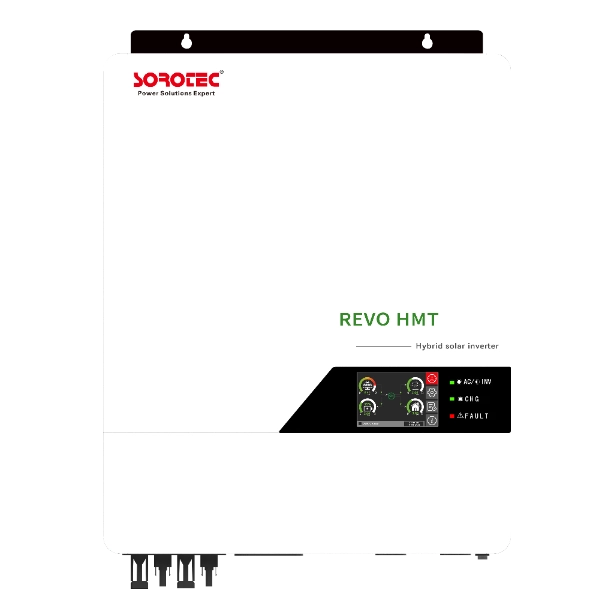
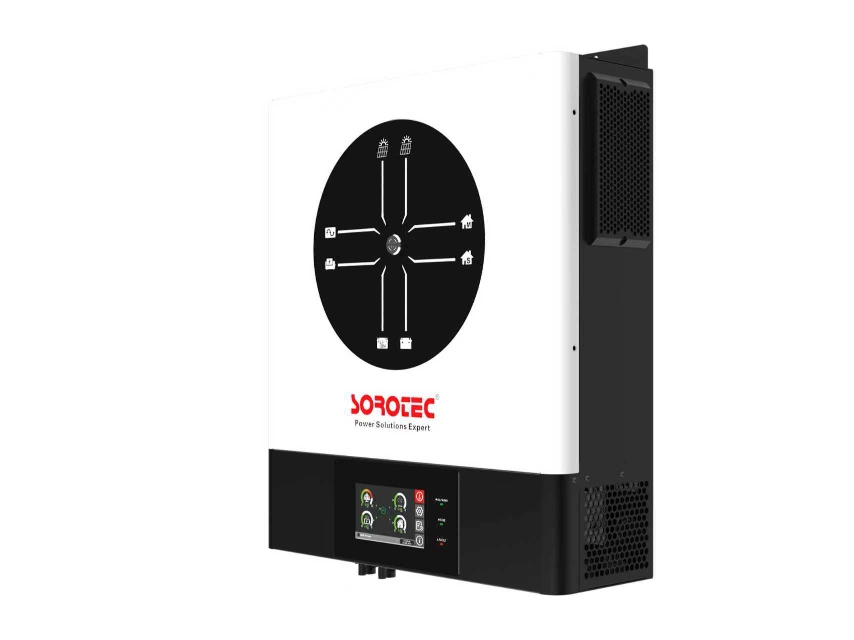
The REVO VM V Hybrid On & Off Grid Energy Storage Inverter suits PV systems seeking both grid links and reserve functions. It handles battery charging from solar and grid inputs, so it ensures easy switches amid outages.
Such an inverter matches home and modest business PV builds where power self-reliance and load steadiness count. By linking PV output with battery storage, folks get sharper command of energy handling without tricky setups.
How On & Off Grid REVO HMT-G2 6KW Supports PV System Flexibility
The REVO HMT-G2 6KW inverter targets stronger-power uses that demand firm output and solid load management. It backs on-grid and off-grid runs, so it fits blended settings like shops, store fronts, and minor factory areas.
Its build lets PV systems keep vital loads going even if the grid falters, a frequent issue in growing areas and far-off work zones.
Applying Off Grid REVO VP/VM Series In Off-Grid PV Installations
In pure off-grid cases, the Off Grid REVO VP/VM Series from 1.2KW to 5KW range delivers a small and trusty fix. These inverters see wide use in rural power-ups, telecom bases, and lone solar efforts.
Their basic form and good match with battery setups make them apt for spots lacking grid reach.
What Challenges Do CSP and PV Face In Real-World Deployment?
Each technology meets real bounds that shape setup plans and money choices.
Geographic And Irradiance Requirements
CSP calls for high direct sunlight levels, which narrows its use to set areas. Clouds and dampness cut system output sharply. PV, however, runs on scattered light and holds up in broader weather types.
Cost And Infrastructure Differences
CSP plants include major building tasks, involved thermal parts, and drawn-out prep times. PV setups roll out faster and prove simpler to fund, above all for small and mid-sized works.
Storage And Dispatchability Constraints
Though CSP weaves in thermal storage smoothly, PV leans on batteries, which pile on expense and need sound inverter oversight. Yet, gains in hybrid inverter builds have rendered PV-plus-storage setups much more reachable lately.
Typical System Cost Comparison (Utility-Scale Averages)
| System Type | Approx. Cost per MW | Storage Included |
| CSP with Thermal Storage | USD 4–6 million | Yes |
| PV without Storage | USD 0.8–1.2 million | No |
| PV with Battery Storage | USD 1.5–2.5 million | Yes |
Data based on public project cost ranges from IRENA and NREL reports
How Can SOROTEC Products Enhance Solar PV System Performance?
As PV systems shoulder greater roles in power delivery, inverter caliber emerges as a key decider.
Hybrid On-Off Grid Energy Storage Capabilities
SOROTEC hybrid inverters let PV systems run in varied modes sans extra gear. This range backs grid-linked work, reserve power, and pure off-grid use on one unit.
Intelligent MPPT And Remote System Management
Precise MPPT following boosts energy yield, particularly in shifting weather. SOROTEC inverters aim to keep steady work without tough setups, which cuts install and upkeep work.
Combining PV With Battery Storage For Greater Reliability
When matching PV with storage and a solid inverter, users secure firm power flow even in shaky grid spots. This way handles many cases once tied to CSP, yet on a smaller scale and with less expense.
FAQ
Q1: Is CSP better than PV for long-term energy storage?
A: CSP brings inbuilt thermal storage, which fits large utility grids well. Yet for typical business and home users, PV linked with battery storage offers greater range and simpler rollout.
Q2: Can PV systems replace CSP in all applications?
A: PV meets most spread-out and mid-level demands. CSP keeps worth in set utility-large works where extended thermal storage fits and apt sunlight holds.
Q3: Which SOROTEC inverter is suitable for a hybrid solar system with backup power?
A: The REVO VM V Hybrid On & Off Grid Energy Storage Inverter fits well for hybrid setups needing battery reserves and firm work amid grid drops.


