

Choosing a 5kVA UPS is common for small data rooms, telecom cabinets, security systems, and light industrial setups. However, many buyers misunderstand what “5kVA” really means in daily operation. The rated number looks simple, but the actual load capacity depends on several technical factors, including power factor, load type, and system design.
For manufacturers like SOROTEC, whose solutions cover UPS systems, hybrid inverters, and photovoltaic energy storage, load calculation is not only about backup power. It directly affects system stability, battery life, and long-term operating cost. Understanding how load capacity works helps users select the right configuration from the start.
What Does Load Capacity Mean for a 5kVA UPS System?
Before calculations come into play, it is important to clarify what “load capacity” actually refers to in a UPS environment. Load capacity is not just the number printed on the nameplate. It represents the maximum usable power the UPS can deliver continuously to connected equipment without overload or shutdown.
This distinction matters in real projects, especially when a UPS is paired with solar or hybrid inverter systems like SOROTEC’s REVO series.
Difference Between kVA Rating and Usable kW Output
The kVA rating shows apparent power, while equipment consumes real power measured in kilowatts (kW). The missing link between the two is the power factor (PF).
In most industrial UPS systems, the usable output is lower than the kVA rating. For example, a 5kVA UPS does not automatically deliver 5kW. The actual kW depends on the designed power factor of the system.
| UPS Power Factor | 5kVA Usable Output (kW) |
|---|---|
| 0.8 | 4.0 kW |
| 0.9 | 4.5 kW |
| 1.0 | 5.0 kW |
These values reflect common UPS designs used globally in data centers and industrial backup systems. Many modern systems operate at 0.9 PF, which has become a standard benchmark in the industry.
This difference explains why some systems appear “overloaded” even when the connected equipment seems within the rated kVA.
Power Factor Impact on Actual Load Capacity
Power factor represents how efficiently electrical power is used. Loads with motors, transformers, or compressors tend to lower the power factor, while purely resistive loads maintain higher values.
If the connected equipment operates at a lower PF than expected, the UPS reaches its limit faster. This is one reason SOROTEC systems often integrate intelligent load management and hybrid inverter control, allowing users to balance grid, battery, and solar inputs more effectively.
Typical Equipment Supported by a 5kVA UPS
In practical installations, a 5kVA UPS is commonly used for:
- Small server racks and network switches
- Telecom base station equipment
- Security monitoring and access control systems
- Industrial control panels
- Medical or laboratory devices with stable power demand
The total connected load usually stays between 3.5 kW and 4.5 kW, depending on the UPS design and power factor.
How Is the Real Load Capacity of a 5kVA UPS Calculated?
Once the concept of usable power is clear, the next step is understanding how to calculate real load capacity. This calculation becomes especially important in hybrid or off-grid systems where energy storage and solar input are involved.
Basic Load Capacity Calculation Formula
The standard formula used across the industry is straightforward:
Usable Load (kW) = UPS Rating (kVA) × Power Factor
For a 5kVA UPS with a 0.9 power factor, the calculation looks like this:
5 × 0.9 = 4.5 kW
This number represents the maximum continuous load the UPS can handle under ideal conditions.
Role of Efficiency and Safety Margins
UPS systems are not 100% efficient. Internal losses from power conversion and heat dissipation reduce the actual available output.
Most manufacturers recommend operating a UPS at 70–80% of its maximum load. This buffer improves reliability and extends battery life.
| Rated Output (kW) | Recommended Continuous Load (70–80%) |
|---|---|
| 4.0 kW | 2.8–3.2 kW |
| 4.5 kW | 3.1–3.6 kW |
| 5.0 kW | 3.5–4.0 kW |
This approach aligns with real-world design practices in data centers and industrial energy projects.
Importance of Startup and Surge Power
Some equipment draws extra power at startup. Motors, pumps, and compressors may briefly require 2–3 times their rated power. If surge capacity is not considered, the UPS may trip even though the average load looks acceptable.
SOROTEC hybrid inverters, such as the REVO VM V Hybrid On & Off Grid Energy Storage Inverter, are designed to handle short surge events by coordinating battery discharge and grid input, reducing the risk of system interruption.
Why Does Load Type Affect a 5kVA UPS Performance?
Not all loads behave the same way. Understanding load characteristics helps explain why two systems with the same total wattage may perform very differently.
Resistive Loads Versus Inductive Loads
Resistive loads, such as heaters or incandescent lighting, draw power steadily and maintain a high power factor. Inductive loads, including motors and transformers, introduce reactive power that reduces efficiency.
A UPS supporting mostly inductive loads will reach its limit sooner, even if the wattage appears moderate.
Motor-Based and Compressor Load Considerations
In industrial environments, motor-driven equipment is common. These loads create inrush current during startup, stressing both the UPS inverter and battery system.
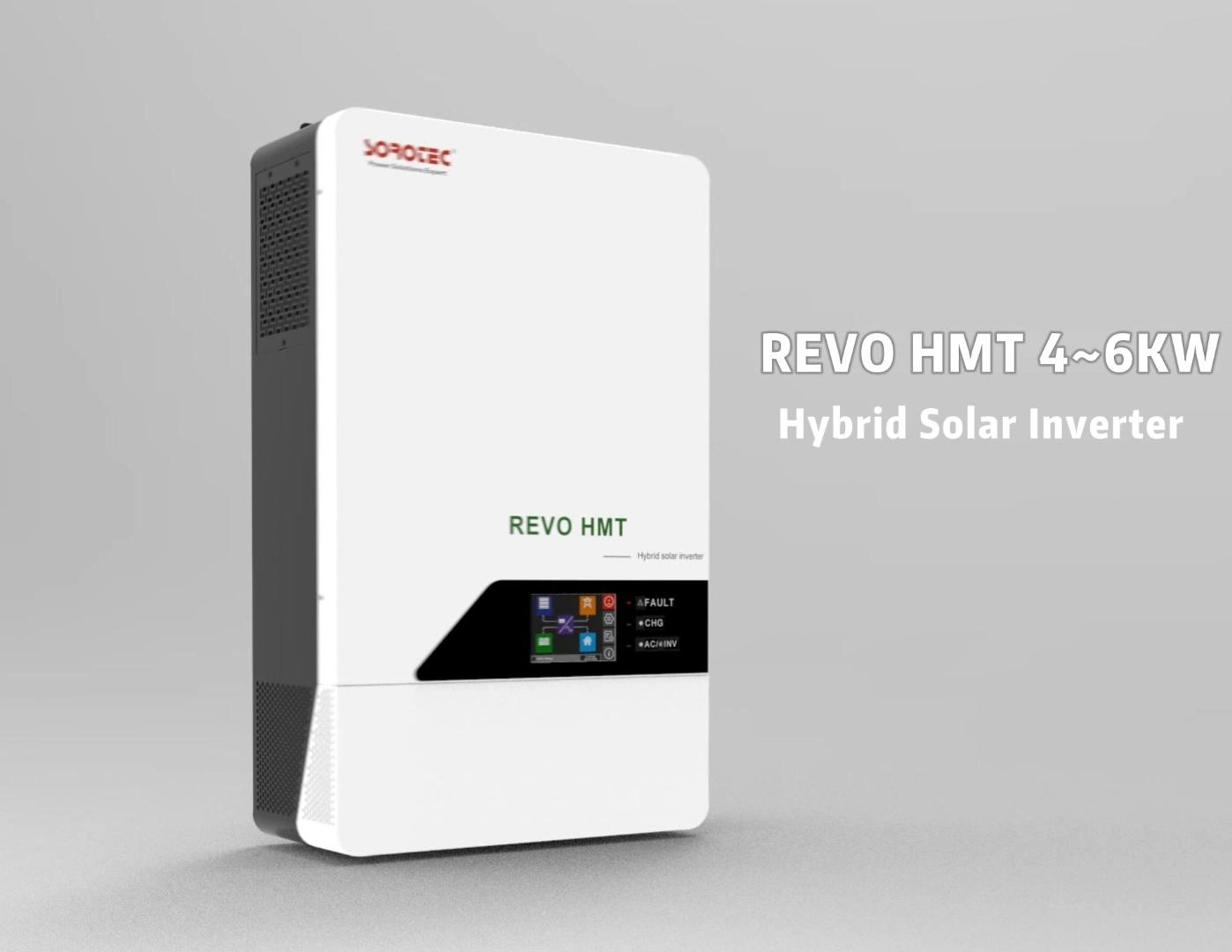
Hybrid solutions like the REVO HMT-G2 6KW On & Off Grid Inverter help manage this challenge by sharing load demand between solar, battery, and grid sources when available.
Sensitive Electronics and Stable Power Demand
Servers, communication equipment, and control systems require clean, stable power. For these applications, maintaining load below the UPS maximum is critical to avoid voltage drops or transfer delays.
How Do SOROTEC Inverter Solutions Support 5kVA-Level Applications?
SOROTEC’s product portfolio is designed to go beyond traditional UPS functions. By combining backup power with solar and hybrid technology, systems gain flexibility and resilience.
Hybrid On and Off Grid Power Handling With REVO VM V Hybrid Inverter
The REVO VM V Hybrid On & Off Grid Energy Storage Inverter supports seamless switching between grid, battery, and solar power. This design helps maintain stable load delivery even when grid conditions fluctuate.
For 5kVA-class systems, this means better load sharing and less stress on a single power source.
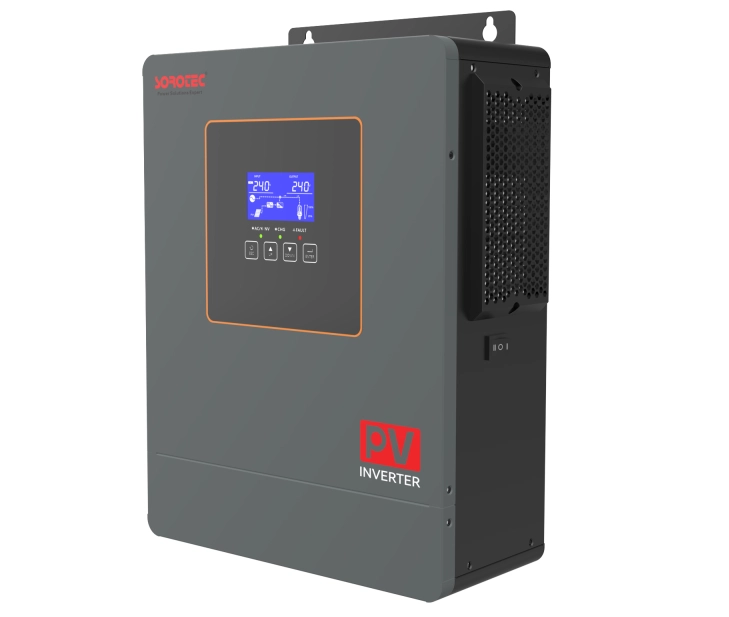
Pure Off-Grid Load Support Using REVO MPI Photovoltaic Inverter
The REVO MPI 6kW/10kW Photovoltaic Inverter is built for off-grid environments where UPS systems often struggle with limited input options. Its dual power rating allows it to handle variable loads without frequent shutdowns.
This makes it suitable for remote sites, telecom stations, and small industrial setups operating close to the 5kVA range.
Flexible Grid Interaction With REVO HMT-G2 6KW System
The REVO HMT-G2 6KW inverter supports parallel operation and intelligent load management. In hybrid systems, it can support UPS-level loads while coordinating with energy storage to smooth peak demand.
How Can System Design Improve the Usable Load Capacity of a 5kVA Setup?
Load capacity stays changeable. Through sound system planning, workable output can rise without raising the UPS figure.
Battery Configuration and Discharge Rate Optimization
Battery size and release speed straightly shape how long a UPS holds its stated load. Adding lithium batteries, backed by SOROTEC units, yields better release performance than old lead-acid types.
Solar Input and Hybrid Energy Coordination
Adding solar input reduces the load on batteries and extends runtime. In hybrid systems, part of the load is supplied directly by PV, effectively increasing the usable capacity of the UPS.
Parallel Expansion for Higher Load Demands
For growing applications, parallel inverter operation allows multiple units to share the load. This approach is widely used in commercial energy storage and industrial backup projects.
FAQ
Q1: How many watts can a 5kVA UPS actually handle?
A: A standard 5kVA UPS puts out between 4,000 and 4,500 watts, based on its power factor and performance. Keeping under 80% of that proves wise.
Q2: Can a 5kVA UPS support motor loads?
A: Yes, but startup surge must be considered. Units with combined or inverter aid manage motor loads more evenly than plain UPS builds.
Q3: Is a hybrid inverter better than a traditional UPS for 5kVA applications?
A: In numerous situations, yes. Combined inverters add extra adaptability by linking grid, battery, and solar power, which betters load management and power use.


