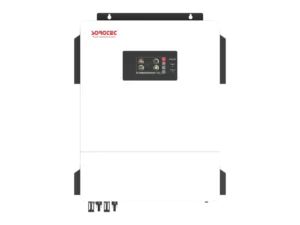

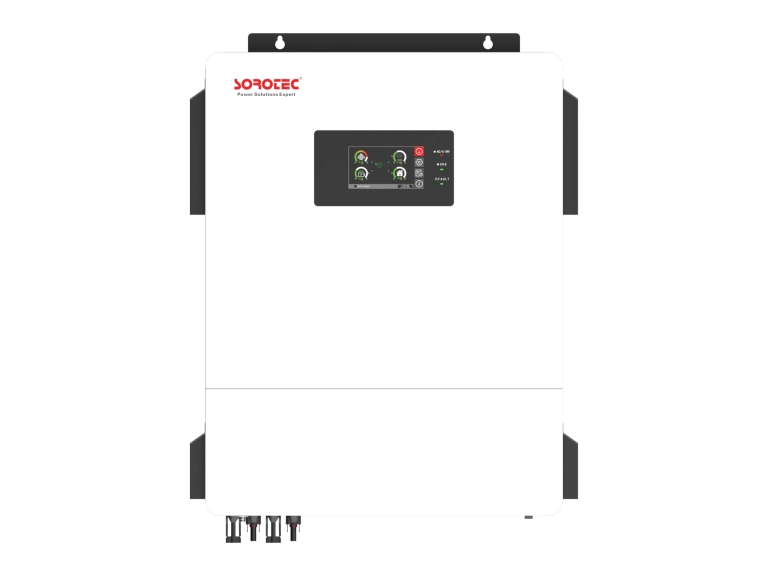
IP54 Hybrid Inverters are becoming more relevant as solar storage systems move beyond tidy indoor equipment rooms. In real projects, the inverter may sit in a garage, a utility room, a shaded patio, or a semi-outdoor wall area near the battery and distribution board. Those spaces are practical. They also bring dust, moisture, temperature swings, and the occasional splash from cleaning or weather. A system that looks fine on paper can feel badly placed once installation starts.
SOROTEC has built its solar and power electronics business around practical system needs, not just spec-sheet appeal. Since 2006, it has developed inverters, storage solutions, and power products for residential, commercial, and energy infrastructure projects. That background matters when installers and buyers need equipment that fits real sites, not only ideal showrooms. The company also possesses powerful manufacturing scale, testing capability, certifications, and overseas project support, which are all useful signals when choosing a long-term energy equipment partner.
Installation Environments That Create Real Inverter Risks
The first question is not always “Which inverter has the highest rating?” It is often “Where will the inverter actually go?” Once that is clear, the rest of the decision becomes easier.
Dust Exposure in Garages and Utility Areas
Garages are rarely as clean as brochure photos. Tire dust, cardboard fibers, woodwork residue, pet hair, and storage clutter all find their way into the air. Utility rooms can have lint, fine particles, and occasional condensation from nearby equipment. Over time, dust can collect around vents, seals, and cooling paths if the enclosure is not suited to the setting.
For that reason, installation planning should treat dust as a normal operating condition, not an edge case. The goal is not to make a garage behave like a laboratory. The goal is to choose hardware that is better prepared for a less controlled space.
Moisture and Splash Risks in Semi-Outdoor Spaces
Semi-outdoor placement often sounds safer than it is. A shaded side wall may still face rain drift. A sheltered patio may see splashback during washing. A tool shed can pick up moisture when air changes quickly after a hot afternoon. These are small events, but they happen repeatedly.
This is where IP-rated equipment starts to matter. The IP code is used to describe resistance against solid particles and liquids, which is exactly the kind of protection installers look at when the inverter will not live in a dry indoor room.
Heat, Ventilation, and Daily Access Constraints
A tight corner in a utility room may seem convenient, yet poor ventilation can make servicing harder. A wall under a roof overhang may give better airflow and better cable routing. A shaded garage exterior wall may also be closer to PV and battery equipment, reducing unnecessary installation complexity.
The point is simple: a suitable enclosure does not replace proper installation practice, but it gives the project more workable placement options.
Why IP54 Protection Matters in Solar Storage Design
Once you move from “ideal indoor room” to “real building environment,” enclosure protection becomes part of system fit. It affects flexibility, service access, and how confidently you can place equipment in a practical location.
Dust Resistance for Non-Ideal Indoor Locations
IP54-rated equipment is designed for situations where full indoor cleanliness cannot be assumed. In the product context here, the enclosure is presented for dust resistance and protection against splash water from all directions. That combination is useful for garage walls, equipment rooms, shaded patios, and other areas where a lower-protection enclosure may feel too exposed.
Why IP54 Hybrid Inverters Fit Semi-Outdoor Placement
IP54 Hybrid Inverters help bridge the gap between fully indoor placement and rough outdoor exposure. They are not a license to ignore installation guidance, direct weather, or drainage. Still, they give a project more room to breathe when the best electrical location is not a perfectly sealed room.
| Installation Area | Common Site Issue | Why IP54 Helps |
| Garage Wall | Dust, occasional moisture, limited dedicated equipment space | Better protection for a commonly used residential location |
| Utility Room | Fine particles, service congestion, nearby water lines | More suitable than a basic indoor-only enclosure |
| Shaded Patio | Splashback, changing humidity, semi-open placement | Supports more flexible protected placement |
| Tool Shed or Service Annex | Dust and less controlled airflow | Better match for utility-style environments |
The listed use cases align with the installation scenarios described on the product pages for semi-outdoor deployment.
Installation Flexibility Beyond Standard Equipment Rooms
Hybrid solar storage systems commonly combine PV input, battery charging, grid connection, and off-grid or backup load support in one setup. That makes equipment placement more important because the inverter sits close to several parts of the electrical design.
That is why IP54 Hybrid Inverters matter in everyday projects. Their value is not only in the rating itself. Their value is in the placement freedom they offer when a project needs a sensible balance of protection, access, and wiring efficiency.
Residential Installations and Split-Phase System Needs
Residential systems often face a very practical limit: the inverter must fit the house as it is. Not every home has a neat technical room. Many rely on a garage wall, a utility alcove, or a sheltered side area.
North American 120V/240V Power Compatibility
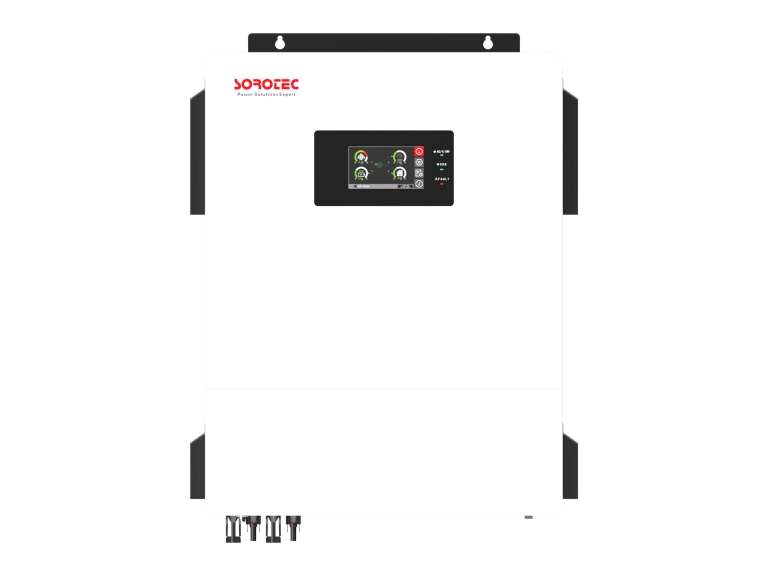
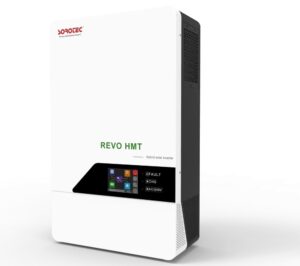
For homes using split-phase electrical systems, voltage compatibility is a basic requirement. The Split-Phase IP54 REVO HMT supports 120V/240V split-phase output and is offered in 8kW, 10kW, and 12kW power options. It is built for residential energy storage needs that include everyday household circuits and larger loads such as air conditioning units, dryers, and EV chargers.
Garage-Based Home Energy Storage Layouts
When you compare IP54 Hybrid Inverters for garage-mounted residential systems, three questions matter:
| Selection Point | Why It Matters in a Home Project |
| Split-Phase Output | Matches common residential distribution layouts |
| Charging Capability | Helps refill batteries faster during strong solar windows |
| Installation Protection | Supports practical garage and semi-outdoor placement |
The split-phase model supports up to 200A solar charging current, dual independent MPPT controllers, up to 22A input current per controller, and a 60–450VDC operating range for each MPPT path. These details matter when the array faces more than one orientation or when you want the battery to charge efficiently during short, strong sunlight periods.
Split-Phase Model for Residential Projects
This product is a strong fit when your project needs a residential-oriented hybrid inverter that can sit in a more realistic installation zone without feeling fragile. It also supports intelligent load management, time-of-use settings, LCD control, local network access, and optional Wi-Fi remote communication. That combination makes it easier to manage household solar storage without overcomplicating daily use.
Commercial and Three-Phase Installations with Tougher Site Conditions
Commercial and light industrial projects are different. They may still use compact equipment spaces, but the power pattern is usually more complex. Loads are heavier, phase balance matters more, and the inverter placement may sit closer to service zones rather than living areas.
Mixed Equipment Loads in Light Commercial Sites
A small workshop, farm facility, guesthouse, or retail back room may have pumps, compressors, HVAC, refrigeration, and office loads sharing one energy system. Those loads do not always rise evenly. They also may not sit neatly on each phase.
A practical hybrid inverter for this setting should do more than carry rated power. It should deal with imperfect load balance and still offer placement flexibility in spaces that are not climate-controlled equipment rooms.
Three-Phase Load Imbalance in Real-World Operation
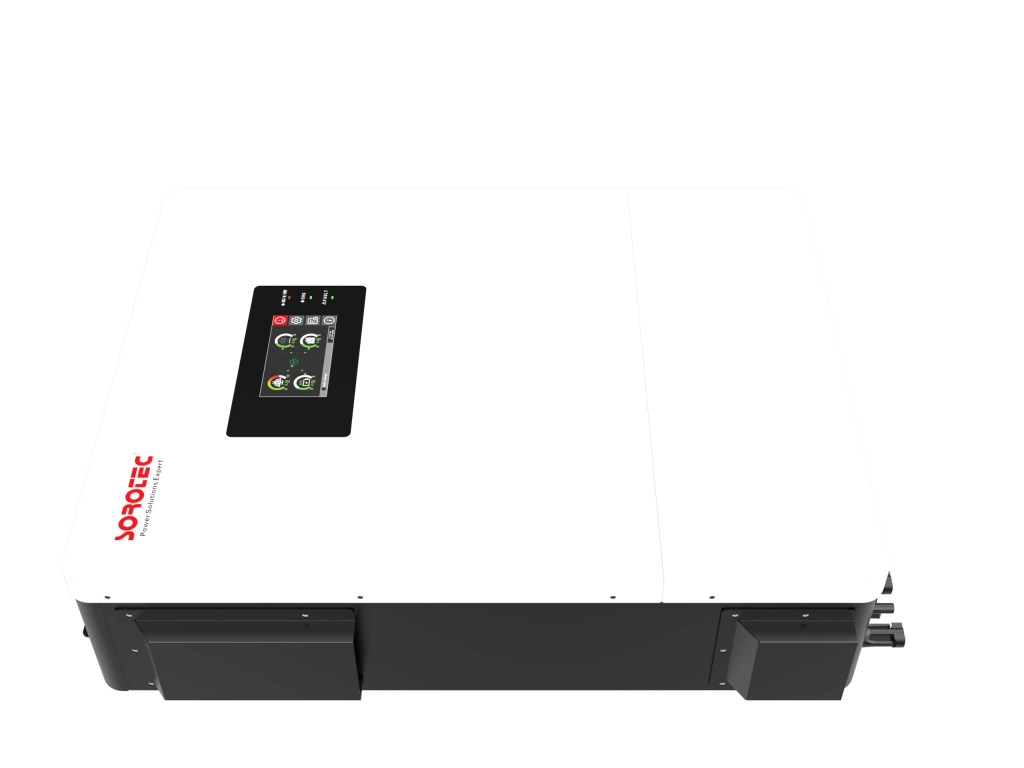
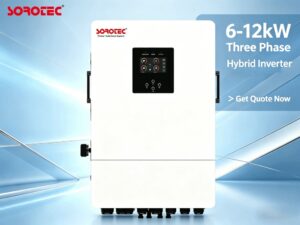
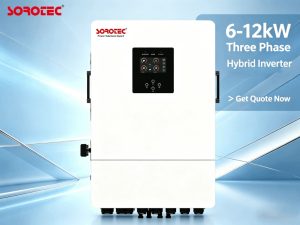
The Three-Phase IP54 REVO HMT is designed around that kind of issue. It supports 100% three-phase unbalanced load output, with single-phase loads able to reach 50% of rated power. It also uses an 800VDC maximum PV input platform and an MPPT operating range of 200–650VDC, which makes it more suitable for higher-voltage PV strings often seen in larger residential or light commercial installations.
Three-Phase Model for Complex Installations
In commercial placement, IP54 Hybrid Inverters become especially useful when the installer wants stronger environmental protection without moving everything indoors. The three-phase model is presented with an operating temperature range of -25°C to 60°C, remote monitoring support, time-of-use energy management, insulation monitoring, islanding protection, and optional AFCI. It also states DC-side efficiency of up to 97.5%.
| Feature | Split-Phase Model | Three-Phase Model |
| Power Range | 8kW / 10kW / 12kW | 6kW–12kW |
| Output Type | 120V/240V Split Phase | Three Phase |
| IP Rating | IP54 | IP54 |
| PV Platform | Dual MPPT, 60–450VDC per controller | Up to 800VDC input, 200–650VDC MPPT |
| Notable Strength | Residential fit and fast solar charging | Unbalanced three-phase load handling |
| Best Match | Homes, villas, garage installations | Light commercial sites, mixed three-phase systems |
This comparison is based on the product details published for the two models.
How to Choose the Right IP54 Hybrid Inverter
The better choice is not simply the model with the longest feature list. It is the model that fits your grid type, installation zone, and real load pattern.
Installation Location and Protection Priorities
Start with the physical site. If the inverter will sit in a garage, a utility wall area, or a semi-outdoor covered location, the enclosure rating deserves attention. Cable paths, service clearance, ventilation, and nearby moisture sources should be checked at the same time. A polished electrical design still needs a sensible wall.
Split-Phase vs. Three-Phase System Matching
Choose the split-phase model when the project follows 120V/240V residential distribution and needs compatibility with larger household appliances. Choose the three-phase model when the site has three-phase power, uneven loads, or stronger light commercial requirements. These are different electrical environments, not just different product sizes.
Charging, Monitoring, and Future Expansion Needs
A good shortlist for IP54 Hybrid Inverters should also include charging speed, MPPT design, remote monitoring, scheduling functions, and the likely next step for the project. Some buyers care about backup. Others care about self-consumption. Some want both. That is normal. The inverter should support the priorities that will actually matter after commissioning, not only on installation day.
Why Supplier Support Still Matters
Product fit matters, but project support matters too. If the site is awkward, the load is mixed, or the installation is likely to evolve, clear service helps more than another line of marketing copy. It is useful to review project case studies before finalizing a plan, especially when you want to compare real application directions. For buyers who want product selection help, service guidance, or direct project discussion, the next step is to contact the service team.
For many solar storage projects, IP54 Hybrid Inverters are a practical middle ground between basic indoor units and heavier outdoor systems. They give you more freedom in garages, utility rooms, and sheltered semi-outdoor spaces, while still allowing the system design to stay focused on power needs, load structure, and long-term usability.
FAQ
Q: Are IP54 Hybrid Inverters suitable for garage installation?
A: Yes, they can be a good fit for garages when the installation follows product guidance for clearance, ventilation, and protected placement. The enclosure rating is especially useful in locations where dust and occasional splash exposure are more likely than in a finished indoor room.
Q: Should a home use split-phase or three-phase hybrid equipment?
A: That depends on the local electrical system. Homes using 120V/240V split-phase service usually fit a split-phase model better. Sites with three-phase service, mixed phase loads, or light commercial demand may be better matched with a three-phase design.
Q: Does IP54 mean the inverter can stay in direct rain?
A: No. IP54 improves resistance to dust and splashing water, but it does not mean the equipment should be installed in fully exposed outdoor conditions. Semi-outdoor placement still needs proper shelter and sound installation practice.