

The shift toward renewable energy has picked up speed, and global deliveries of energy storage inverters have expanded at a steady yearly pace of 25% during the past five years. As additional homeowners and companies in regions such as Europe and the UK embrace these systems in line with fresh rules like the Future Homes Standard, ensuring these devices operate without hitches holds greater significance now than before. Even the finest equipment, including the SOROTEC REVO HES series, can encounter setbacks from surrounding pressures or setup mistakes. This handbook outlines ways to identify the problems and maintain steady power supply in 2026.
Why Is Your Inverter Failing to Power the Load?
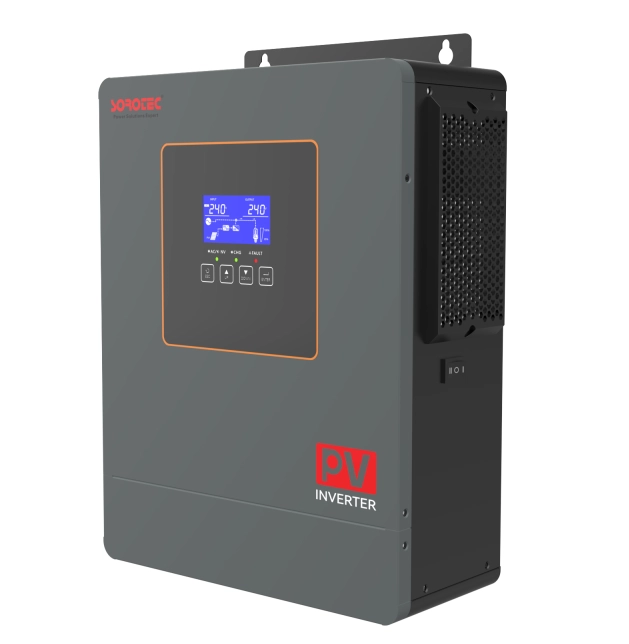
It proves quite bothersome when sunlight pours down yet your devices remain without energy. In most instances, the inverter does not truly suffer damage; rather, it performs its role by halting operations to shield the inner parts or the battery group from harm. And recognizing the reasoning behind these protective stops marks the initial move toward restoring normal function.
Battery Discharge and Voltage Issues
Whenever a system ceases to deliver energy, the starting point for inspection involves the battery’s charge level. If the battery voltage falls under a defined cutoff point, then the inverter halts drawing energy to avoid lasting harm to the cells. In off-grid arrangements, such situations arise commonly after several overcast days, during which the solar panels fail to fully recharge the system. Employing a hybrid model like the REVO HES enables setting a “Mains Priority” option, whereby the grid assists in recharging the batteries once they drop too low, thereby sustaining essential loads without interruption.
System Overload and Surge Capacity
Power units vary in their demands, for not every kilowatt behaves the same. Loads with inductive properties—such as air conditioners or water pumps—require a substantial initial burst of energy to begin operation. Should you attempt to activate four 1P air conditioners on a setup not equipped for that starting rush, the inverter’s safeguard mechanism activates right away. The REVO MPI series includes a twofold power specification to manage these bursts effectively, yet the overall load must remain inside the inverter’s boundaries to prevent an equipment shutdown.
Internal Circuitry and Protection Faults
At times, the concern lies further within the enclosure. Contemporary inverters contain numerous sensors that track aspects from temperature to short circuits. If the REVO HES-G2 senses an abrupt short in household wiring or if the inside temperature reaches a risky high of 85°C, it interrupts the electricity flow without delay. Reviewing the LCD display for precise error codes generally reveals whether the matter stems from a passing outside issue or an equipment defect requiring expert examination.
| Inverter Type | Best Application Scenarios | Core Advantages | Limitations |
| String Inverter | Residential and commercial projects (up to 1 MW) | Flexible, easy installation, and scalable; better for complex layouts | Not ideal for very large utility-scale systems |
| Centralized Inverter | Large-scale utility plants (above 1 MW) | Lowest cost per watt at large scale; high power density | One failure affects a large section; requires heavy machinery to install |
| Microinverter | Small residential roofs with shading issues | Panel-level MPPT; no high-voltage DC risk (<60V); highest availability | Highest initial cost per watt; complex to install for large numbers of panels |
| Hybrid Inverter | Homes requiring energy independence and storage | Manages solar, battery, and grid energy in one device; supports millisecond UPS switching | More complex internal circuitry than standard grid-tied inverters |
How Can You Resolve Common Solar Inverter Connectivity Issues?
By 2026, a solar setup proves effective only to the extent of its information flow. Many operators depend on mobile applications to monitor their “Peak and Valley” gains or assess battery condition. When the application displays nothing, it signals not a halt in power but a loss of oversight regarding energy control.
Monitoring System and Wi-Fi Configuration
The majority of connection troubles trace back to a faint Wi-Fi connection or an out-of-sync cloud profile. The REVO HES series incorporates integrated Wi-Fi, but if the inverter resides in a basement or a room with solid walls, the signal may falter in reaching the router. Frequently, a basic reboot of the Wi-Fi component or a software enhancement—executable from afar through the SOROTEC platform—resolves any lapses in data recording, all without requiring tools like a screwdriver.
Battery Management System Communication Errors
The inverter and battery assembly must exchange information continuously via standards such as RS485 or CAN. Should the communication line loosen or prove substandard, the inverter could misjudge the battery’s voltage or heat and enter a secure idle state. It serves as a wise practice to verify that these communication fittings remain secure, particularly following equipment relocation or addition of a fresh battery unit to the collection.
Parallel System Synchronization Failure
In bigger households employing several REVO HES 10kW devices in parallel configuration, precise timing holds utmost importance. If the primary and secondary units lack proper address assignments in the parameters, they cannot align their AC outputs. Consequently, this results in one device bearing the full burden while others remain inactive. Correct parallel settings, including “Shared CT” and distinct local identifiers, prove essential for the entire arrangement to initiate as a unified whole.
What Causes Decreased Power Generation Efficiency?
If your regular monthly benefits decline despite favorable conditions, you likely face a reduction in output. Solar power demands ongoing attention, since minor outside elements can substantially affect the energy yield from panels to household use.
Solar Panel Shading and Hot Spot Effects
Even a lone leaf or spot of bird waste on a monocrystalline panel can block flow like an obstacle in a stream. With cells linked in series, obstructing one cell hampers the output of the full chain. This generates “hot spots” where the blocked cell absorbs energy from adjacent ones and heats up. Arrangements with the REVO HES gain from MPPT (Maximum Power Point Tracking), which seeks optimal voltage to curb these reductions, yet clearing panels manually remains the most reliable remedy.
Improper Inverter and Battery Voltage Matching
An inverter functions optimally within a designated voltage range. For the REVO HES, the MPPT span generally falls between 80V and 500V. If installers include too few panels per string, the voltage may linger too low to engage the inverter at dawn. Similarly, pairing a 48V lithium battery with an inverter suited for another voltage leads to energy waste during conversion or outright charging refusal.
Inefficient Work Mode Selection
Occasionally, the components operate correctly, but the configuration errs. In areas with high peak rates—like the UK or Europe—and if the inverter lacks “Peak and Valley” setting, opportunities for savings diminish. The ideal setup charges batteries during low-cost nighttime hours and releases energy during evening peaks. Should the REVO HES remain in “Self-Consumption” without accounting for rate changes, the return on investment proceeds at a slower pace.
Which Environmental Factors Compromise Long-Term Reliability?
Inverters endure considerable strain, though they lack total resistance. Positioned outdoors or in unregulated areas, they confront challenges from intense summer warmth to coastal salt exposure. Without considering local weather, the service duration of these devices shortens considerably.
Excessive Heat and Inadequate Ventilation
Electronic elements dislike elevated temperatures. If the inverter mounts in a confined spot lacking air movement, the built-in fans labor excessively. Upon reaching the thermal boundary inside, the device reduces output deliberately to maintain cooling. For superior results, ensure space around your SOROTEC unit stays open and steer clear of direct, intense sunlight exposure, regardless of its strong IP rating.
Dust and Moisture Ingress
The REVO HES carries an IP66 designation, indicating robust sealing against dust and strong water streams. Nonetheless, sealed does not equate to zero upkeep. In seaside locations, salt mist gradually corrodes outer contacts and links if unchecked. An annual review to confirm seal integrity and cable condition against pests or corrosion averts complete system failures.
Grid Fluctuations and Islanding Risks
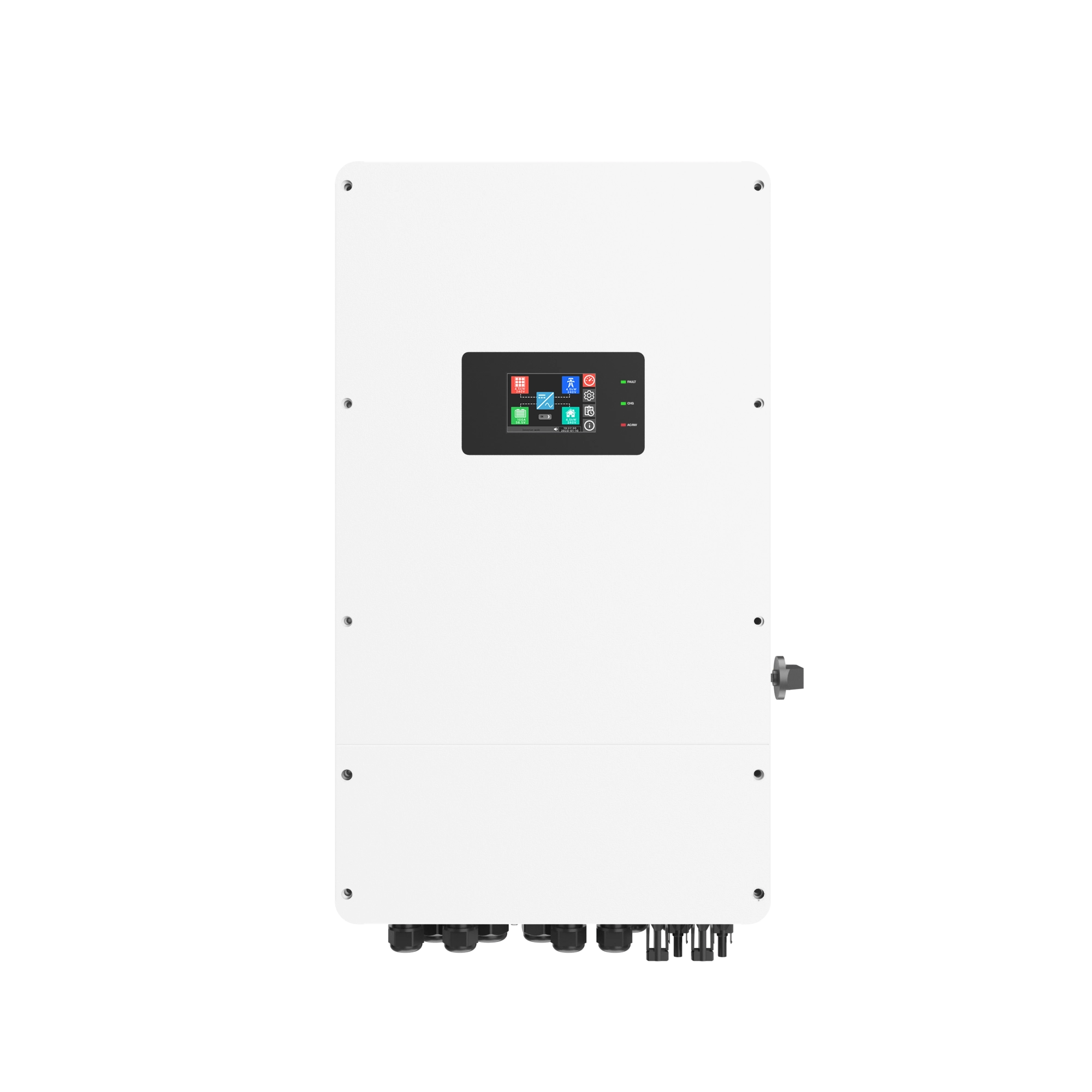
Power networks lack constant stability, particularly in isolated zones or islands. Wild swings in grid voltage prompt the inverter to detach, safeguarding home devices. Known as “anti-islanding” safeguard, this prevents solar output from entering a faulty grid, which endangers utility personnel. The REVO HES-G2‘s tunable mains delay, extending to 999 seconds, allows the system to pause until grid steadiness returns before reconnection attempts.
How Should You Maintain Your SOROTEC System for 2026?
Modest care yields substantial benefits. No electrical expertise proves necessary to sustain peak condition; a simple schedule suffices. Consistent upkeep distinguishes a setup enduring 10 years from one retaining 85% efficiency beyond 25 years.
Routine Hardware and Connection Audits
Several times yearly, approach the inverter and scan for irregularities. Do loose cables appear? Does dust accumulate on heat sinks? Securing connections promotes smooth energy transfer and wards off “arcing”—small sparks that risk escalating to fires. Signs of corrosion or discoloration near terminals signal the need for professional intervention.
Battery Health and SOC Calibration
Lithium iron phosphate (LFP) batteries require little direct care, yet they profit from BMS evaluations. Annually or biennially, permit deep discharge followed by full recharge to 100%. This process refines “State of Charge” (SOC) estimates, avoiding abrupt cutoffs despite app indications of ample capacity.
| Feature | Lithium Iron Phosphate (LFP) | Lead-Acid (Maintenance-Free) | Gel Battery |
| Average Lifespan | 8-10+ years (up to 10x longer than lead-acid) | 3-5 years | 5-7 years |
| Depth of Discharge (DoD) | Up to 100% without damage | Recommended not to exceed 80% (often 50% for longevity) | Good tolerance to deep discharges |
| Maintenance | None required (BMS managed) | Regular inspection of terminals/seals | Minimal maintenance; spill-proof |
| Efficiency | Highest (20-30% more efficient than lead-acid) | Moderate | Moderate; stable in renewable systems |
| Safety | High (Thermal runaway >500°C) | Risk of water loss/swelling if overcharged | Safe; minimal environmental impact |
Firmware Updates and Performance Optimization
Similar to mobile devices, inverters enhance capabilities through time. Producers issue firmware revisions that refine MPPT processes or correct minor code flaws triggering false alerts. Maintaining Wi-Fi linkage on the REVO series and reviewing updates periodically guarantees access to SOROTEC’s latest engineering advancements for 2026.
FAQ
Q1: My inverter screen is blank, but my house still has power. What’s wrong?
A: Likely, the inverter operates in “Bypass Mode.” In this state, it routes grid energy straight to the residence without converting solar input or engaging batteries. Possible causes include battery defects, failed DC fuses, or deactivation at the primary switch. Consult the monitoring app for “DC Input” faults.
Q2: Can I wash my solar panels with a pressure washer to improve efficiency?
A: No, refrain from high-pressure streams. Cleaning dust benefits output, but such tools risk fracturing tempered glass or compromising frame seals. Opt for a gentle brush with water or a hose at low pressure. This approach protects panels and upholds the 25-year warranty.
Q3: Why does my inverter make a humming noise in the middle of the day?
A: A mild hum remains standard. It arises from inductors and transformers laboring to transform DC into AC energy. Should the sound intensify or develop rattling, inspect for blocked fans or loosened mounting hardware from vibrations.


