

Refrigerators rank among the toughest household devices when it comes to power quality. Although their everyday energy needs might seem average on labels, the inner compressor motor creates special strain on inverters, particularly in off-grid or emergency power setups. Picking between a pure sine wave inverter and a modified sine wave inverter is far from a minor technical point to overlook. Indeed, an unsuitable waveform might result in buzzing sounds, lower performance, a cut-short service life, or abrupt breakdowns right when you need cooling the most.
This review centers on actual refrigerator actions and clarifies why selecting the right waveform counts, while linking those points to SOROTEC’s inverter options tailored for home and solar-based uses.
What Is The Difference Between Pure Sine Wave And Modified Sine Wave?
Prior to exploring refrigerator suitability, it proves useful to grasp how these two inverter varieties actually supply power. And since the waveform form decides how well the inverter’s output resembles standard utility grid electricity, this directly influences devices driven by motors.
Pure sine wave inverters create electricity that closely resembles the even sinusoidal waveform provided by the grid. On the other hand, modified sine wave inverters try to copy that curve through stepped voltage stages, which leads to a blocky waveform shape.
Although this distinction might seem theoretical at first, its impacts are tangible and useful in practice.
Pure Sine Wave Inverter Output Explained
A pure sine wave inverter generates a neat, steady waveform featuring very little harmonic distortion. Moreover, top-tier models typically maintain total harmonic distortion under 3%, a level that matches grid norms in places like North America and Europe. As a result, this even output lets motors, compressors, and control circuits function just as planned, free from extra electrical pressure.
Today’s refrigerators depend more on electronic control units, adjustable-speed compressors, and sensor-driven defrost setups. These parts are built for consistent sine wave supply. Therefore, when connected to a pure sine wave inverter, the startup process goes more smoothly, the motor stays cooler, and the inner electronics act in their usual way.
Modified Sine Wave Output Characteristics
Modified sine wave inverters provide power in stepped voltage blocks instead of a fluid curve. While numerous resistive loads, such as simple heaters or traditional lights, can handle this form well, inductive loads like refrigerator compressors do not respond as favorably.
The stepped waveform brings in greater harmonic levels, which makes motors pull in more current than required. Consequently, this additional current frequently appears as clear humming sounds, greater heat accumulation, and poorer efficiency. In the long run, strain on insulation and wear on bearings turn into genuine issues.
Waveform Impacts On Appliance Performance
The U.S. Department of Energy points out that devices with motors, when supplied by uneven waveforms, can face efficiency drops ranging from 5% to 20%, based on the load and operating cycle. For a refrigerator that operates around the clock, such losses build up fast, both in terms of energy expenses and wear on the gear.
The choice of waveform goes beyond simply getting a refrigerator to start. Rather, it concerns how effectively it performs, how long it endures, and how much power it wastes without notice.
Why Does Waveform Matter For Refrigerators?
Refrigerators mix one of the biggest startup power demands in a household with one of the longest daily run times. Because of this mix, they prove particularly vulnerable to inverter quality.
By understanding the processes inside the unit, one can see why the waveform selection holds such importance.
Sensitive Electronics And Compressor Protection
Nearly all current refrigerators employ induction motors or inverter-type compressors managed by electronic panels. At startup, the compressor could require three to seven times its normal running power for a short period. A neat sine wave permits this rush to flow evenly.
However, modified sine wave output might trigger uneven current peaks during startup. These peaks heighten pressure on relay switches, motor coils, and control panels. Eventually, this pressure leads to early compressor breakdowns, among the costliest fixes for refrigerators.
Efficiency And Energy Consumption Considerations
Energy Star reports indicate that refrigerators make up about 7% of overall home electricity usage in the United States. Yet, when fed by a modified sine wave inverter, the identical refrigerator tends to use more power to deliver the same cooling effect.
This lack of efficiency carries even greater weight in solar or battery-reliant setups. For instance, the added power use means quicker battery drain, briefer backup periods, and more often needing a generator or grid support.
Longevity Of Cooling Components
Heat stands as the quiet foe of electric motors. The harmonic unevenness from modified sine wave supply raises internal motor temperatures, even if outward performance seems fine. Across months or years, breakdowns in insulation and worsening of lubrication become probable.
In contrast, pure sine wave supply cuts down on needless heating and mechanical strain, thereby lengthening compressor durability and lowering upkeep hazards.
Which Inverter Type Is Better For Residential Refrigerators?
Now that the technical foundation is set, the everyday conclusion emerges more plainly. Ultimately, the decision hinges on hopes for dependability, system scale, and a view toward ongoing costs.
Benefits Of Pure Sine Wave For Refrigerator Motors
Pure sine wave inverters enable refrigerators to operate softly, effectively, and reliably. The startup feels smoother, running sounds decrease, and energy consumption matches maker specs. This holds special value for inverter-type refrigerators featuring variable-speed compressors, which are now widespread in power-saving homes.
In backup power arrangements meant to function amid blackouts that last hours or days, steady cooling output turns into a matter of safety and preserving food, beyond mere ease.
Limitations Of Modified Sine Wave With Inductive Loads
Modified sine wave inverters can seem appealing owing to their cheaper initial price. Nevertheless, their drawbacks show up clearly with ongoing inductive loads. Greater noise, lesser efficiency, and elevated breakdown rates frequently cancel out those starting savings.
Numerous refrigerator makers clearly suggest pure sine wave supply for inverter use, especially in units with electronic control panels.
Cost Vs Performance Tradeoffs
The table below outlines common performance contrasts drawn from sector test results and maker advice.
| Feature Comparison | Pure Sine Wave Inverter | Modified Sine Wave Inverter |
|---|---|---|
| Total Harmonic Distortion | < 3% | 20–30% |
| Refrigerator Noise Level | Normal | Noticeable Hum |
| Energy Efficiency | High | Reduced |
| Compressor Heat Build-Up | Low | Elevated |
| Long-Term Appliance Life | Longer | Shortened |
Whenever reliability for the refrigerator takes priority, pure sine wave technology regularly stands out as the more secure option.
How Do SOROTEC Inverters Support Refrigerator Loads?
SOROTEC builds its inverter lineup based on genuine home and off-grid load patterns, placing a firm emphasis on motor-powered devices like refrigerators.
Every model fits various setup situations, all while delivering pure sine wave output.
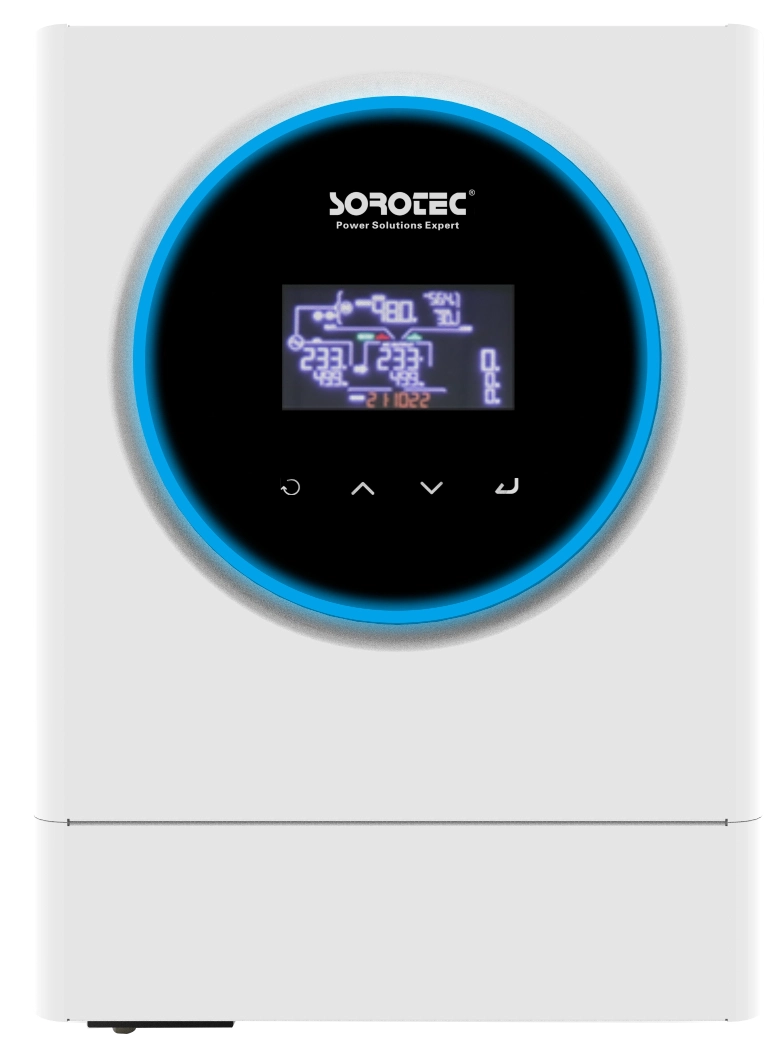
On & Off Grid REVO HM 4/6KW Pure Sine Wave Reliability
The REVO HM 4/6KW offers dependable pure sine wave output that works well for home refrigerators, freezers, and similar inductive loads. Thanks to its robust surge handling, it manages compressor startups without dips in voltage or changes in waveform.
This unit works in both grid-tied and off-grid modes, so it serves as a sensible pick for houses requiring smooth shifts during power failures, all while ensuring refrigeration stays steady.
On & Off Grid REVO VM IV PRO-T 4/6KW Multi-Mode Flexibility
The REVO VM IV PRO-T 4/6KW suits those who want greater command over energy inputs. Its pure sine wave output guarantees fit for refrigerators, whereas various operation modes permit easy changes between solar, battery, and grid sources.
In home solar arrangements where refrigerators need to keep going no matter the sunlight, this adaptability boosts overall system steadiness.
REVO MPI Photovoltaic Inverter Dual-Power For Off-Grid Use
The REVO MPI 6kW/10kW photovoltaic inverter aims at complete off-grid settings. Its dual power levels let it adjust to varying load needs, yet it upholds clean sine wave output.
For isolated houses or farm locations where refrigeration matters for storing food or medications, this inverter supplies firm power without harming appliance condition.
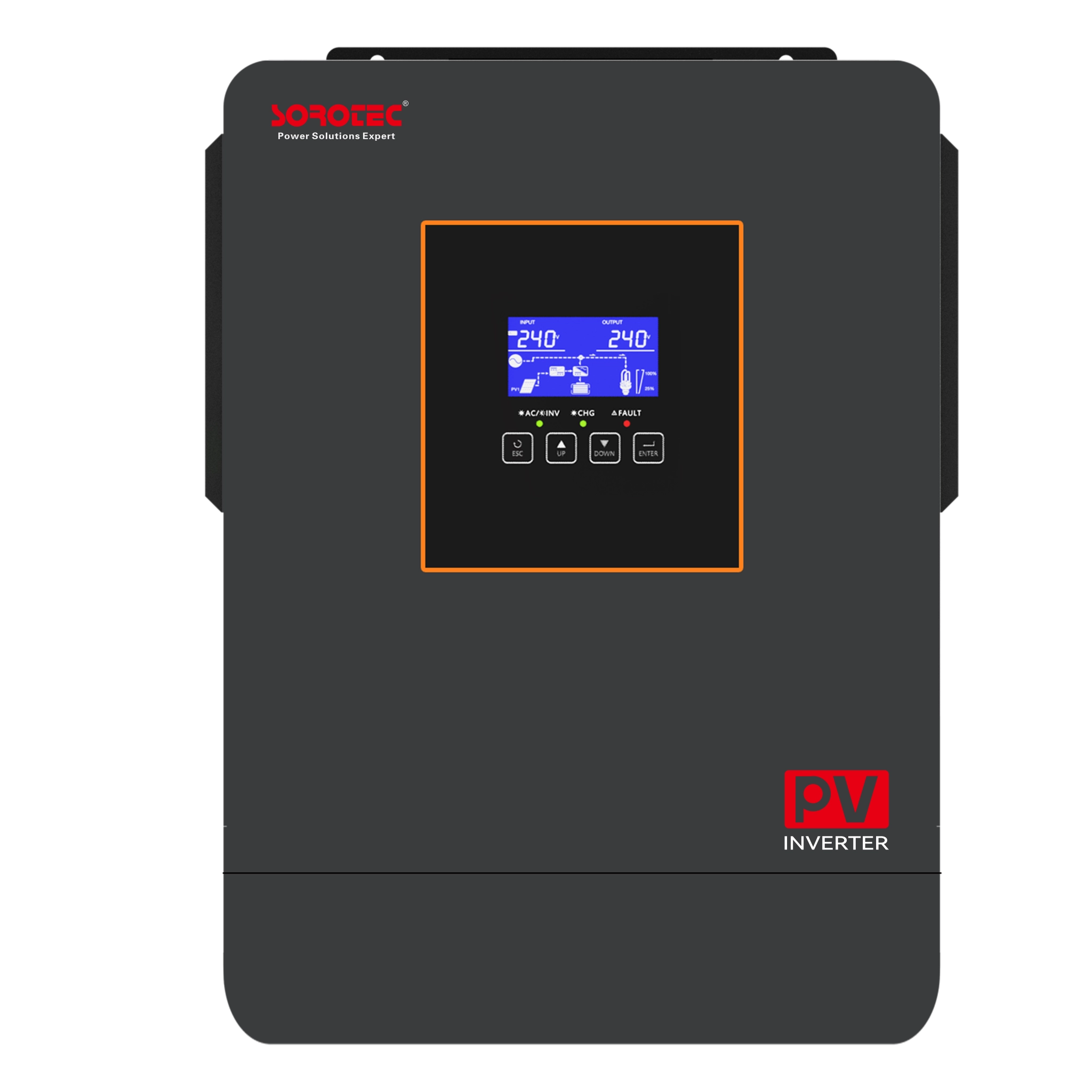
The table below shows main specs related to refrigerators for these models.
| SOROTEC Model | Output Waveform | Typical Refrigerator Support | Application Scenario |
|---|---|---|---|
| REVO HM 4/6KW | Pure Sine Wave | Multiple Household Units | Home Backup, Hybrid |
| REVO VM IV PRO-T 4/6KW | Pure Sine Wave | Continuous Daily Use | Solar + Grid Systems |
| REVO MPI 6kW/10kW | Pure Sine Wave | Heavy-Duty Off-Grid Loads | Remote & PV-Only Sites |
What Installation Scenarios Benefit From SOROTEC Pure Sine Wave Inverters?
Various living and work settings impose distinct requirements on refrigeration systems. Pure sine wave inverters gain particular worth in cases where power quality must remain uncompromised.
Home Backup Power During Outages
In grid failures, refrigerators often top the list of devices owners aim to keep active. SOROTEC’s pure sine wave inverters let refrigerators function routinely, absent odd noises or dips in output, even through prolonged blackouts.
Solar-Integrated Refrigerator Power Supply
Within solar-powered homes, each watt holds value. Effective inverter output minimizes lost energy and stretches battery operation time. Clean sine wave supply aids refrigerators in hitting desired temperatures quicker and cycling more smoothly, thus safeguarding captured solar power.
RV And Mobile Cold Storage Applications
Portable settings bring voltage shifts and repeated startup actions. Pure sine wave output eases strain on refrigeration setups in RVs, food vans, and traveling health units, where breakdowns could lead to major setbacks.
FAQ
Q1: Can a refrigerator run on a modified sine wave inverter?
A: Certain refrigerators might operate, but their function often suffers. Buzzing, greater power use, and risks of lasting damage occur frequently, particularly with current electronic controls.
Q2: How much surge power does a refrigerator need?
A: Typical home refrigerators demand three to seven times their standard running power at startup. Units like SOROTEC’s REVO series are built to manage these rushes dependably.
Q3: Is pure sine wave always necessary for solar systems?
A: For devices driven by motors, like refrigerators, pure sine wave output earns strong endorsement. It boosts efficiency, guards gear, and lengthens system endurance.