
Let’s be honest: solar panels sitting on a clean, suburban office roof are easy. They stay relatively cool, the air is filtered, and they rarely deal with anything more aggressive than a bit of bird droppings or heavy rain. But you aren’t running a suburban office. You are running a facility where the machines never sleep, the air is thick with particulates, and the temperature is anything but “standard.” When you invest in Commercial Solar Storage, you aren’t just buying hardware; you are buying a critical piece of infrastructure that needs to survive a war zone of environmental stressors.
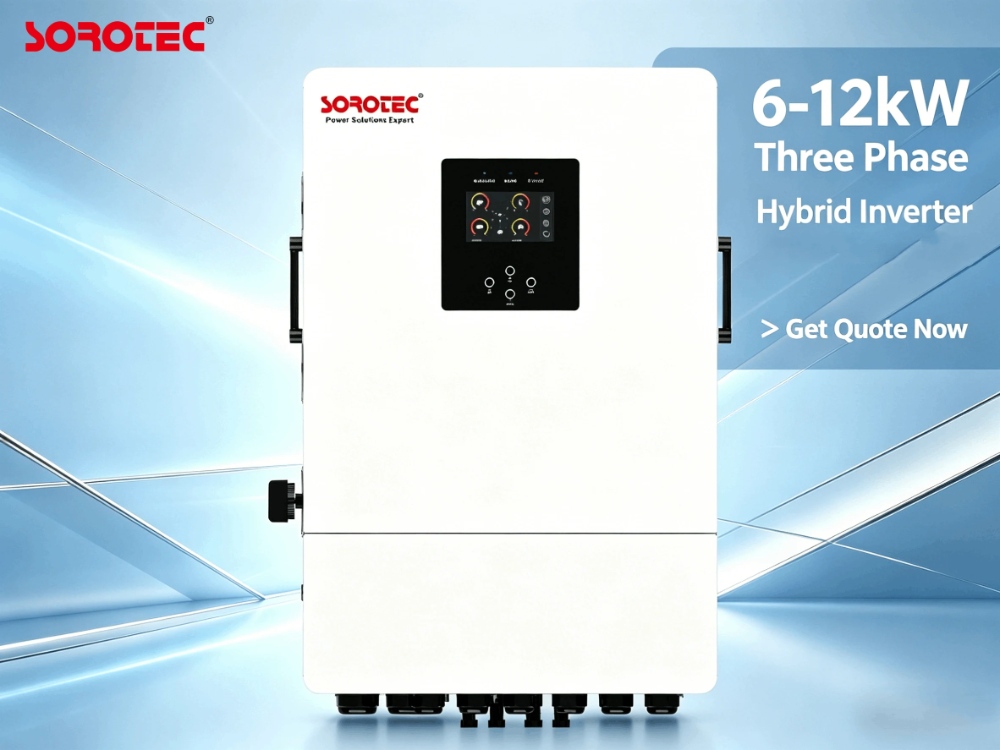
If you are looking for equipment that actually survives a factory floor, you should look into SOROTEC They have been in the power electronics field since 2006, building a reputation as a national high-tech enterprise that doesn’t just chase trends. They live and breathe the tech, handling everything from data centers to complex energy systems, and they have the case studies to prove it. Also they hold a deep technical history, and they aren’t just moving boxes; they are providing solutions for real-world reliability.
Common Threats to Your Commercial Solar Storage
The moment you install your system on an industrial site, the clock starts ticking. These environments are naturally hostile to electronics. You don’t need a PhD to see why, but you do need to know exactly what you are fighting against.
Extreme Temperature Fluctuations
Industrial sites are notorious for heat islands. A roof covered in heavy machinery or near blast furnaces will get significantly hotter than the surrounding area. When your batteries and inverters sit in that heat, their chemical components degrade faster. It’s not just a slight efficiency loss; it’s a direct hit to the lifespan of your storage cells. Conversely, in unheated warehouses or outdoor installations in cold climates, batteries struggle to discharge properly. If you aren’t careful, the constant cycling between hot and cold creates micro-fractures in the internal components.
Airborne Dust and Debris
In a manufacturing plant or a processing facility, the air is rarely clean. Fine dust, metal shavings, or chemical particulates are always floating around. If your equipment doesn’t have an airtight enclosure, this dust settles on your circuit boards and inside your cooling fans. Dust acts like an insulator. It prevents heat from escaping, which leads to overheating, and in humid conditions, it can become conductive, causing short circuits. I’ve seen an inverter fail because a gecko got inside—don’t let simple dust block your fans.
Corrosive Chemical Exposure
If you operate near chemical processing plants, food production facilities, or coastal areas, the air itself is an enemy. Corrosive vapors, salt spray, or acidic cleaning agents will eat away at unprotected terminals and exposed copper traces on your PCB boards. Even if the system works fine today, you might find that in two years, the contact points have oxidized to the point of failure. This isn’t just “aging”; it’s chemical warfare on your investment.
Essential Protective Features for Your Equipment
Since you cannot change the industrial nature of your business, you have to change how you build your power system.
High IP Rating Enclosures
The easiest way to stop dust and liquid is a physical barrier. You need a system with an IP65 or IP66 rating. This is the industrial standard for “dust-tight” and protection against powerful water jets. If your hardware is just sitting in a vented box, it is already failing. An IP66 enclosure, like those found on ruggedized industrial units, creates a seal that keeps the factory atmosphere out of your delicate electronics.
Advanced Thermal Management
You cannot rely on passive cooling in an industrial environment. You need active thermal control. This usually means liquid cooling or intelligent, filtered air cooling systems that keep the electronics operating within a safe temperature range. When the external temperature hits 50°C, the internal components need to stay significantly cooler. If your system lacks this, it will start to throttle power to save itself, and that means you aren’t getting the output you paid for.
Robust Electrical Isolation
Industrial power environments are noisy. Motors starting up, large machinery cycling, and grid instability all create voltage spikes and surges. Your storage system needs physical and electrical dual isolation to protect the sensitive battery management system (BMS) from these surges. Without this, a sudden voltage spike from a heavy machine nearby could fry your inverter board in milliseconds.
Defense Capabilities of the Three-Phase Output iHESS L3P G2
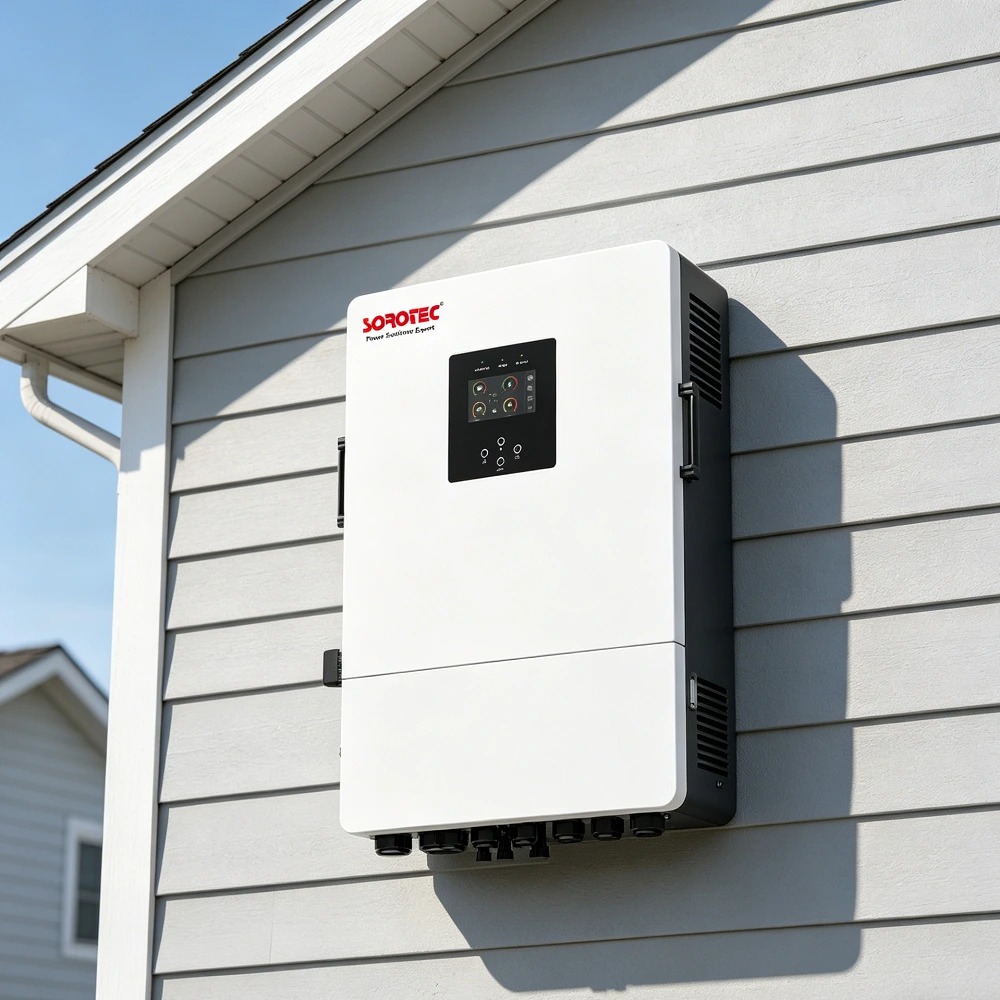
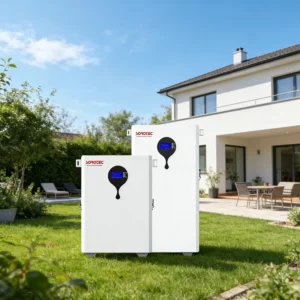
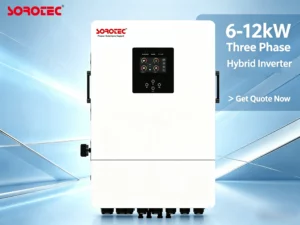
When you need a system that doesn’t quit, you look at hardware built for the mess. The Three-Phase Output iHESS is designed precisely for these rugged, no-nonsense industrial environments.
Industrial-Grade Structural Protection
This unit hits that IP66 mark right out of the gate. That means you can place it in environments where dust or moisture is a constant threat without worrying about the internal boards. It is built to stand up to the physical reality of a production floor, not just a clean room.
Smart Temperature Regulation
The unit is built to handle an operation temperature range of -10°C up to 50°C. It doesn’t just sit there in the heat; it keeps running. When paired with its advanced internal architecture, it keeps the battery chemistry stable even when the external environment is hostile.
Seamless Grid Independence
In an industrial setting, a power outage is a disaster. The iHESS L3P G2 features a switching time of less than 10 milliseconds. This is fast enough that your critical loads—like PLC controllers or vital sensors—won’t even blink. You get the stability of grid-connected operation with the rugged resilience of an off-grid system.
Table 1: Performance Comparison in Harsh Conditions
| Feature | Standard Inverter | Ruggedized Unit (iHESS L3P G2 +) |
|---|---|---|
| Protection Class | IP20 – IP54 | IP66 |
| Temp. Range | 0°C to 40°C | -10°C to 50°C |
| Switching Time | 20-50ms | <10ms |
| Isolation | Minimal | Physical & Electrical Dual Isolation |
Effective Maintenance Routines for Harsh Conditions
Even the best Commercial Solar Storage hardware needs a human touch. You cannot just “set it and forget it.”
Routine Visual Inspections
Once a month, walk out to the unit. Check the cables. Look at the seals. If you see dust buildup on the cooling vents, take a vacuum or compressed air to it. It’s a five-minute job that adds years to the equipment’s life.
Coolant and Airflow Checks
If you have a liquid-cooled system, watch the fluid levels. If it is an air-cooled system, make sure the vents are not obstructed. In a factory, things tend to get stacked against walls—don’t let your inverter be the thing buried under a pallet of supplies.
Real-Time Data Monitoring
Don’t wait for the alarm to go off. Use the monitoring app or the web interface provided by your manufacturer. If you see the internal temperature creeping up consistently, you know you have a problem before the hardware actually trips. Use the CAN or RS485 communication ports to feed this data directly into your facility management system.
Table 2: Recommended Maintenance Cycles for Industrial Sites
| Maintenance Task | Frequency (Standard) | Frequency (Dusty/Industrial) |
|---|---|---|
| Visual Seal/Cable Check | Quarterly | Monthly |
| Heat Sink/Fan Cleaning | Half-Yearly | Quarterly |
| Battery Data Review | Quarterly | Monthly |
Partner with SOROTEC for Your Commercial Solar Service
When you are ready to stop fighting with unreliable power and get a system that works, get in touch with a team that knows industrial power. SOROTEC provides not just equipment, but a long-term partnership in keeping your production lines moving. From customized solutions to standard industrial units, they have the technical support you need. Their after-sales service team is built to keep your system running for the long haul. Feel free to contact them directly to discuss your site-specific requirements. Don’t let a cheap inverter be the reason your factory stops.
FAQs
Q: How often should you service your commercial solar storage in a dusty environment?
A: In a high-dust industrial area, I recommend a monthly visual check and a quarterly cleaning of the cooling intakes. Do not wait for the “annual” service mark; the dust accumulates much faster than that.
Q: What happens to your battery management system during extreme heat?
A: A good BMS will monitor the temperature of the batteries 24/7. As soon as it detects danger of a thermal event by rising temperature, it will reduce charge- and discharge current to a safe level to protect your equipment from damage.
Q: Can you add protective enclosures to an existing solar setup?
A: It can be done but with a great deal of risk. Adding an external enclosure to a device that becomes hot could cause the hot device to become a heat trap. We highly recommend purchasing hardware from the outset that is ruggedized for commercial outdoor use and is rated native to the level of protection required such as the Commercial Solar Storage solutions which have native IP66 protection. Trying to retrofit a non-industrial box to a piece of commercial outdoor hardware can be very difficult or even not possible.